Thursday, 15 May 2025
_22339_36510.jpg)
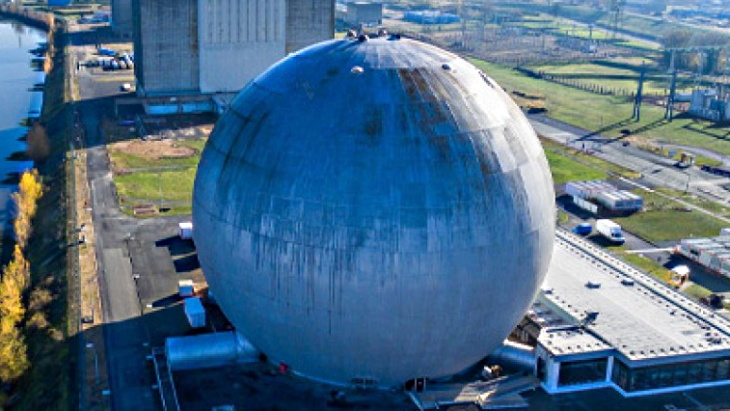
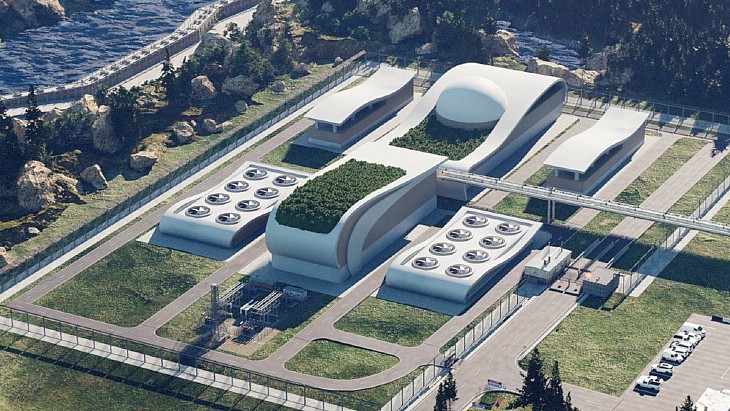
The preliminary consultation is part of the development of a lead-cooled SMR within the European EU-SMR-LFR project, in which Belgium’s Nuclear Research Centre (SCK-CEN) collaborates with partners in Italy and Romania. In the long term, the project provides for the construction of two precursors: the first on the SCK-CEN site in Mol, followed by a second in Pitesti, Romania.
The process, which will last two and a half years, should identify and, if possible, resolve potential obstacles to a possible permit application. “Such consultation is informative and advisory in nature and does not imply a preliminary granting of a permit,” the Federal Agency for Nuclear Control (FANC) noted.
The consultation will take place through workshops and exchange of technical documentation on nuclear safety, security and non-proliferation. A top-down approach will be used: first the fundamental principles will be examined, then possibly focusing in on more technical details.
SCK-CEN Director General Peter Baeten said: “For SCK-CEN, this consultation is an essential step to ensure that our innovative technologies are not only scientifically advanced, but also meet safety standards. The collaboration with the FANC and foreign regulators strengthens the robustness of our trajectory.”
“For FANC, nuclear safety is always central, even when it comes to new technologies, which come with greater challenges,” said FANC Director General Pascale Absil. “Such innovative projects are really exciting and offer young talent the opportunity to develop.”
The Romanian nuclear regulator (CNCAN) and the International Atomic Energy Agency (IAEA) are also taking part in the consultation. For FANC, this is the first time that it is working with international partners so early in a project within an exploratory framework. “This international dimension is an important added value in this process,” Absil said. “It allows us to exchange insights with other safety authorities, which is valuable for a careful and objective assessment.”
FANC emphasises that the consultation does not mean that a permit application will automatically be approved. “Our role as an independent supervisor remains guaranteed: we do not take a position on the desirability of nuclear projects, but we ensure that if they do come, this is done safely and in accordance with the law.”
The EU-SMR-LFR project is being carried out by a consortium of European partners: SCK-CEN, ENEA (the Italian national agency for new technologies, energy and sustainable economic development), Italy’s Ansaldo Nucleare, and Romania’s Regia Autonoma Tehnologii pentru Energia Nucleara (RATEN). The focus is not only on research into lead-cooled, fast reactor technology, but also on the actual commercialisation of the technology.
The commercial rollout will be preceded by extensive research and intensive testing. The consortium has outlined a clear vision, based on a step-by-step approach. The partners will systematically agree all the requirements together.
Initially, a small-scale reactor is to be constructed in Mol, Belgium, with completion scheduled by 2035. With this reactor, the partners want to demonstrate its technological and construction aspects. A step towards the next phase of development, the construction of the 300 MWt Advanced Lead-cooled Fast Reactor European Demonstrator (ALFRED) in Pitești, Romania. With ALFRED, the partners focus on the technical and economic feasibility of future commercial SMRs. It will leverage and expand the work done over the past 10 years by Ansaldo Nucleare, ENEA and RATEN under the Fostering ALFRED Construction (FALCON) consortium toward this objective. The third step will be the global commercialisation of the SMR-LFR.
Article researched and written by WNN’s