In November 2021, at the COP26 Summit in Glasgow, Honourable Prime Minister Shri Narendra Modi made an ambitious statement. He said India will meet 50 percent of its energy requirements from renewable energy or non-fossil fuel-based energy resources. And take our non-fossil energy capacity to 500 GW by 2030.
A large part of India’s expansion to non-fossil fuels will be in solar energy. India is already moving on a fast track with an expansion in solar manufacturing driven by ambitious climate targets, strong policy tailwinds, and rising global demand for clean energy alternatives.
Renewable energy installations (including large hydro) have increased to approximately 212 GW as of January 2025. Growth in the solar power sector has been robust over the last five years, with solar power accounting for a share of 46% percent as of January 2025.
India has the potential to support 750 GW of solar energy installations and has been offering several incentives and schemes to encourage the development of solar power plants.
According to CRISIL, India expects 175-180 GW of solar capacity additions over Fiscal 2025-2030. This, it said, will be driven by government initiatives like the National Solar Mission (NSM), which focuses on achieving grid parity for solar energy by 2022 and parity with coal-based thermal power by 2030, other central schemes driven by the Solar Energy Corporation of India (SECI), a Navratna CPSU, State solar policies, and other CPSU programs under the Jawaharlal Nehru National Solar Mission, (JNNSM).
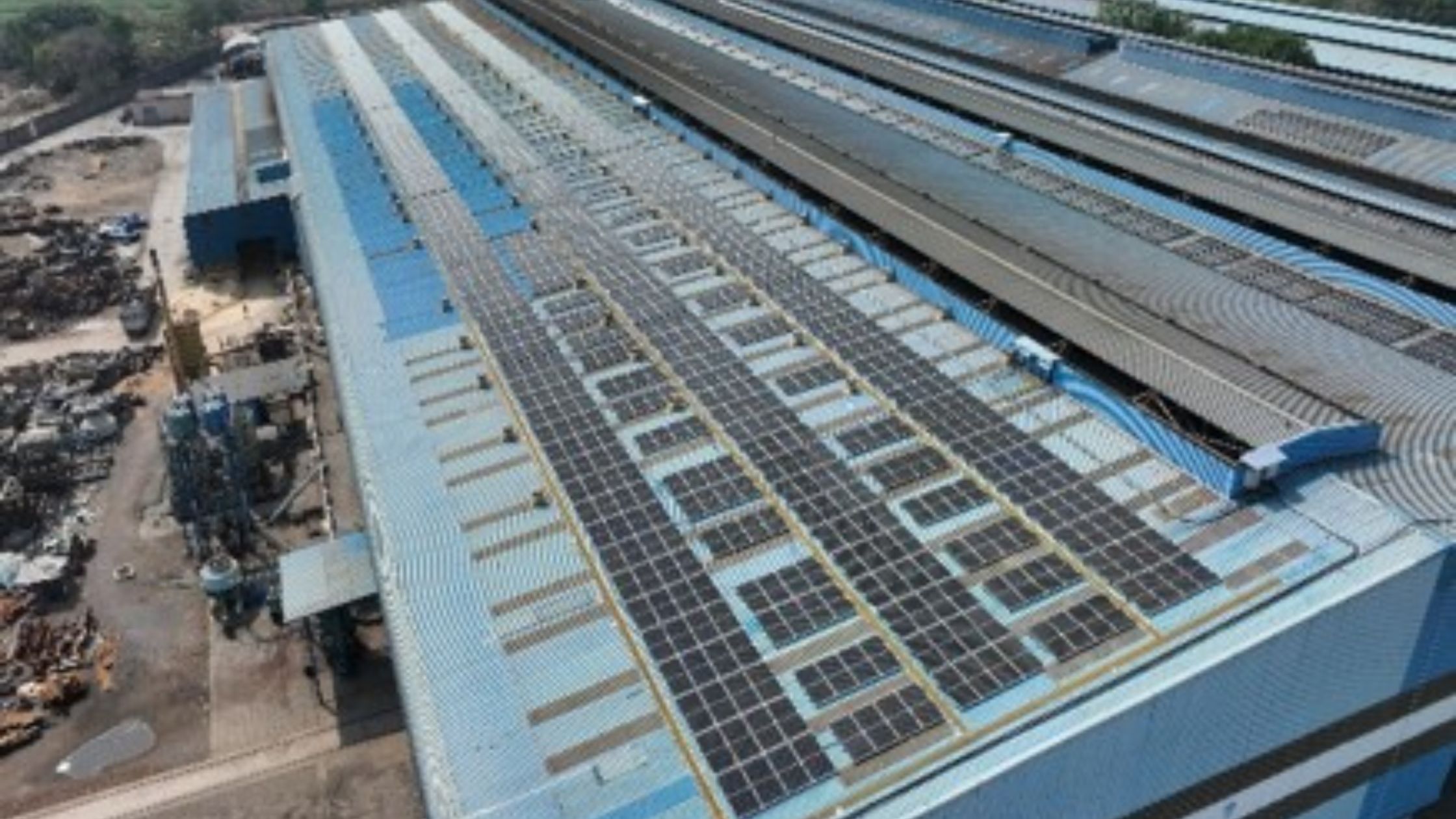
At the same time, it is expected that there will be 27-29 GW of rooftop solar projects (under the CAPEX and OPEX mode) to be commissioned by Fiscal 2030, led by PM Surya Ghar Yojana and industrial and commercial consumers under net/gross metering schemes of various states.
Manufacturing and Import Challenges
Yet, there are challenges that India must overcome if it must realize the 2030 goalpost. One of the primary elements of this is to reduce imports to justify costs. There is also competition from China and high import duties in some countries that Indian manufacturers must face.
The good news is that India’s solar manufacturing landscape is undergoing a transformation, and domestic manufacturers are commissioning new facilities and incorporating advanced technologies to enhance efficiency and output. New integrated factories are being developed with plans to scale capacity by 2026, reflecting a broader trend.
According to Mercom India, India’s cumulative module manufacturing nameplate capacity has reached approximately 63 GW in Fiscal 2024 and the cumulative cell manufacturing capacity is about 7.6 GW as of June 2024. The nameplate module capacity in India is expected to touch 82-87 GW by March 2025.
Quality as a Cornerstone
Amidst this manufacturing momentum, ensuring consistent quality has become a non-negotiable priority. The Government’s new Quality Control Order (QCO) for 2025, notified by the Ministry of New and Renewable Energy, emphasizes this imperative. Coming into effect 180 days from the date of publication, the QCO requires solar PV modules, inverters, and storage batteries to conform to new Indian Standards and carry the Bureau of Indian Standards (BIS) mark. This includes manufacturers, importers, and distributors, holding them accountable throughout the supply chain.
Sustaining Demand, Driving Policy Synergy
The domestic market remains robust, backed by government initiatives. The PM KUSUM Scheme is specifically developed to increase the penetration of solar pumps. There is a sustained demand for agriculture and irrigation needs and solar pumps are a cost-effective and sustainable solution for irrigation. The PM Surya Ghar Muft Bijli Yojana, for instance, plans to install solar panels in one crore houses of middle-class and poor families.
On the policy front, the government has been proactive and taken the lead through initiatives like PLI, the Domestic Content Requirement (DCR) mandate for the use of domestically manufactured solar cells and modules, imposition of BCD on the import of solar PV cells & modules, mandated registration of solar cell and module under the Approved List of Models and Manufacturers (ALMM) for complying with BIS standards, and support for training and skill development have driven this transition, promoting domestic production and lowering foreign supply chain dependency. At the same time, financing support for capex-heavy manufacturers, and incentives for R&D will be crucial to sustaining momentum in FY25.
The Bottom Line
The government has already made a robust beginning through policy and initiatives. The industry, in turn, must focus on innovation, sustainability, and building skills to be globally competitive not just to touch the 2030 finishing rope, but also to become a global trendsetter and high-quality, sustainable solar production destination.