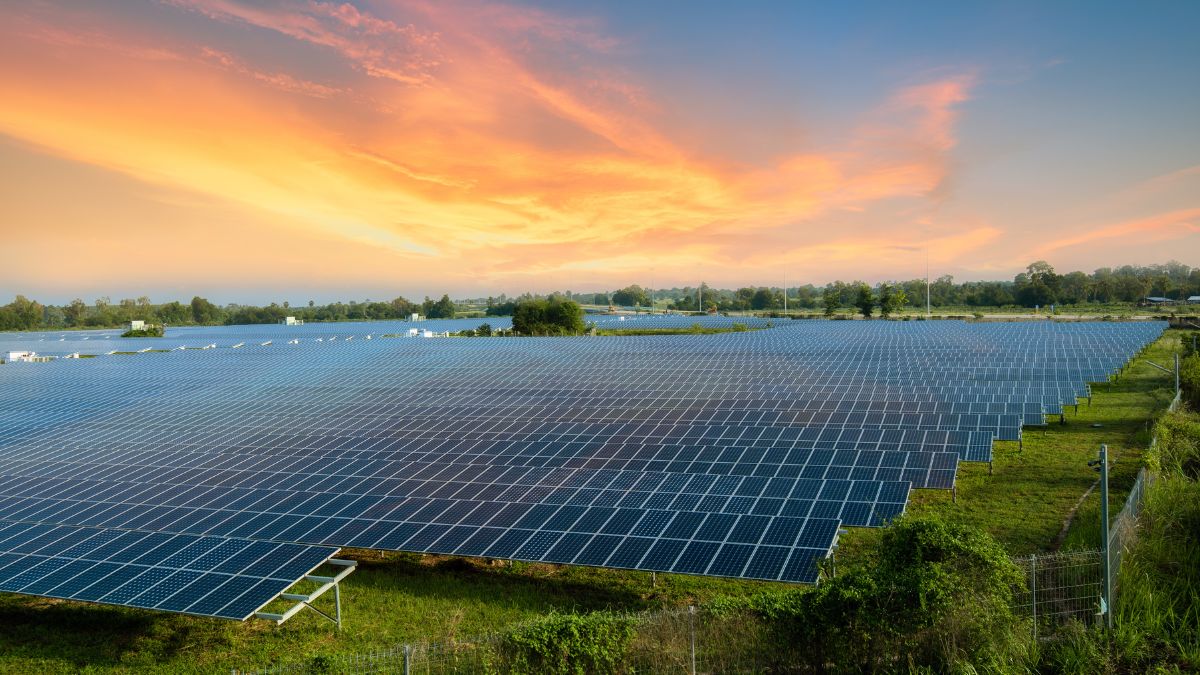
India has shown strong progress in renewable energy, especially in solar power. By the end of May 2025, the country had installed a total solar photovoltaic capacity of 110,834.28 MW (megawatts). This makes up more than 61.98 percent of India’s total renewable energy capacity, excluding large hydroelectric power. The growth is supported by falling solar panel prices, improved technology, government support, and greater public awareness about clean energy.
In 2025 alone, India added 12,969.56 megawatts of new solar capacity from January to May 2025. In May 2025, the country installed 2.888 gigawatts of solar energy, which is a 2.68 percent increase from April. This steady addition shows India’s commitment to sustainable energy and its long-term environmental goals. In the same month, wind energy added 233.7 megawatts, contributing to the growth of renewable sources apart from large hydro projects.
Government policies have played a big role in this progress. The Production-Linked Incentive (PLI) scheme and the Approved List of Models and Manufacturers (ALMM) policy have helped improve the quality and reliability of solar products. The ALMM policy was reinstated on April 1, 2024, making it necessary for all government solar projects to use certified solar modules. From June 1, 2026, this rule will also apply to solar PV cells, which will help improve the overall performance and efficiency of solar installations.
As of May 2025, India’s total renewable energy capacity, excluding large hydro, reached 178.82 gigawatts. Out of this, solar and wind together contributed 162 gigawatts, which is over 90.66 percent of the total. Ground-mounted solar projects lead the way, with 84.43 gigawatts installed. Rooftop solar systems have also grown, with 18.37 gigawatts in place, becoming popular among homes, commercial buildings, and industries due to cost savings and energy independence. Hybrid solar wind systems have reached a capacity of 3.02 gigawatts.

Off-grid solar solutions are also making a positive impact in rural areas. These include solar lanterns, solar pumps for farmers, and microgrids, which now total more than 5 gigawatts. These systems are helping reduce the use of diesel generators, which are both polluting and expensive to operate.
Despite this progress, there are still challenges. One major problem is the shortage of land for building large solar parks. Another is the difficulty of integrating growing amounts of solar power into the national electricity grid without causing power supply problems. To address these, more investment is needed in grid infrastructure, advanced technologies, and support for domestic solar manufacturing.
Crossing 110 gigawatts in solar and 51 gigawatts in wind energy shows that India is becoming one of the top countries in clean energy. With the help of government programs like solar parks and rooftop incentives, the country is well on track to meet its renewable energy goals and become a global leader in solar power.