What innovations helped PVH reach multiple GWs in tracker installations, and how do your systems perform across varied terrains?
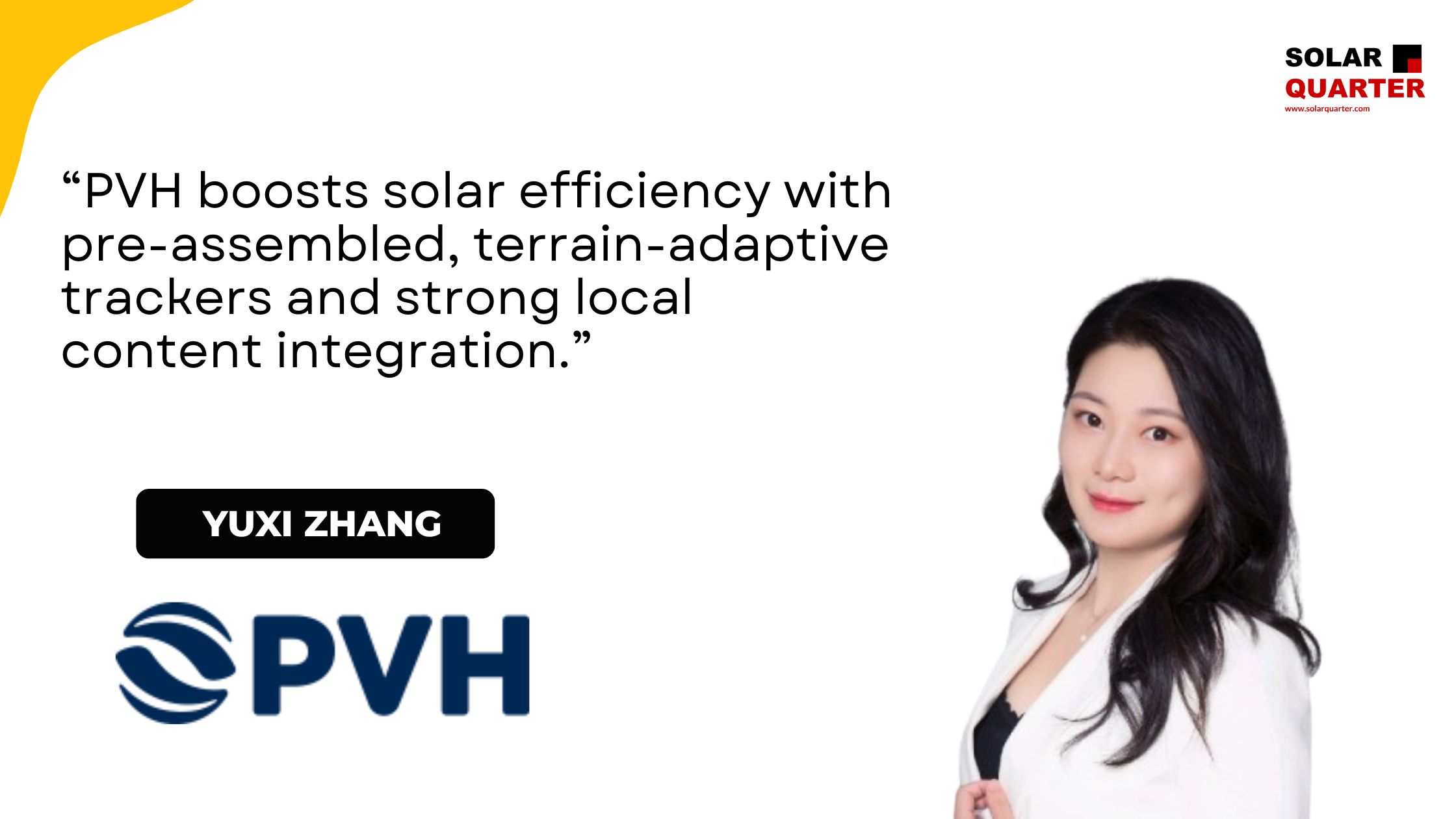
PVH’s exponential growth in the utility-scale solar tracker segment crossing multiple gigawatts of installed capacity can be attributed to our steadfast commitment to innovation. A key breakthrough has been our factory pre-assembly approach. By pre-assembling tracker components at our manufacturing facilities and delivering them ready-to-install to the project sites, we have significantly reduced both installation time and costs for EPC contractors.
Moreover, our tracker systems are engineered for adaptability across a wide range of terrains. Whether the project is located on flatlands, undulating ground, or uneven slopes, PVH trackers can be deployed rapidly and effectively. This ensures that terrain-related challenges do not hinder the speed or efficiency of installation.
How does Terrain Response Technology improve utility-scale solar plant performance and reliability?
Our Terrain Response Technology represents a significant advancement in the deployment of solar trackers on challenging land profiles. Each tracker in our system features up to one degree of post-to-post flexibility. This technical capability allows the system to seamlessly follow the natural contours of the land, minimizing or even eliminating the need for costly and environmentally disruptive earthworks.
From a performance perspective, this flexibility accelerates the construction timeline and simplifies installation for EPCs, especially in regions with non-uniform topography. Environmentally, it plays a crucial role by preserving the topsoil, reducing erosion risk, and supporting long-term land sustainability. This means the land remains reusable even after the project’s full operational lifecycle of 25 years, aligning with broader environmental stewardship goals.
How are PVH trackers adapting to the local content requirements in different projects and regions?
PVH is deeply committed to supporting local content mandates in every market where we operate. A prime example is our strategic entry into Saudi Arabia in 2021. Understanding the Kingdom’s emphasis on localization, we established a dedicated manufacturing facility within Saudi Arabia.Through this local setup, we source a significant portion of our raw materials from regional suppliers and actively hire and train local talent. This approach not only ensures compliance with project-specific localization thresholds but also aligns with national economic development goals. Our localization strategies empower EPCs to meet their regulatory obligations while enhancing community engagement and economic contribution in each market.