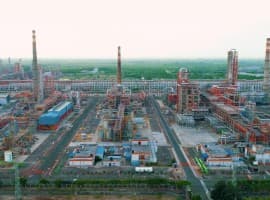
India’s state-run refiners have requested urgent guidance from the government in New Delhi following a social media post by U.S. President Donald Trump, reported by AP News, announcing a 25% tariff on Indian exports to the United States effective August 1, and warning of an additional penalty tied to India’s continued purchases of Russian oil.
The announcement has unsettled procurement teams that had previously structured Russian crude purchases through intermediaries and non-dollar payments under the assumption they would remain outside U.S. enforcement.
The Financial Post cited two officials at state-run refining firms as saying that internal compliance teams are reassessing July and August liftings of Russian Urals and Sokol crude, particularly those routed via third-party traders in the UAE and Singapore. These cargoes had been structured under non-dollar contracts and priced below the $60 per barrel G7 cap, which Indian buyers previously believed would shield them from secondary sanctions. The unexpected tariff threat has cast doubt on that assumption, and several August tenders have been delayed pending legal review.
The request for clarity comes amid mounting uncertainty over India’s position in global enforcement frameworks. A recent European-led action against a Russia-linked Indian refiner has intensified scrutiny over ownership structures and crude origin declarations, raising fears of broader exposure should U.S. authorities align with EU enforcement posture. Recent enforcement language has expanded focus beyond per-barrel price thresholds to include supply chain transparency and trader identity, particularly for shipments transiting Fujairah and Khor Fakkan.
Traders are also watching how the evolving U.S. position could affect broader coordination between Washington and Brussels. While the U.S. and EU recently announced a $750 billion energy cooperation deal, the framework has faced logistical constraints and credibility questions as Russian crude continues flowing to Asia through layered intermediaries.
By Charles Kennedy for Oilprice.com
More Top Reads From Oilprice.com
- EIA Reports Surprise 7.7M Barrel Crude Build
- Turkey Pushes for Full Use of Kurdistan Oil Pipeline
- Trump Says ‘We’ll Just Step It Up’—But Can U.S. Oil Deliver?