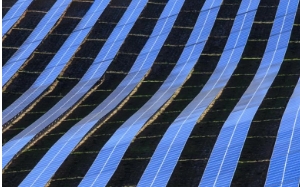
Scaling up renewable energy plays a vital role in enhancing Europe’s energy security by reducing its dependence on imported fossil fuels and shielding economies from global price volatility. According to the first Regional Energy Transition Outlook for the European Union, published by the International Renewable Energy Agency (IRENA) in collaboration with the European Commission, increasing the use of renewables also improves affordability and competitiveness by relying on domestic, cost-effective energy sources available across the EU.
The report highlights that achieving the EU’s energy transition goals in the coming years will require faster integration and expansion of energy infrastructure, a stronger push for electrification powered by renewables, and improved institutional frameworks to guide energy planning and implementation. Importantly, these frameworks must be supported by robust enforcement mechanisms to ensure consistent action and accountability across all Member States.
According to the outlook, annual renewable power capacity additions in the EU are expected to reach 122 gigawatts (GW) by 2050—twice the current level. By 2030, 70% of the EU’s electricity is projected to come from renewables, rising to nearly 90% by 2050. However, this transformation will require substantial investment in power sector capacity and infrastructure. The total investment needed is estimated at €5.6 trillion by 2050, which is equivalent to nearly 80% of Germany’s 2024 GDP. This means the EU must invest around €220 billion annually—nearly 50% more than current investment levels.
Modernising infrastructure is not only essential to support renewable energy deployment, but also to maintain long-term electricity affordability. As renewable sources become more widespread, wholesale electricity prices tend to decline due to lower operational costs and reduced exposure to fossil fuel price fluctuations. With the right investment, a fully decarbonised energy system could offer greater price stability. To achieve the full energy transition, total investments across all sectors will need to reach €1 trillion annually by 2050—roughly 6% of the EU’s GDP in 2024.
Despite growing momentum, the report warns that the current pace of renewable energy deployment remains insufficient to meet the EU’s climate and energy goals for 2030, and its ambitions for 2040 and 2050. National implementation across sectors and technologies is still uneven, and timely, coordinated action among EU Member States remains a significant challenge. The report calls for greater integration in energy planning and stronger cooperation at the regional level.
Francesco La Camera, IRENA Director-General, stated, “The EU’s global leadership in climate mitigation is more important than ever. But delayed action risks higher costs, making strategic investment critical to a successful transition. EU policymakers should pay close attention to affordability, energy price inflation, and the security of energy supplies.”
He further added, “Investing in the energy transition within the EU is a no-regrets option. The EU economy could grow by 2% annually until 2050 and boost energy sector jobs to nearly 8 million within this decade. By placing low-cost renewables at its heart, the transition can enhance energy independence and deliver affordable, sustainable energy to industry, households, communities, and citizens across the EU.”
Dan Jørgensen, EU Commissioner for Energy and Housing, mentioned, “To fight climate change while strengthening our resilience, we need more renewables, and faster. Homegrown renewables will make us more energy independent as we move away from fossil fuels. They will also create new jobs and drive innovation. This is a clear win-win for the climate, and the economy. This report provides a clear compass for our energy transition. It will help us implement our Action Plan for Affordable Energy which sets an ambitious strategy to cut energy costs while building a clean, competitive, and secure Energy Union”.
To remain on track for a net-zero transition by 2050, IRENA outlines several critical actions the EU must take by 2030. These include increasing the share of renewables to meet or exceed the target of 42.5% of Gross Final Energy Consumption through accelerated electrification and direct renewable use. Wind and solar capacity must reach at least 1,100 GW, contributing to a total renewable energy capacity of 1,247 GW—nearly doubling the 640 GW installed by the end of 2023. Battery storage capacity must expand to at least 46 GW, a significant increase from 6 GW in 2023, to ensure system flexibility.
Additionally, electricity should make up 33% of final energy consumption by 2030, compared to 21% in 2023. The EU must also deploy 51 million heat pumps in buildings, growing at an annual rate of 7%, and expand electric mobility to reach 100 million electric vehicles by 2030, supported by a robust charging infrastructure. Finally, the report calls for the development of strong regulatory and investment frameworks to support regional hydrogen hubs and large-scale electrolysis deployment.
The IRENA EU Energy Transition Outlook was developed in close partnership with the European Commission and EU Member States. It provides valuable insights to support evidence-based policy decisions and guide the EU toward building a secure, competitive, and climate-aligned energy system.
Subscribe to get the latest posts sent to your email.