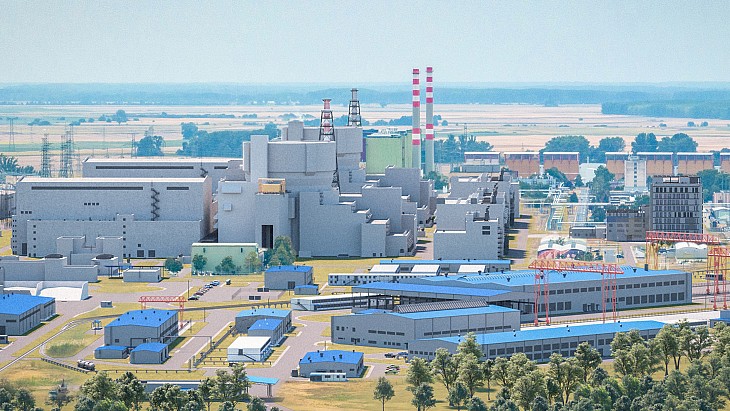
In its judgement published on Thursday, the court set out the background to the case: “By decision of 6 March 2017, the European Commission approved investment aid which Hungary intended to grant to the State-owned company MVM Paks II for the development of two new nuclear reactors at the Paks nuclear power station site. Those new reactors were to gradually replace the four existing reactors. MVM Paks II was intended to become, free of charge, the owner and operator of the two new reactors.
“Their construction was to be financed entirely by the Hungarian State. The construction of the new reactors was entrusted, by means of a direct award, to the Russian company Nizhny Novgorod Engineering, in accordance with an agreement between Russia and Hungary on cooperation on the peaceful use of nuclear energy. Russia also agreed under that agreement to provide Hungary with a State loan in order to finance most of the development of the new reactors. Austria contested the Commission’s approval decision before the General Court. By judgment of 30 November 2022, the General Court dismissed the action. Austria subsequently lodged an appeal with the Court of Justice against the judgment of the General Court.”
In its ruling it says that “contrary to what the General Court ruled, the Commission could not confine itself to ascertaining whether the aid at issue complies with the EU rules on State aid, but should have also ascertained whether the direct award of the contract for the construction of the two new nuclear reactors complies with EU public procurement rules”.
It also says that “in so far as the Commission took the view, in the approval decision, that, in any event, the direct award of the construction contract complied with the rules on public procurement, that decision is not sufficiently reasoned”.
It is not clear what impact the court ruling will have. The European Commission said it noted the decision and “will carefully study the judgment and reflect on next steps”.
Hungary’s Foreign Minister Péter Szijjártó responded that “before the opponents of energy security break out the Champagne, I would like to make it clear that the European Court of Justice’s decision is against the European Commission’s previous decision” and Hungary continues to view the plant’s construction as “the main future pillar of Hungary’s energy security”.
“This court decision does not limit or slow down the progress of the investment in any way. On the contrary, we have accelerated this investment and at the beginning of the next decade we will connect both units of the new Paks nuclear power plant to the grid,” he told a news conference.
The Paks II project
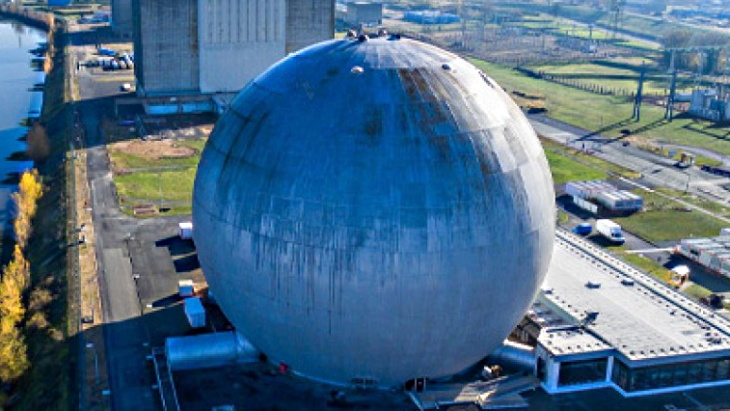
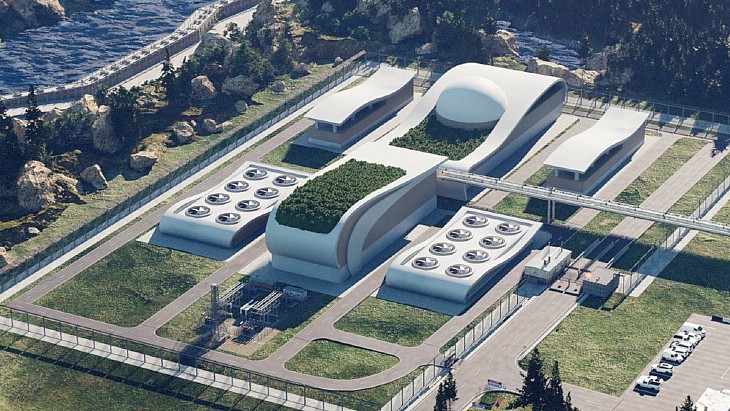
The Paks plant, 100 kilometres south of Budapest, currently comprises four Russian-supplied VVER-440 pressurised water reactors, which started up between 1982 and 1987. An inter-governmental agreement was signed in early 2014 for Russian enterprises and their international subcontractors to supply two VVER-1200 reactors at Paks as well as a Russian state loan of up to EUR10.0 billion (USD10.5 billion) to finance 80% of the project.
The construction licence application was submitted in July 2020, the construction licence was issued in August 2022, and a construction timetable was agreed in 2023. First concrete is expected later this year, with a target to connect the new units to the grid at the beginning of the 2030s.
Austria, which shares a border with Hungary, has no nuclear power plants. It also launched legal action against the Commission in 2015 over its approval of the UK’s support for the Hinkley Point C nuclear power plant project in Somerset, England. The General Court dismissed that lawsuit in July 2018 saying the Commission “did not err” in accepting the UK’s stance that construction of the plant was in the British public’s interest.