Russia Signals Lower Gas Prices for China Compared With Europe and Turkey

Russia expects to sell natural gas to China at significantly lower prices than it charges in Europe and Turkey, according to a draft outlook from the Economy Ministry tied to the 2026 budget. The document, seen by Bloomberg, projects that Chinese deliveries will be priced at least 27 percent below European and Turkish levels over the next three years, with the gap widening to 38 percent in 2025.

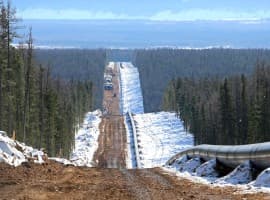
The numbers lay bare the price Moscow is paying for its eastward pivot. With Europe largely off the table, Russia has funneled volumes into the Power of Siberia line and is pushing to seal the long-delayed Power of Siberia-2, a 50-billion-cubic-meter conduit into northern China. The pipelines guarantee an outlet for Siberian gas, but they also cement steep discounts compared with what Europe once paid.

Statements by Russian officials have echoed this direction. 

Gazprom chief Alexei Miller has publicly acknowledged that gas sales to China would come at lower prices than to Europe, while President Vladimir Putin described the arrangement as giving China a “competitive advantage.” Chinese commentary has used more guarded language, referring to “reasonable market prices” and “competitive terms,” but reports in outlets such as Guancha and Cnyes confirm that Russia has offered Beijing a cheaper deal than its Western customers.

The strategy reflects Beijing’s leverage as the dominant buyer willing to absorb large Russian volumes. For Moscow, it ensures long-term outlets for gas even if it means reduced revenue per unit. 

The spread between Chinese and European prices could have significant implications for Gazprom’s finances and for regional LNG dynamics, as discounted pipeline gas strengthens China’s hand in negotiating spot cargoes from other suppliers.

By Charles Kennedy for Oilprice.com

More Top Reads From Oilprice.com


  • Related Posts

    Why Oil’s War Premium Is Unwinding Again

    In an analysis posted on the Saxo Bank website on Wednesday, Ole Hansen, Saxo Bank Head of Commodity Research, outlined “why oil’s war premium is unwinding again”. Hansen highlighted in…

    Hormuz Crisis Boosts Appeal of $42-Billion Tanzania LNG

    Equinor sees a multi-billion LNG export project in Tanzania becoming more attractive for development amid the Middle East conflict that has crippled liquefied natural gas supply through the Strait of…

    Have You Seen?

    Preview: Swagelok webinar to explore gas distribution system design

    • August 26, 2026
    Preview: Swagelok webinar to explore gas distribution system design

    Preview: Swagelok webinar to explore gas distribution system design

    • August 26, 2026
    Preview: Swagelok webinar to explore gas distribution system design

    Development and production offer biggest AI prizes – McKinsey

    • August 26, 2026
    Development and production offer biggest AI prizes – McKinsey

    SLB selected as reservoir partner for Havstjerne carbon storage project

    • August 26, 2026
    SLB selected as reservoir partner for Havstjerne carbon storage project

    Why Oil’s War Premium Is Unwinding Again

    • August 26, 2026
    Why Oil’s War Premium Is Unwinding Again

    Brevard County backs LNG infrastructure at Kennedy Space Center

    • August 26, 2026
    Brevard County backs LNG infrastructure at Kennedy Space Center

    Kalpa Power Secures 286 MWp Utility-Scale Solar Project in Madhya Pradesh

    • August 26, 2026
    Kalpa Power Secures 286 MWp Utility-Scale Solar Project in Madhya Pradesh

    Indian Green Energy Stocks Trade Mixed As Sensex, Nifty Decline (26 August 2026)

    • August 26, 2026
    Indian Green Energy Stocks Trade Mixed As Sensex, Nifty Decline (26 August 2026)

    Mantel advances high-temperature CO2 capture towards commercial scale

    • August 26, 2026
    Mantel advances high-temperature CO2 capture towards commercial scale

    Taiwan Announces 2026 Renewable Energy Feed-In Tariffs Across Solar, Wind And Other Sources

    • August 26, 2026
    Taiwan Announces 2026 Renewable Energy Feed-In Tariffs Across Solar, Wind And Other Sources