Dismantling of Hamaoka 1 reactor under way

Hamaoka 1 and 2 are both boiling water reactors, starting up in 1973 and 1978, respectively. Unit 1 had a capacity of 540 MWe while unit 2’s capacity was 840 MWe. Chubu decided to close both units in January 2009 as they required expensive modifications to meet seismic standards imposed after the July 2007 Niigata Chuetsu offshore earthquake.

The utility submitted a decommissioning plan for Hamaoka 1 and 2 in June 2009, which was subsequently revised in September of that year. The overall plan divided the decommissioning of the two units into four stages. The first stage is for preparations for dismantling work at the units, while the second stage covers the dismantling and removal of equipment surrounding the reactors. The third stage is for the dismantling of the reactors themselves, while the fourth covers the demolition of buildings at both units.

The plan was approved by the Ministry of Economy, Trade and Industry in November 2009, when Chubu began stage 1 of the decommissioning programme.

Having completed stage two work at both units, on 18 December last year the Nuclear Regulation Authority approved Chubu’s application to move to the third stage of decommissioning at the units.

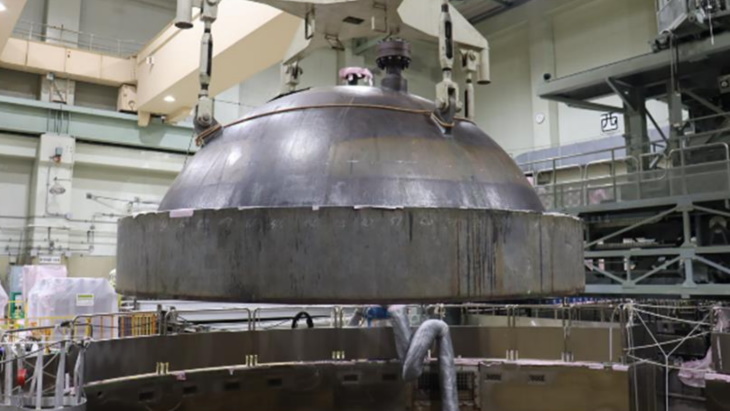
Chubu announced on 17 March that it had removed the upper lid of the pressure vessel of unit 2, marking the start of the dismantling of the reactor itself. As well as the reactor pressure vessel, the reactor internals and radiation shielding surrounding the vessel will be dismantled.

Hamaoka 1 and 2 are the first two commercial nuclear power reactors in Japan to enter the reactor dismantling phase.

Chubu plans to dismantle units 1 and 2 over a period of about 12 years, starting with the reactor of unit 2 first. The decommissioning of the two reactors is expected to be completed in fiscal 2042 after the reactor buildings are demolished.

   

  • Related Posts

    US uranium production up again

    US mines produced 1,388,000 pounds U3O8 (534 tU) in 2025, up from 677,000 pounds U3O8 in 2024. The 2025 figure was the highest since 2016’s production of 2,545,000 pounds, according…

    Sogin begins re-encapsulation of uranium-thorium fuel

    Between 1968 and 1970, 84 elements of irradiated fuel from the uranium-thorium cycle from the Elk River experimental reactor in Minnesota, USA, were shipped to the Rotondella plant for reprocessing…

    Have You Seen?

    US Energy Firms Add Most Rigs in a Week Since June 2022, Baker Hughes Says

    • June 26, 2026
    US Energy Firms Add Most Rigs in a Week Since June 2022, Baker Hughes Says

    Chevron Eyes More Deals to Power US Data Centers

    • June 26, 2026
    Chevron Eyes More Deals to Power US Data Centers

    US Diesel Refining Economics Remain Firm Despite Iran War Truce

    • June 26, 2026
    US Diesel Refining Economics Remain Firm Despite Iran War Truce

    US Refining Capacity Fell by 263,000 Barrels Per Day in 2025, Says EIA

    • June 26, 2026
    US Refining Capacity Fell by 263,000 Barrels Per Day in 2025, Says EIA

    Qatar Offers First Crude Loadings to Buyers Since War Began

    • June 26, 2026
    Qatar Offers First Crude Loadings to Buyers Since War Began

    China’s Crude Imports Set to Hit Weakest Level Since 2016

    • June 26, 2026
    China’s Crude Imports Set to Hit Weakest Level Since 2016

    Kazakhstan Cuts Gas Output after Drone Strike on Russian Processing Plant

    • June 26, 2026
    Kazakhstan Cuts Gas Output after Drone Strike on Russian Processing Plant

    Hormuz Shipping Confidence Is Still Shaky

    • June 26, 2026
    Hormuz Shipping Confidence Is Still Shaky

    Saudi Arabia Set to Slash Oil Prices as Hormuz Reopens

    • June 26, 2026
    Saudi Arabia Set to Slash Oil Prices as Hormuz Reopens

    Baghdad Hosting EU Energy Talks After Iraq Floats OPEC Exit

    • June 26, 2026
    Baghdad Hosting EU Energy Talks After Iraq Floats OPEC Exit