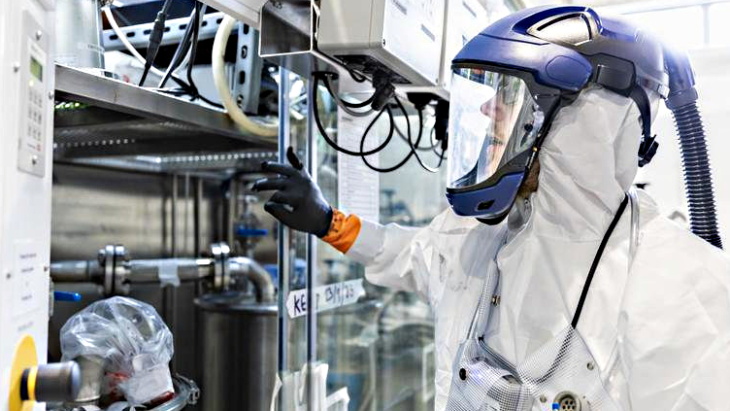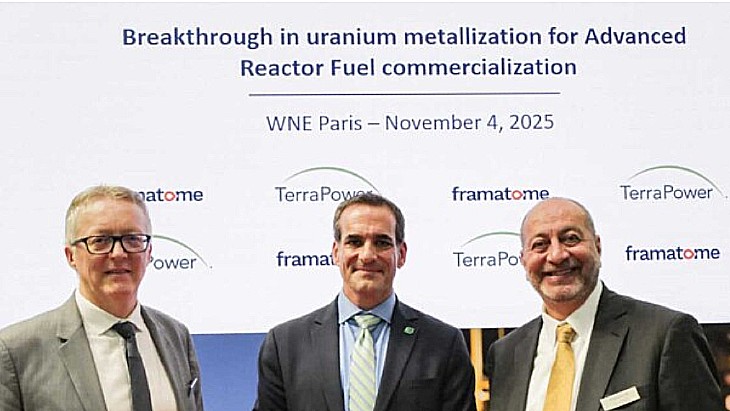
Production of HALEU (high-assay low-enriched uranium) metal is a crucial part of the fuel fabrication process to transform uranium into a metallic feedstock that is used to fabricate fuel for advanced reactors. A metallisation fabrication line has been completed at Framatome’s facility in Richland, Washington, and the companies said the process, technologies, and expertise used to produce metal from depleted uranium can be used with uranium at the higher enrichment levels required to power TerraPower’s advanced reactor design.
“This milestone underscores the critical progress being made in developing a reliable advanced reactor fuel supply chain and in propelling TerraPower’s Natrium technology,” Lionel Gaiffe, senior executive vice president of Framatome’s Fuel Business Unit, said. “Through this strategic collaboration, we are delivering the next generation of nuclear technology that will define the future of clean energy.”
TerraPower’s Natrium technology features a 345 MWe sodium-cooled fast reactor with a molten salt-based energy storage system. The company broke ground on the first Natrium project last year at a site in Kemmerer, Wyoming.
Natrium – like many advanced reactors currently under development – will use HALEU fuel, with uranium enriched to contain between 5% and 20% uranium-235. The US Department of Energy established its HALEU Availability Program in 2020 to secure a domestic supply of HALEU for civilian domestic research, development, demonstration, and commercial use, enabling nuclear developers to request HALEU material from DOE sources, including material from the National Nuclear Security Administration. Earlier this year – following Executive Orders to expedite the roll-out of new reactors – the DOE launched a new pilot programme to accelerate the development of advanced nuclear reactors and strengthen domestic supply chains for nuclear fuel.
Successful completion and operation of the metallisation fabrication line demonstrates Framatome’s readiness to accept DOE funding as part of the HALEU Availability Program Solicitation and deploy in a Category II facility. (Category II facilities are licensed by the US Nuclear Regulatory Commission to handle “special nuclear material of moderate strategic significance” such as HALEU: the low-enriched uranium used to fuel the USA’s current reactor fleet is classed as being of low strategic significance and can be handled in a Category III facility.)
“TerraPower has been committed to supporting the development of a robust, domestic HALEU fuel supply chain,” TerraPower President and CEO Chris Levesque said. “The successful production of these metallic uranium pucks proves that we can manufacture the metallisation component of HALEU fuel here in Washington and support our plans to rapidly deploy Natrium plants across the United States.”
The Natrium reactor is a TerraPower and GE Vernova Hitachi Nuclear Energy technology.