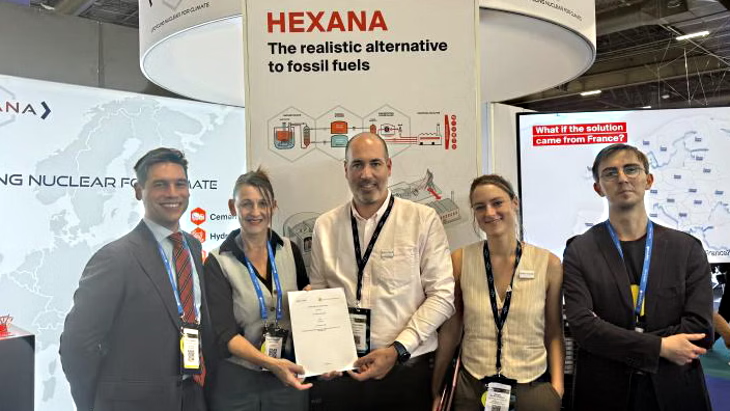
Through this partnership, Atoomcoöperatie – which describes itself as the world’s first citizen-driven energy cooperative for nuclear energy – will drive coordination and momentum for Hexana’s advanced modular reactor deployment in the Netherlands. The cooperative will facilitate stakeholder engagement, align regional and national interests, and cultivate a favourable environment for regulatory, industrial, and financial cooperation.
Hexana aims to develop a small modular reactor (SMR) featuring a sodium-cooled fast neutron reactor, integrated with a high temperature storage device. A plant would comprise two of these reactors (400 MWt each) supplying a heat storage device. An adjoining conversion system will allow it to produce electricity on demand and in a flexible manner to compete with gas-fired power plants, but also to supply heat directly to nearby energy-intensive industries.
Hexana says its solution is capable of simultaneously producing low-carbon high-temperature heat (up to 500°C) and electricity for energy-intensive industries such as chemicals, steel, hydrogen or e-fuels production, essential for their decarbonisation journey. Beyond industrial applications, the reactor’s thermal storage capability acts as a stabiliser for the power grid, compensating for the variability of renewable energy sources. The solution also provides reliable, stable and efficient electricity for data centres and high-demand digital infrastructure, supporting the Netherlands’ ambitions in the sector.
“The Netherlands stands as a strategic hub for European industry, with historic clusters that anchor Europe’s economic strength,” said Hexana CEO Sylvain Nizou. “At Hexana, we aim to bring these industries a decarbonised and resilient energy solution that ensures predictability and energy security. We chose mature, proven sodium-cooled technology, with six reactors already successfully operated in Europe, because decarbonising industry is urgent and requires mature, reliable solutions that can also enhance grid flexibility. Atoomcoöperatie’s expertise and deep understanding of the Dutch energy landscape will be instrumental in accelerating our deployment in the Netherlands.”
“This partnership reflects a shared belief that nuclear innovation must serve people, industry, and the planet,” said Olguita Oudendijk, Chair of Atoomcoöperatie. “By aligning communities, policymakers, and technology leaders, we can make advanced nuclear energy a cornerstone of a resilient, carbon-free Netherlands. Working with Hexana allows us to translate global reactor expertise into Dutch industrial strength and long-term energy security.”
Atoomcoöperatie says it wants to co-invest in a new nuclear power plant or SMR, “so we can acquire a share of the ownership and have a voice in the process. We want to enable our members to supply nuclear power at cost. We want to stimulate the nuclear industry in the Netherlands. By collaborating with citizens, businesses, and government agencies, we’re joining forces. This way, we’re building a diverse, engaged energy community of members who contribute expertise, have a voice, and share in the benefits.”
In December 2021, the Netherlands’ new coalition government placed nuclear power at the heart of its climate and energy policy. In addition to keeping the Borssele plant in operation for longer, the government also called for the construction of new reactors. Based on preliminary plans, two new reactors will be completed around 2035 and each will have a capacity of 1000-1650 MWe. The government is also taking steps to prepare the Netherlands for the possible deployment of SMRs.