There are about 440 nuclear power reactors with a combined capacity of almost 397 GWe operating in 31 countries with at least 70 power reactors under construction, which will add another 77 GWe. Nuclear generation reached an all-time high of 2,667 TWh in 2024.
During COP28 – held in Dubai, UAE, in December 2023 – 25 countries backed a Ministerial Declaration calling for the tripling of global nuclear energy capacity by 2050. The heads of state, or senior officials, from Bulgaria, Canada, the Czech Republic, Finland, France, Ghana, Hungary, Jamaica, Japan, South Korea, Moldova, Mongolia, Morocco, the Netherlands, Poland, Romania, Slovakia, Slovenia, Sweden, Ukraine, the UAE, the UK and the USA signed the declaration on 2 December, with Armenia and Croatia also signing up during the summit.
The declaration says the countries recognise the need for a tripling of nuclear energy capacity to achieve “global net-zero greenhouse gas/carbon neutrality by or around mid-century and in keeping a 1.5°C limit on temperature rise within reach”. It also recognises that “new nuclear technologies could occupy a small land footprint and can be sited where needed, partner well with renewable energy sources and have additional flexibilities that support decarbonisation beyond the power sector, including hard-to-abate industrial sectors”.
At COP29, held in Baku, Azerbaijan, in November last year, six more countries – El Salvador, Kazakhstan, Kenya, Kosovo, Nigeria and Turkey – added their support for the tripling of global nuclear energy capacity by 2050, bringing the total number of countries endorsing the declaration to 31.
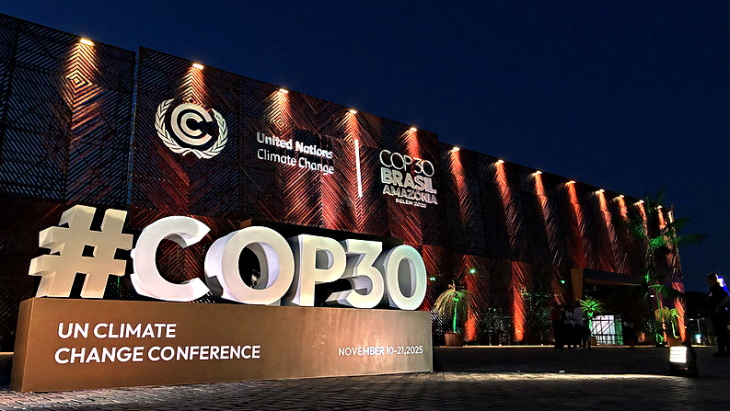
On the sidelines of COP30, Rwanda and Senegal have become the latest national signatories to the Declaration to Triple Nuclear Energy.
Rwanda has been looking towards nuclear energy for some time, signing an intergovernmental agreement with Russia on the use of nuclear energy in 2018, followed by two memorandums of cooperation on education and personnel training and on developing public acceptance of nuclear energy. The Rwanda Atomic Energy Board, which is intended to coordinate research and development of nuclear energy activities in the country, was established by the Rwandan government in 2020.
Almost all the electricity Senegal produces is from fossil fuels, but in early 2010 it announced that as part of its policy to replace oil for power generation, and to integrate with the West African Power Pool, it was considering a nuclear power plant. However in 2011 the president said that he had cancelled plans for nuclear power.
Speaking in a keynote address during Africa Energy Week in Cape Town last month, Cheikh Niana, Senegal’s Deputy Minister, Ministry of Energy, Petroleum and Mines, said the country had begun its nuclear journey. “We are establishing a nuclear research reactor first – a foundation for training our people, training our scientists and engineers in advanced nuclear medicines, agriculture and material research,” he said. “We are also preparing the ground for the future development for a small modular reactor as part of our long-term strategy vision Senegal 2050. This is not a dream – it is a strategic roadmap. We invite our African brothers and sisters to join us on this path so that Africa does not once again stand behind, but stand at the forefront for global progress.”
“Rwanda’s bold ambitions in nuclear energy strongly resonate with the global community’s efforts to accelerate clean, reliable, and accessible energy transition. So we are keen to have Rwanda joining this coalition of the ambitious,” World Nuclear Association Director General Sama Bilbao y León said during Friday’s announcement at COP30. “Senegal’s nuclear research reactor and all the preparations that are taking place right now for a small modular reactor’s deployment after the vision Senegal 2050 are a testament to the country’s commitment to innovation, progress, and leadership.”
She added: “The path to tripling nuclear capacity is open, but it demands bold, pragmatic, and visionary leadership. Governments must act now, but the industry needs to deliver and work together with civil society. A cleaner, more resilient future is within reach with nuclear energy. We need to move with purpose, investing in solutions that work to shape a tomorrow that is defined by reliability, innovation, and climate responsibility.”
Meanwhile, financial institutions Stifel and CIBC joined the Financial Institutions Statement of Support, reinforcing the investment community’s commitment to nuclear energy as a cornerstone of clean, resilient, and secure energy systems. They were joined by major energy users Equinix, Fermi America and Circulairity, as well as new industry members including Kazatomprom and Nuclearia Energy, all pledging support for the tripling goal.
More than 140 nuclear industry companies have now endorsed the accompanying industry pledge, while 16 major financial institutions have backed the goal since September 2024. A growing group of large energy users also support the initiative.
Last week, World Nuclear Association released a preview of the its forthcoming World Nuclear Outlook Report 2025. Due for publication later this year, the study compiles national government targets and goals for nuclear capacity for 2050 and assesses them alongside plans for continued and extended operation of existing reactors, completion of those under construction, and realisation of planned and proposed projects. The report concludes that the tripling of global nuclear capacity by 2050 can be achieved, provided governments take immediate and sustained action to deliver on their own national targets for nuclear capacity.