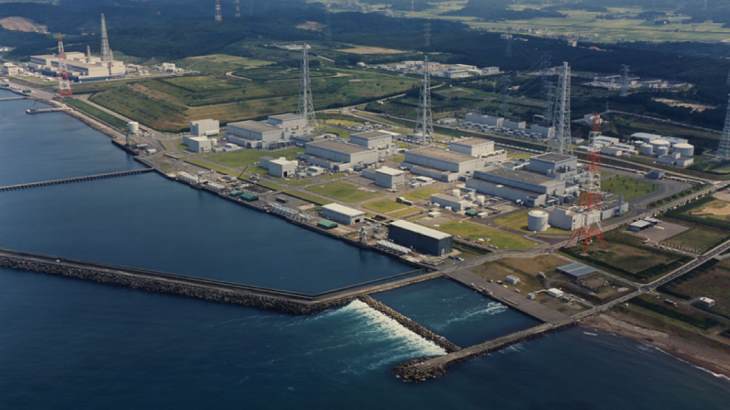
The seven-unit Kashiwazaki-Kariwa plant was unaffected by the March 2011 earthquake and tsunami which damaged Tokyo Electric Power Company’s (Tepco’s) Fukushima Daiichi plant, although the plant’s reactors were previously all offline for up to three years following the 2007 Niigata-Chuetsu earthquake, which caused damage to the site but did not damage the reactors themselves. While the units were offline, work was carried out to improve the plant’s earthquake resistance. All units have remained offline since the Fukushima Daiichi accident.
Although it has worked on the other units at the Kashiwazaki-Kariwa site, Tepco is concentrating its resources on units 6 and 7 while it deals with the clean-up at Fukushima Daiichi. These 1356 MWe Advanced Boiling Water Reactors began commercial operation in 1996 and 1997, respectively, and were the first Japanese boiling water reactors to be put forward for restart. Tepco received permission from the Nuclear Regulation Authority to restart units 6 and 7 in December 2017. Restarting those two Kashiwazaki-Kariwa units – which have been offline for periodic inspections since March 2012 and August 2011, respectively – would increase the company’s earnings by an estimated JPY100 billion (USD638 million) per year.
Tepco is prioritising restarting Kashiwazaki-Kariwa unit 6, where fuel loading was completed in June. The company has until September 2029 to implement anti-terrorism safety measures at unit 6, and it could operate until that time, pending local approval. Kashiwazaki-Kariwa 6 would become the first reactor owned by Tepco to restart following the Fukushima Daiichi accident. However, Tepco has yet to obtain the Niigata prefectural government’s consent.
Niigata Governor Hideyo Hanazumi has now given his consent to the restart of the unit.
“The government’s policy is to promote nuclear power generation, which boasts excellent supply stability and technological self-sufficiency,” he said in a statement. “Based on this policy, the restart of the Kashiwazaki-Kariwa Nuclear Power Plant is considered extremely important in light of the vulnerability of the power supply structure in eastern Japan, the disparity in electricity rates between east and west Japan, and the need to secure economic growth opportunities through decarbonised power sources.”
Hanazumi said that as part of his approval he will call on the government to take seven steps to ensure the safety of the plant and of nearby residents. These include continuing to provide “thorough, easy-to-understand explanations” abut the plant’s safety; continuing to improve the safety of the plant; promoting public awareness and understanding of evacuation procedures among residents; the construction of new roads to allow evacuation; the monitoring of Tepco’s performance; and reviewing the current allocation of subsidies for areas hosting nuclear power plants.
“We will strongly urge the national government and Tepco to demonstrate through their actions and results that they are prioritising safety in the operation of the Kashiwazaki-Kariwa Nuclear Power Plant, which will help restore the trust of the prefecture’s residents,” he said. Hanazumi added: “Tepco has announced that it will contribute approximately JPY100 billion over approximately 10 years from revenues from operations to the prefecture to contribute to improving safety and security in the prefecture and revitalising the local economy. Tepco will also make new business investments in the prefecture to promote local industry and create jobs. We view this as a sign of Tepco’s commitment to coexisting with the local community and working hand in hand with it.”
A survey of Niigata residents showed earlier this month that 50% are in support and 47% against restarting Kashiwazaki-Kariwa unit 6, while nearly 70% said they are concerned about Tepco being responsible for operating the reactor, the Kyodo news agency reported.
Last month, Tepco President Tomoaki Kobayakawa informed the Niigata Prefectural Assembly that the utility is considering decommissioning Kashiwazaki-Kariwa units 1 and 2, which are 1,067 MW boiling water reactors that began supplying power in February 1985 and February 1990, respectively.