Adopted in 1991 in the Finnish city of Espoo and entered into force on 10 September 1997, the Espoo Convention sets out the obligations of signatory parties to assess the environmental impact of certain activities and in doing so, notify and consult other parties on all major projects where the project under consideration is likely to have a significant adverse environmental impact in that state.
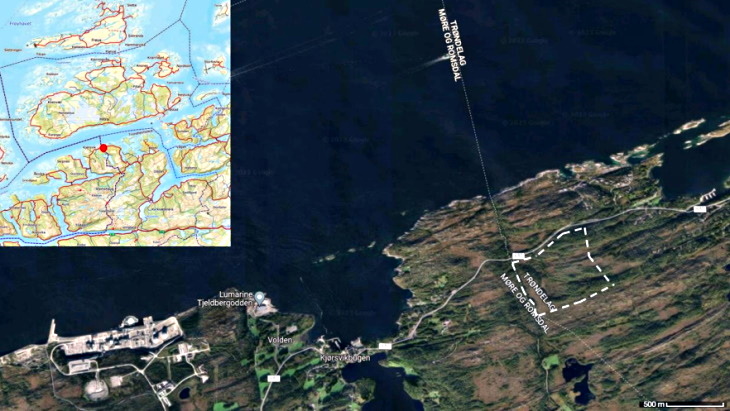
Nuclear project developer Norsk Kjernekraft submitted a proposal to Norway’s Ministry of Energy in November 2023 for an assessment of the construction of the small modular reactor (SMR) plant. According to the preliminary plan, the plant will be located in a common industrial area – the Taftøy industrial park – in the border area between Aure and Heim. The plant is planned to consist of several SMRs, which together will produce around 12.5 TWh of electricity annually, if the plant is realised in its entirety.
In April this year, the Ministry of Energy, the Ministry of Health and Care Services, the Ministry of Justice and Public Security, and the Ministry of Climate and Environment requested the Norwegian Water Resources and Energy Directorate, the Norwegian Radiation and Nuclear Safety Authority, and the Norwegian Directorate for Civil Protection prepare an Environmental Impact Assessment programme for the proposed plant. A notification with a proposal for an assessment programme for the establishment of a nuclear power plant in Aure and Heim municipalities was published for consultation in Norway by the Ministry of Energy in May 2024 with a deadline for submissions that same autumn.
At the request of the Ministry of Energy, the Norwegian Environment Agency has now submitted the proposed impact assessment programme for consultation by neighbouring countries, giving them the opportunity to assess the impacts this could have on them, so that this can be investigated further in a possible further process of planning the licence application and operation. The deadline for other countries to provide input to the assessment programme is 6 January 2026. After the consultation deadline, the Norwegian Environment Agency will forward any input to the Ministry of Energy as the responsible authority for further assessment.
Norsk Kjernekraft noted that this is the first of ten projects it is implementing in Norwegian municipalities has reached this stage. “Although the process concerns one location, its scope is national,” it said. “Once the neighbouring country notification is completed, the Ministry of Energy will be ready to determine the final assessment programme – the decision that formally opens the door to starting the actual impact assessment. It will also provide a clear methodological template that will allow the Ministry to more quickly process the remaining impact assessment notifications for our projects across the country.”
“The fact that the neighbouring country consultation has already been initiated is a powerful signal that the government now wants progress, not postponement. This is concrete action – and very gratifying,” said Norsk Kjernekraft CEO Jonny Hesthammer. “When the programme is determined, we can accelerate the entire application process. We save at least one year compared to if the matter had to go through full parliamentary processing before commencement. This is exactly the kind of pace Norway now needs.”
He added: “For the host municipalities, this means that the planning of a possible nuclear power investment takes a concrete and very important step forward. Norway is now building the necessary foundation to be able to realise nuclear power as part of the energy system of the future.”
Norsk Kjernekraft said that if all ten of its projects are realised, “Norway will be well on its way to doubling today’s power production by 2050 – with a minimal footprint and great importance for industrial development, technology investments and emission reductions throughout the country.”