Summary
• Gas appliances linked to health issues, climate change
• Republican states counter local gas restrictions with laws
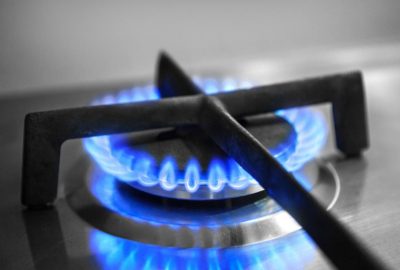
(Reuters) – President-Elect Donald Trump is weighing an executive order that seeks to protect gas-powered appliances including stoves and heaters from federal and local regulators who want to phase them out of homes and businesses, two sources familiar with the plans said.
Republicans, including Trump, have spent the last few years attacking local Democratic efforts to limit gas-powered appliances in new construction projects amid environmental and health concerns.
The U.S. consumer regulator said in 2023 it was reviewing gas appliances and links with respiratory conditions such as asthma, but noted that any regulation would be a lengthy process.
Details of the executive order are still under discussion but are likely to mirror Congressional efforts to limit federal dollars for state and local initiatives that restrict gas-powered appliances or impose regulations that would increase their cost, the sources said.
Trump’s transition team did not respond to requests for comment.
Gas-powered stoves, favored by cooks who like fast, high heat, have joined plastic straws in recent years as fodder in the U.S. culture wars between liberals trying to curb climate change by convincing Americans to rethink lifelong habits, and Republicans like Trump and business groups.
“It speaks volumes when an order from the White House is needed to stop our own government from banning natural gas furnaces and water heaters,” Karen Harbert, president of the American Gas Association, an industry trade group, said in a statement. “Despite the illegal efforts to ban access and use of natural gas, our industry is hard at work to keep life essential energy affordable and reliable especially during the extreme cold we are experiencing right now.”
The US Department of Defense has added gaming giant Tencent to a list of firms allegedly aiding China’s military.
Over 75 million U.S. households use natural gas for at least one appliance, mostly for home or water heat, according to the most recent residential energy consumption survey published by the U.S. Energy Information Administration in 2020.
The survey found that more Americans are also turning to natural gas to cook and dry clothes. Some 47 million households used natural gas for cooking in 2020, up from 39 million in 2015, the survey found.
Roughly two out of every five American homes have a gas stove, the survey found.
PREMATURE DEATHS
While gas appliances first came under fire for their impact on climate change, over the last few years several studies have shown that gas stoves emit nitrogen oxides that are harmful to human health along with other planet-warming gases.
A study last year by researchers at Jaume I University in Castelló de la Plana, Spain, found that exposure to gas stove pollutants was responsible for about 40,000 premature deaths annually in the European Union and Britain.
Dozens of Democratic-controlled cities, including San Francisco and Berkeley, California, have sought to restrict new buildings from using gas stoves as a way to reduce greenhouse gas emissions and improve indoor air quality. New York state approved a law last month banning natural gas stoves and furnaces in most new buildings.
Those policies have faced legal challenges. Berkeley, the first city to enact such a ban, was barred from enforcing its policy by a U.S. appeals court ruling in 2023. It repealed the rule last year.
In response to those policies, legislators in more than 20 Republican-led states have passed laws that prohibit local governments from restricting gas in buildings, according to S&P Global.
The Energy Department, under President Joe Biden, proposed a rule requiring both gas and electric stoves and cooktops to use more efficient designs and technologies, but they scaled back the plan amid Republican and industry criticism.
Share This:
More News Articles