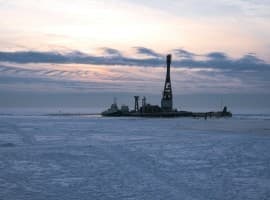
Equinor and its partners in the huge new Arctic oilfield Johan Castberg will invest $396 million (4 billion Norwegian crowns) to construct the first tie-back of another discovery to the Castberg hub that would boost oil production from the area.
The investment decision by Equinor, Vår Energi, and Petoro was made just eight months after Johan Castberg came on stream, the Norwegian energy major said on Thursday.
Equinor announced in the summer that Johan Castberg hit full capacity of 220,000 barrels per day (bpd) of crude oil production, noting that peak capacity has been reached just three months after the field in Norway’s Arctic waters in the Barents Sea came on stream.
As Norway’s newest oilfield, Johan Castberg will produce crude for 30 years, boost Norway’s oil exports, and bolster the role of Western Europe’s biggest oil and gas producer as a reliable and long-term supplier of energy, Equinor says.
Equinor and its minority partners in the Johan Castberg field will now begin work to develop the Isflak discovery from 2021, which will be the first one tied back to the Johan Castberg production platforms.
Recoverable oil in the new subsea development is estimated at 46 million barrels, and start-up is planned for the fourth quarter of 2028, Equinor said today.
“Johan Castberg has been developed as a future hub in the area. Isflak from 2021 is the first of several discoveries that are now being matured as additional volumes,” said Trond Bokn, Equinor’s senior vice president for project development.
Equinor sees opportunities to add 250-550 million new recoverable barrels that can be developed and produced over Johan Castberg, noted Grete Birgitte Haaland, senior vice president for Exploration & Production North.
“The partnership is already planning six new wells for improved oil recovery, and we will explore more in the area,” Haaland added.
Equinor and other operators on the Norwegian Continental Shelf are exploring prospects near operational fields to take advantage of the existing infrastructure to raise oil and gas production via tie-backs and tie-ins, which are cheaper than investing in standalone developments.
Earlier this month, Vår Energi confirmed an oil discovery very close to its Goliat field in the Barents Sea, the first operating Arctic oilfield offshore Norway.
By Tsvetana Paraskova for Oilprice.com
More Top Reads From Oilprice.com
- Oil Tanker Rates Skyrocket 467%
- China to Launch First Small Modular Reactor in 2026
-
Ukraine Strikes Key Russian Oil Platform in Caspian Sea