Wednesday, 8 January 2025
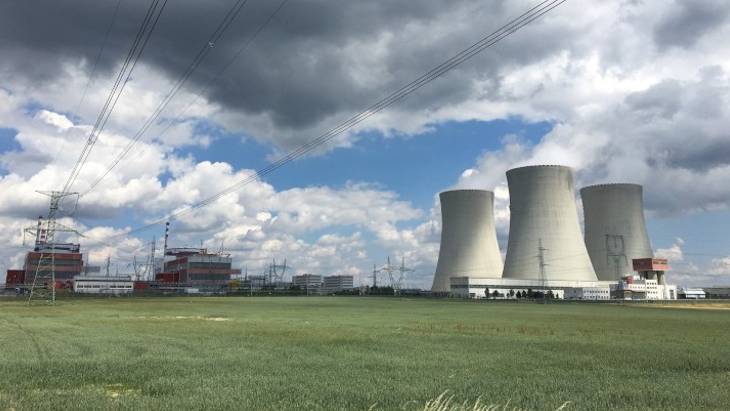
The Ministry of Industry and Trade and the Ministry of the Environment worked together on the update, which models the development of the country’s energy sector to fulfil European Union decarbonisation targets.
Minister of Industry and Trade Lukáš Vlček said: “We have been looking for solutions to ensure that these targets are met as cost-effectively as possible, taking into account our current conditions and the need to ensure a secure supply of affordable energy. Electricity generation will be based on renewables and nuclear, and the role of gas-fired sources can also be expected to increase.”
The plan says the share of renewable energy sources (RES) in electricity generation will rise from 16.5% in 2023 to 28% by 2030 and 46% by 2050. The ministries said: “The share of nuclear will be around 44% by 2030. Together with the completion of new reactors, an increase to 68% in 2040 can be expected.”
It says that 28% of heat in the Czech Republic comes from renewable sources, with the plan expecting that to rise to 40% in 2030 and 74% in 2050. The country also uses heat from nuclear power plants.
According to the ministries “the national plan does not contain any new obligations or prohibitions for private entities. Nor does it serve in any way as a central plan for the development of our energy sector, telling investors what they can and cannot do and giving them mandatory targets”.
It says natural gas will serve as an intermediate source alongside “less predictable renewable generation, but then it will gradually disappear almost completely from the energy mix to be replaced by renewable and low-emission gases, including hydrogen”.
Environment Minister Petr Hladik said the plan “represents a strategic vision of the future of the Czech energy sector until 2050. The plan is especially crucial for the private sector, which needs to know the long-term outlook for its planning and investments … the goal is to reduce greenhouse gas emissions by 55% by 2030 through the development of RES, storage and flexibility, energy savings and the phasing out of fossil energy, including the complete phase-out of coal mining and combustion by 2033. The scenario envisages a fivefold increase in energy from photovoltaics and wind, increasing building renovation rates, which we are now meeting mainly through our most successful New Green Savings Programme, and the development of nuclear … [the plan] … has the potential to increase GDP by two percentage points.”
The Czech Republic currently has six nuclear reactors generating about one third of its electricity. There are plans for a large expansion of capacity, with up to four new large power units, as well as a roll-out of as much as 3 GW of capacity from small modular reactors.