Turkey just took another very large, very deliberate step deeper into Russia’s energy orbit — and this time it comes with a $9 billion price tag.
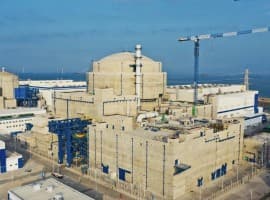
Ankara says that Russia has provided $9 billion in new financing for the Akkuyu nuclear power plant, Turkey’s first-ever nuclear facility, which is being built by Russia’s state-owned Rosatom on the Mediterranean coast. According to Energy Minister Alparslan Bayraktar, the bulk of that money will be deployed in 2026 and 2027, with as much as $4–5 billion flowing next year alone. The plant is now expected to come online in 2026, after multiple delays.
While this may look like a straightforward infrastructure update, it’s more about how deeply intertwined Turkish and Russian energy interests remain, despite years of flowery talk about diversification and reduced dependence on Moscow.
Akkuyu has always been different from Turkey’s other energy ambitions. It is a build-own-operate project. This means that Rosatom shoulders the financial risk, owns the plant, and will operate it for decades. That structure is precisely why Akkuyu survived when Turkey’s second nuclear project at Sinop collapsed under runaway costs and political complexity. Only Russia stayed.
What makes the timing interesting is that this financing lands just as Turkey is loudly advertising its renewable credentials. The country’s installed renewable capacity has surged to roughly 74 gigawatts, solar capacity has doubled in under three years, and Ankara says wind and solar have helped avoid $15 billion in natural gas imports since 2022. Turkey has also set a 2053 net-zero target and is negotiating massive new solar projects, including a 5-gigawatt package with Saudi Arabia’s ACWA Power.
Yet nuclear sits outside that clean-energy narrative. Akkuyu alone is expected to supply roughly 10 percent of Turkey’s electricity demand once fully operational. It reduces gas imports, stabilizes baseload power, and quietly locks in a long-term strategic partnership with Russia that renewables simply do not replace.
Turkey is also talking to South Korea, China, and the United States about future nuclear projects in Sinop and Thrace. But talk is cheap. Russia already has steel in the ground, reactors rising, and now another $9 billion on the table.
For Ankara, this is more than simply choosing Moscow over Brussels or Washington. It is about leverage. Turkey is building an energy system that is diversified on paper, but ruthlessly pragmatic underneath. Russian gas, Russian nuclear financing, Middle Eastern solar capital, European grids, and domestic renewables all coexist because Turkey wants options and bargaining power.
So regardless of what Turkey says publicly about diversification, it is not finished doing business with Russia.
By Julianne Geiger for Oilprice.com
More Top Reads From Oilprice.com
- Sweden’s Vattenfall Seeks State Funding for New Nuclear Reactors
- Why Christmas Is Still a Diesel Stress Test for Energy Markets
- Oil Prices Set for Largest Weekly Gain in Three Months