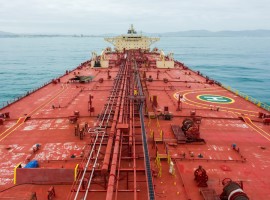
Petrobras has brought the P-78 FPSO online at its Búzios 6 development, adding up to 180,000 barrels per day of oil capacity and reinforcing just how central the pre-salt has become to Brazil’s production story.
The new unit is the seventh FPSO now operating at the Búzios field in the Santos Basin, lifting installed capacity at the field to roughly 1.15 million bpd. That matters because Búzios is no longer just a growth project. It is already one of the world’s largest producing oilfields, and it is still climbing.
P-78’s startup caps a year in which Petrobras leaned heavily into execution rather than expansion for expansion’s sake. The company has kept its pre-salt program on schedule, even as global offshore projects continue to struggle with cost inflation, yard delays, and tighter financing. P-78 arrived from Singapore with commissioning already advanced, trimming risk and avoiding a costly idle period offshore Brazil.
The gas aspect of this hasn’t been as widely discussed, but it is as equally as important. Output from P-78 will be tied into the Rota 3 pipeline, and it will boost gas flows to shore by up to 3 million cubic meters per day. For Brazil, that supports a longer-term goal of reducing dependence on LNG imports and stabilizing domestic gas supply, even as power demand continues to fluctuate.
Technically, the unit reflects a shift toward standardization after years of bespoke FPSO designs in an effort to apply lessons learned across earlier pre-salt platforms, from emissions control to energy efficiency, while still pushing high well productivity through intelligent completions and dense subsea layouts.
The challenge with Buzios isn’t geology, it’s scale. Búzios continues to deliver barrels faster than expected, but continuing growth will require disciplined capex, reliable subsea infrastructure, and stable regulatory conditions.
By Julianne Geiger for Oilprice.com
More Top Reads From Oilprice.com
- Top Chinese Offshore Gas Field Ships 100th Oil Cargo
- Coal Remains King in India While Exports Optimize Domestic Stock
- India to Leverage Russian Oil Import Data in Trade Deal Negotiations