A week after President Donald Trump’s bold talk about U.S. oil majors “going in and spending billions” to revive Venezuela’s wrecked crude industry, the administration is now walking back the idea of direct U.S. cash backing for that effort, even as it convenes a who’s-who of energy executives at the White House.
Earlier in the week, Trump publicly portrayed Venezuela’s reopening to Western oil investment as a near-done deal, framing multi-billion-dollar capital commitments by firms like Chevron, ExxonMobil and ConocoPhillips as imminent and implicitly supported by Washington. That messaging fed speculation that the U.S. might underwrite some of the cost or provide hefty financial guarantees to blunt the risk of investing in a politically volatile Caracas.
But on Friday, Interior Secretary Doug Burgum, who also leads the White House’s National Energy Dominance Council, put a pin in the subsidy angle: the administration doesn’t plan to hand out taxpayer funds to underwrite oil sector rebuilding in Venezuela. Burgum said the cash needs, which are widely estimated in the tens of billions over the coming decade, will have to come from the companies themselves and the capital markets, with the U.S. offering security and a stable operating environment rather than checks.
Energy Secretary Chris Wright echoed that sentiment on television, noting that institutions like the U.S. Export-Import Bank could offer credit support, but so far companies haven’t asked for direct money.
This isn’t a smoking gun reversal. It’s more of a shift in emphasis. Earlier in the week, President Trump implied that the government might backstop investment or reimburse majors as they rebuild Venezuelan output, adding that they may also recoup through their own revenue streams instead. But by today, senior officials were explicitly dampening expectations of that sort of fiscal risk-sharing In other words, private capital must carry the load.
This afternoon, the White House is hosting a high-level meeting with a broad swath of the global oil industry to talk about all this in real time. Expected attendees include U.S. and international players such as Chevron, ExxonMobil, ConocoPhillips, Continental Resources, Halliburton, HKN Energy, Valero, Marathon, Shell, Trafigura, Vitol, Repsol, Eni, Aspect Holdings, Tallgrass, Raisa Energy, and Hilcorp. Administration officials slated to participate include Burgum, Wright and Secretary of State Marco Rubio.
Chevron is the only major U.S. producer still operating in Venezuela under a special license; ExxonMobil and ConocoPhillips walked away in the 2000s after nationalization of foreign assets. Their willingness to commit capital now hinges on strong legal, political, and financial guarantees from Washington—something industry leaders have publicly said they need before plowing money into a country with decades of instability and expropriation risk.
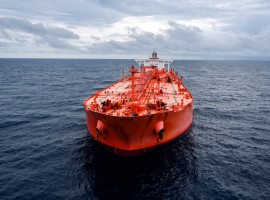
Venezuela still sits on some of the largest proven oil reserves in the world. If output could return to its former levels, it would reshape global crude markets and bring down already low prices. Unfortunately, it is a tough road ahead as decades of neglect and dilapidated infrastructure add to the significant political risk. This means it certainly won’t be a quick fix. And with the U.S. simultaneously seizing sanctioned tankers and asserting control over Venezuelan crude sales, the geopolitical stakes are high. Current oil prices are also not in any position to entice Western majors to invest in more.
A real revival would have to be financed by private capital under whatever guarantees Washington can muster. Today’s White House powwow is where that message gets tested face-to-face with the industry players who’d have to write the checks.
By Julianne Geiger for Oilprice.com
More Top Reads From Oilprice.com
- India’s Power Grid Faces Unprecedented Winter Surge
- Venezuela Fuel Oil Flows to U.S. Pushes Asian Premium to 8-Month High
- Venezuela’s Oil in Floating Storage Soars to 29 Million Barrels