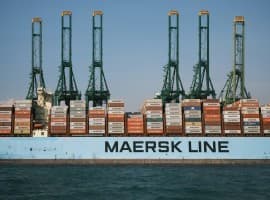
Following improved stability in the Red Sea, shipping giant Maersk is returning to the trans-Suez route connecting the Middle East and India with the U.S. East Coast, the Denmark-based company said on Thursday.
After the successful trans-Suez transits of two vessels in the past weeks, A.P. Moller – Maersk has decided to implement the first structural change of a service back to the trans-Suez route, the shipping giant said.
The return to the Red Sea and Suez Canal route applies to the MECL service, which is solely operated by Maersk and allows the company “to return to the service pattern originally designed and to provide customers with the most efficient transit times,” Maersk said.
The company will continue to monitor the security situation in the Middle East region very closely, and said that “any alteration to the MECL service will remain dependent on the ongoing stability in the Red Sea area and the absence of any escalation in conflicts in the region.”
The first sailing in the structural change of the MECL service will be the Cornelia Maersk on the westbound trans-Suez route voyage 603W, departing Jebel Ali on January 15, 2026. The Maersk Detroit voyage 602E, departing North Charleston on January 10, 2026, will be the first eastbound sailing to use the Trans-Suez route, with all subsequent sailings following this routing, Maersk said.
The return of such a giant shipper to the most efficient East-West route is a step toward normalization of global shipping routes and supply chains, following two years of uncertainties and vessel owners and charterers avoiding the Suez route and having to go around the Cape of Good Hope south of Africa.
In December 2023, global shipping traffic was upended by attacks from the Iran-aligned Houthis in Yemen on commercial vessels transiting the Red Sea before and after entering or exiting the Suez Canal.
The Houthi attacks have forced many tanker and container ship operators, including Maersk, to reroute voyages via Africa. The longer voyages have increased travel times, delayed goods delivery, disrupted supply chains, and raised shipping costs.
By Michael Kern for Oilprice.com
More Top Reads From Oilprice.com
- Oil Prices Sink 4% As Geopolitical Fears Fizzle
- China Leads Global Coal Power Additions Despite Renewables Push
- Bipartisan Bill Proposes $2.5 Billion U.S. Critical Minerals Reserve