Summary
- Lukoil agrees to sell global assets to Carlyle Group
- Foreign assets worth about $22 billion -analysts
- The value of the deal has not been disclosed
- Transaction with Carlyle dependent on U.S. approval
- Deal excludes Lukoil’s assets in Kazakhstan, CPC
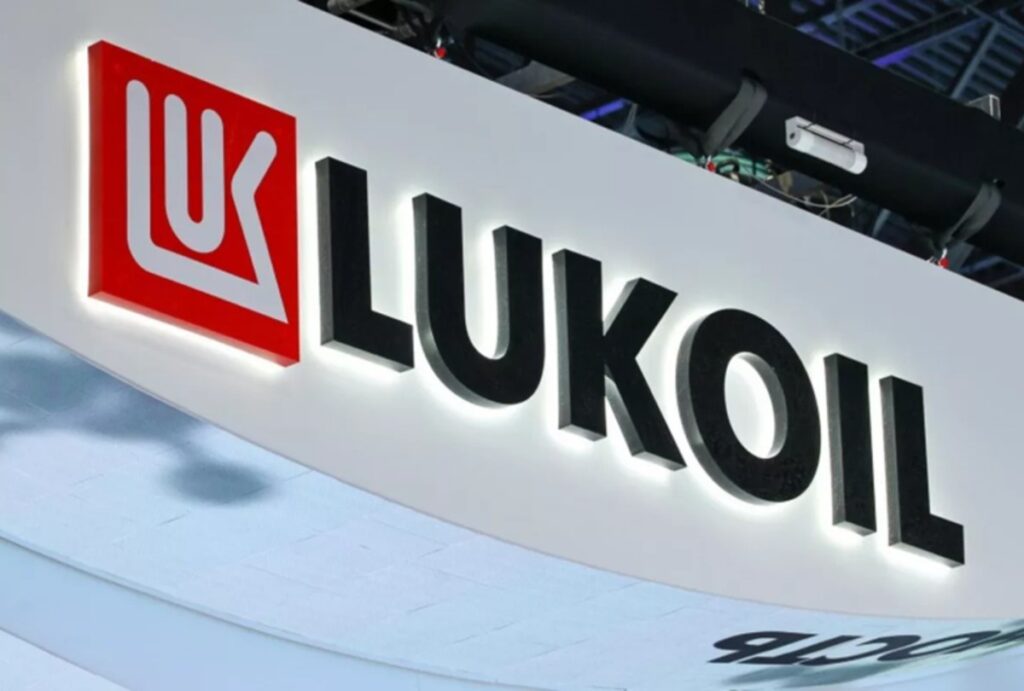
(Reuters) – U.S. private equity firm Carlyle Group has agreed to buy most of Lukoil’s foreign assets, initially valued at $22 billion by analysts, which Russia’s second-largest oil company is being forced to sell because of U.S. sanctions.
Get the Latest US Focused Energy News Delivered to You! It’s FREE:
The planned sale, announced by both companies on Thursday, comes just as Russian, Ukrainian and U.S. negotiators try to reach a deal to end the war in Ukraine, and would mark the end, for now, of Lukoil’s attempt to become a global player.
“Carlyle’s approach to LUKOIL International would be on ensuring operational continuity, preserving jobs, stabilizing the asset base and supporting safe, reliable performance across the portfolio by bringing to bear dedicated oversight and international operating capabilities,” Carlyle said in a statement.
Lukoil, which also announced the planned sale in a statement, said it was continuing negotiations with other potential buyers.
NO VALUATION YET
Neither Lukoil nor Carlyle gave a price for the sale, which still requires approval from the Office of Foreign Assets Control (OFAC), the U.S. agency which administers sanctions. The U.S. Treasury had given Lukoil until February 28 to sell its global portfolio.
A person familiar with the situation said the two groups had not yet agreed on a valuation, which could take some time.
Private equity firms in the energy sector typically hold assets for about five years before trying to sell them on at a profit.
Lukoil did not reply to a request for further comment on the possible transaction.
OFAC has said that any sale proceeds should be blocked and placed in an account subject to U.S. jurisdiction until sanctions on Lukoil are lifted. It has also said that it would want to review any future onward sale of Lukoil’s international assets.
Russia, which accounts for about 10% of global oil production, has faced a myriad of sanctions on its major companies since President Vladimir Putin sent troops into Ukraine in February 2022.
In October, those sanctions were extended to Lukoil and Russia’s largest oil producer Rosneft as part of U.S. President Donald Trump’s attempt to force Moscow towards negotiating an end to the war.
Negotiations have intensified in recent weeks and Trump envoys have repeatedly underscored that Washington could help remove Western sanctions and re-integrate Russia into the global economy, if a deal was reached.
The Kremlin declined direct comment on the deal, saying it was a corporate matter, and reiterated that it considers Western sanctions on Russia illegal.
“For us, the main priority is that the interests of the Russian company are ensured and upheld,” Kremlin spokesman Dmitry Peskov told reporters when asked about the possible sale.
LUKOIL SELLS OUT INTERNATIONALLY
Lukoil said in a statement it had agreed with Carlyle to sell its unit LUKOIL International GmbH, which oversees the company’s foreign assets.
These include operations in Europe, the Middle East, Africa, Central Asia, and Mexico, and range from a controlling stake in Iraq’s sprawling West Qurna 2 oilfield to refineries in Bulgaria and Romania.
“The agreement signed is not exclusive for the Company and is subject to some conditions,” Lukoil said, noting pending U.S. approvals.
Carlyle also said in a statement that the deal was conditional upon its due diligence and regulatory approvals.
Various sources have said that at least a dozen potential suitors had expressed interest in Lukoil assets, including Carlyle, U.S. oil majors Exxon Mobil and Chevron , Abu Dhabi conglomerate IHC, and Saudi Arabia’s Midad Energy.
Chevron has also been in talks with Iraq on the acquisition of the West Qurna 2 oilfield, in which Lukoil has a 75% stake.
Founded in Washington, D.C., Carlyle is a global investment firm with $474 billion in assets, including $20 billion in oil and gas, renewable energy and infrastructure, and decades of experience investing in and operating international energy assets.
LUKOIL WILL RETAIN KAZAKHSTAN’S ASSETS
Lukoil said the deal did not include its assets in Kazakhstan.
Kazakhstan said on Wednesday it had submitted a formal bid to the U.S. authorities for Lukoil’s stakes in the country’s energy projects, which include Caspian Pipeline Consortium, the main gateway for Kazakh oil exports, and the country’s largest oilfield, Tengiz.
The U.S. Treasury had already excluded the CPC, Tengiz and gas condensate field Karachaganak from the list of Lukoil’s assets subject to a mandatory sale.
Washington has so far blocked two proposed deals, the first between Lukoil and Swiss trading group Gunvor in October, and then a proposed share swap engineered by Xtellus Partners, the former U.S. arm of Russian bank VTB, in December.
Reporting by Vladimir Soldatkin, Olesya Astakhova and Dmitry Antonov in Moscow, Shadia Nasralla in London; Editing by Guy Faulconbridge, Andrew Osborn and Tomasz Janowski
Share This:
More News Articles