Summary
- Freeport LNG shutdown impacts global gas prices
- US gas futures rise, European prices fall on Freeport news
- Freeport’s Train 3 shut due to compressor issue
- No comment from Freeport LNG officials
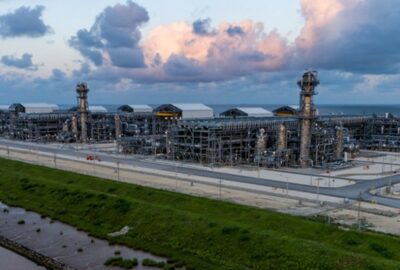
NEW YORK, Jan 30 (Reuters) – Freeport LNG’s export plant in Texas was on track to take in more natural gas on Friday in a sign that one of its three liquefaction trains was likely back in service after shutting down on Thursday, data from LSEG showed.
Freeport is one of the world’s most closely watched liquefied natural gas (LNG) export plants because the shutdown and startup of the facility have previously caused massive price swings in global gas markets.
Get the Latest US Focused Energy News Delivered to You! It’s FREE:
When Freeport shuts, gas prices in the U.S. usually drop in response to lower demand for the fuel from the plant, while prices in Europe increase because of the reduction in LNG supplies available to global markets.
Futures prices in the U.S. were up about 2% on Friday due in part to the expected increase in gas flows to Freeport.
Prices in Europe , meanwhile, were down about 1% due in part to the expected increase in LNG production from Freeport.
Officials at Freeport had no comment.
Freeport told Texas environmental regulators on Thursday that liquefaction Train 3 shut due to a compressor system issue.
LSEG data showed gas flows to Freeport were on track to rise to 1.8 billion cubic feet per day (bcfd) on Friday, up from 1.5 bcfd on Thursday.
The three liquefaction trains at Freeport are capable of turning about 2.4 bcfd of gas into LNG.
One billion cubic feet of gas is enough to supply about 5 million U.S. homes for a day.
The amount of gas flowing to the eight large U.S. LNG export plants, including Freeport, fell to a one-year low on Monday as an Arctic blast boosted U.S. gas demand to near record levels while spot gas and power prices this week hit all-time highs in many parts of the country.
Two LNG export plants – Cove Point in Maryland and Elba Island in Georgia – also took the unusual step of importing LNG.
Analysts said energy firms took these steps – reducing gas flows to the LNG export plants and even importing some cargoes – to sell gas into the high-priced U.S. market and to provide more fuel to the gas grid to help maintain system reliability during a period of extremely high demand.
Reporting by Scott DiSavino; Editing by Tomasz Janowski and Alexander Smith
Share This:
More News Articles