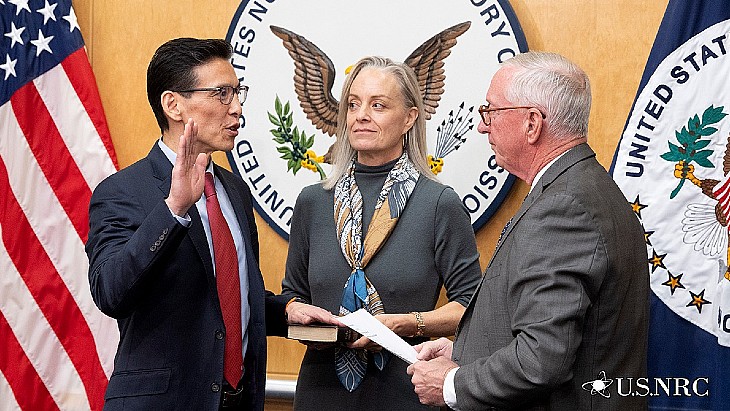
The US Nuclear Regulatory Commission (NRC) was created in 1974 to ensure the safe use of radioactive materials for beneficial civilian purposes while protecting people and the environment, and regulates commercial nuclear power plants and other uses of nuclear materials in the USA. It is headed by five Commissioners appointed by the President and confirmed by the Senate for five-year terms.
The agency said it will reorganise around the core business lines of new reactors, operating reactors, and nuclear materials and waste. Licensing and inspection functions will be integrated within each business line to create a single point of accountability and improve coordination between licensing and inspection teams from the onset of projects. Functions carried out under the corporate support business line will be consolidated to improve efficiency.
“We are in one of the most consequential periods in the NRC’s history, and this reorganisation enables us to meet the moment with more efficient and timely decision making,” NRC Chairman Ho Nieh said. The reorganisation focuses the regulator’s structure around national priorities aimed at accelerating the safe deployment of nuclear technologies, and also aims to achieve greater consistency in the implementation of agency safety programmes across the NRC’s regional offices, he added.
The NRC is to develop a new organisational chart and change management plan “within the next 60 days”. The appointment of key leaders for the reactor safety programme is also a near-term priority.
The changes will meet requirements under two executive orders signed by President Donald Trump last year: EO 14300, Ordering Reform of the Nuclear Regulatory Commission and EO 14210, Implementing the Department of Government Efficiency Workforce Optimization Initiative. Both these – and other orders signed by the president – have prompted actions by the US Department of Energy (DOE) and the NRC to streamline the route to deployment of advanced reactor technologies.
Since taking office in January 2025, President Trump has signed various Executive Orders aimed at increasing nuclear generating capacity and reinvigorating the USA’s nuclear industry. The NRC’s announcement of its reorganisation is the most recent in a number of efforts in line with these orders. Earlier this month, the DOE announced categorical exclusions for advanced nuclear reactors from various National Environmental Policy Act procedures. In January, the NRC issued internal guidance to its staff as it works towards setting up an expedited pathway for approval of reactor designs that have been tested under DOE or Department of War (formerly Department of Defense) programmes.
“Moving carefully but expeditiously to carry out this reorganisation is imperative to provide much-needed stability and certainty for our staff,” NRC Executive Director for Operations Mike King said. “We will maintain a continued focus on the safety and security of operating facilities while creating a structure and regulatory culture that ensures accountability and service for Americans.”