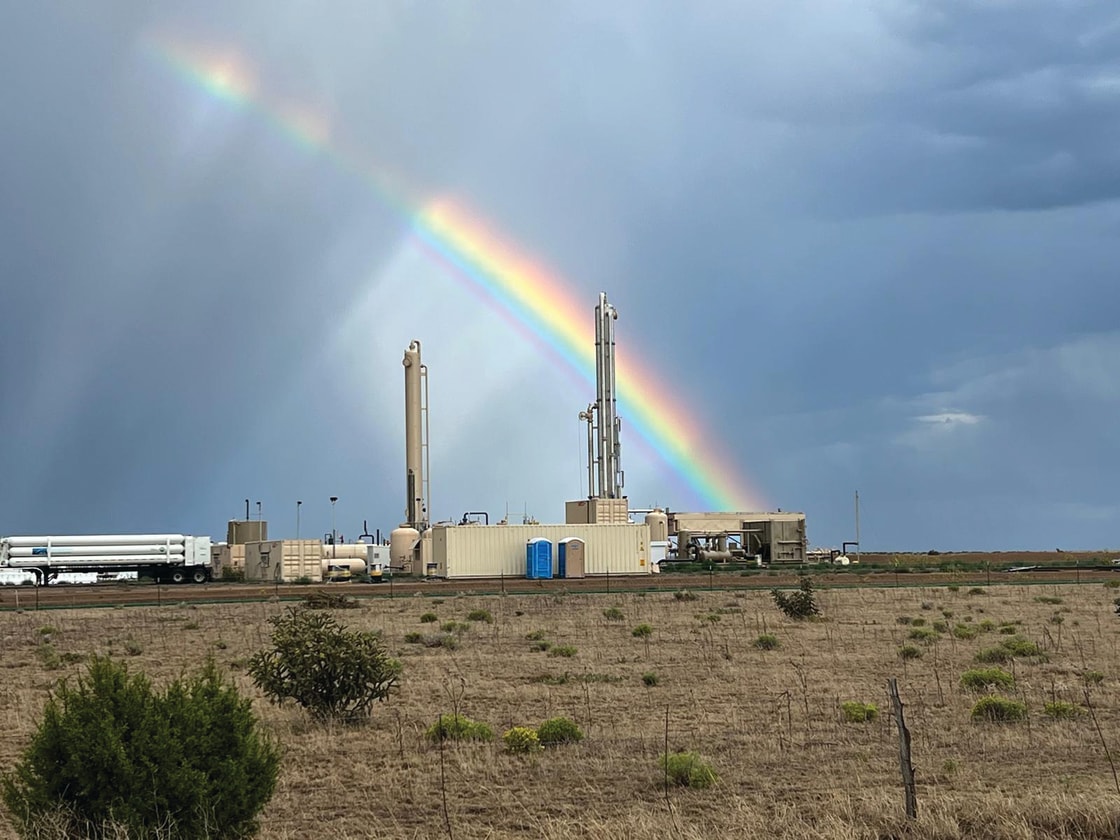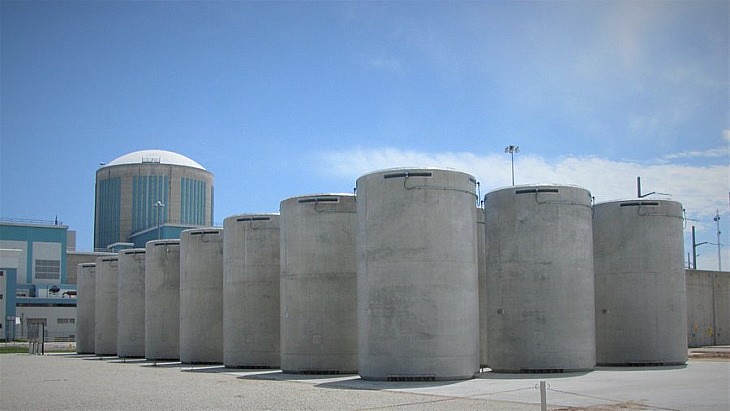
The Department of Energy (DOE) noted that less than 5% of the potential energy in the USA’s nuclear fuel is extracted after five years of operation in a commercial reactor. It says recycling used nuclear fuel could increase resource utilisation by 95%, reduce waste by 90%, and decrease the amount of uranium needed to operate nuclear reactors. Additional benefits to nuclear fuel recycling include the recovery and extraction of valuable radioisotopes for medical, industrial, and defence purposes.
The DOE has selected five companies to help solve the economic and technological challenges associated with nuclear fuel recycling technologies that also meet the USA’s strict non-proliferation standards and national security goals.
Alpha Nur Inc will research and validate a process that will recover highly enriched uranium (HEU) from used nuclear fuel produced by US-based research reactors and transform it to a usable high assay low-enriched uranium (HALEU) form for reuse in small modular reactor designs. “We’re especially grateful to Idaho National Laboratory (INL) for the opportunity to collaborate on this effort,” the company said. “Continuing our work alongside INL is deeply meaningful to our team, and we’re excited to build on that partnership.”
Curio Solutions will receive funding to support the development of its proprietary NuCycle technology for used nuclear fuel recycling. The funding will support a collaborative effort between Curio and key partners including INL, Pacific Northwest National Laboratory, and several other technical organisations to optimise for scale-up and commercialisation of NuCycle, which was designed to improve the economics of fuel recycling by increasing resource utilisation through uranium recovery as uranium hexafluoride (UF6), reducing high-level waste generation by completely recovering minor actinides and key isotopes, and enhancing security through co-extraction of transuranics. The primary objective of the collaboration is to develop detailed engineering designs and specifications for NuCycle’s core processes and prepare for a pilot-scale demonstration.
“This award is further validation of Curio’s game-changing advanced nuclear recycling technology and process for the future of nuclear energy in the United States,” said Ed McGinnis, CEO of Curio. “With the Department of Energy’s partnership, Curio’s NuCycle is now moving decisively towards scaling up for ultimate full commercialisation. NuCycle will fundamentally change how used nuclear fuel is processed and managed. By dramatically increasing resource recovery while minimising waste and embedding safeguards by design, NuCycle is poised to dramatically unlock this untapped national resource in a safe, secure and economically robust manner.”
Flibe Energy Inc will receive funding to study the use of electrochemical methods to process used nuclear fuel, while Oklo Inc will study heavy element deposition in molten salt to optimise a pyro-processing plant design. “This work will help validate recycling processes and generate performance data that support the licensing of Oklo’s commercial fuel recycling facility in Oak Ridge, Tennessee,” the company said. Shine Technologies will develop a process design that incorporates transport, storage, and disposal together with hydro-processing of used fuel.
The projects will last up to three years and require a minimum 20% cost share from each award recipient.
“Used nuclear fuel is an incredible untapped resource in the United States,” said Assistant Secretary for Nuclear Energy Ted Garrish. “The Trump Administration is taking a common-sense approach to making sure we’re using our resources in the most efficient ways possible to secure American energy independence and fuel our economic growth.”
In March 2022, the DOE launched the Converting UNF Radioisotopes Into Energy (CURIE) programme, which is under the auspices of the Advanced Research Projects Agency-Energy (ARPA-E), with the aim of enabling commercially viable reprocessing of used nuclear fuel from the current US light-water reactor fleet by resolving key gaps and barriers in reprocessing technologies, process monitoring, and facility design. Later that year, twelve projects were selected to receive USD38 million of funding.
Reprocessing of used fuel from commercial reactors has been prohibited in the USA since 1977, with all used fuel being treated as high-level waste. However, the nation has more than 250 plant-years of reprocessing operational experience, mostly from reprocessing oxide fuels at government-operated defence plants as part of its military programme. A civil reprocessing plant at West Valley, New York, operated successfully from 1966-1972: a second one at Morris, Illinois, failed to work successfully and was declared inoperable in 1974. A third civil reprocessing plant was built at Barnwell, South Carolina but was not commissioned due to the changed government policy.