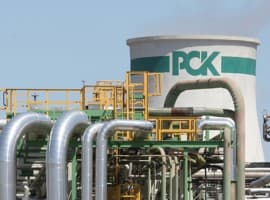
Germany’s uneasy energy truce with Washington is starting to fray, and the pressure point is a single refinery that keeps Berlin moving.
Managers at the PCK Schwedt refinery, majority-owned by Russia’s Rosneft (54.17%), have privately warned the German government that U.S. sanctions are already choking day-to-day operations and could threaten fuel supplies for Berlin and eastern Germany. In a January letter to economy and energy minister Katherina Reiche, refinery management made what they described as an urgent appeal to resolve the standoff before things get worse.
Schwedt is not some marginal asset. It supplies fuel to roughly nine out of ten cars in Berlin, serves the capital’s airport, feeds Brandenburg’s fuel network, and provides key inputs to Germany’s chemical industry. When something goes wrong there, it shows up quickly and loudly.
Berlin previously secured a temporary U.S. waiver allowing the refinery to keep operating despite sanctions on Rosneft, but that license expires on April 29. The problem, according to people familiar with the situation, is that a refinery cannot run on temporary permissions. Long-term crude supply contracts, banking services, and insurance coverage all depend on legal certainty. Right now, banks, insurers, and even oil suppliers are backing away, worried that a single shipment arriving after April 29 could trigger sanctions exposure.
That uncertainty is already pushing Schwedt—with a minority stake held by Shell—closer to a forced sale. Sources say oil companies and large energy investors have taken a look, while Berlin weighs whether it may have to step in itself. A sale to a U.S. buyer, or outright state ownership, are both being discussed behind closed doors.
Schwedt now relies on non-Russian crude, primarily from Kazakhstan, delivered via pipeline and Polish ports. Those flows are legal, but confidence has been shaken since Washington expanded sanctions on Rosneft and Lukoil last year. Even with operations technically permitted, fear alone can gum up the system.
Fuel buyers are already nervous. Polish importer Unimot warned that there is no easy replacement for Schwedt’s refining and logistics capacity, not just for Germany but for parts of Poland as well. With April supply contracts being signed now, hesitation today can translate into shortages tomorrow.
By Julianne Geiger for Oilprice.com
More Top Reads From Oilprice.com
- Fuel Crisis Forces Canadian Airlines to Halt All Flights to Cuba
- BASF Chief Issues Urgent Warning on EU Emissions Trading Scheme
- Trump EPA Set to Scrap Landmark Emissions Policy