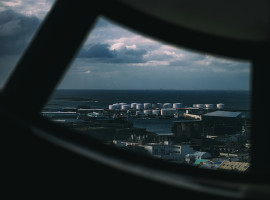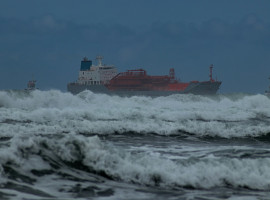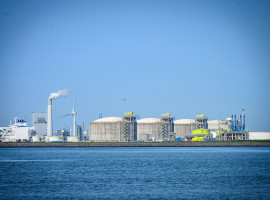
Operations at the Mukran LNG terminal in Germany’s Baltic Sea have resumed following successful icebreaking operations to clear a navigable channel. The facility had been temporarily disrupted by heavy sea ice, preventing cargo ships from departing.Situated on Ruegen island, the Mukran LNG terminal is operated by Deutsche ReGas, which has been utilizing floating storage and regasification units (FSRUs) such as the Energos Power and Neptune. After a slow start, the terminal achieved record-high gas deliveries by the second quarter of 2025, becoming a top-performing terminal before facing the 2026 winter ice restrictions.
The LNG terminal is a central part of Germany’s strategy to replace Russian pipeline gas with LNG, with plans to expand capacity to 13.5 bcm/y, serving both Germany and the Czech Republic. Germany has largely managed to completely cut off direct pipeline imports of Russian natural gas by successfully building new LNG infrastructure.
Europe’s largest economy now sources most of its natural gas from Norway, the Netherlands and Belgium, as well as small amounts of Russian gas through indirect, “hidden” routes. A 2024 study found that between 3% and 9% of Germany’s total gas imports still originated from Russia, arriving via pipelines from countries like Belgium.
Germany is also a major buyer of U.S. LNG, accounting for more than 90% of its total LNG imports. However, the country is hardly an outlier: the U.S. has solidified its position as the primary LNG supplier to the EU, managing to increase its share from 24% in 2021 to 60% in 2025. That share is likely to grow again this year, with the U.S. expected to supply up to 65% of Europe’s total LNG in 2026.
Indeed, energy experts are now warning that Europe now risks creating a new energy dependency on the United States, with the Institute for Energy Economics and Financial Analysis (IEEFA) projecting that the U.S. could account for up to 80% of the continent’s LNG supply by 2030.
By Alex Kimani for Oilprice.com
More Top Reads From Oilprice.com
- Eni Makes Major Gas Discovery Offshore Ivory Coast
- Dangote Drives Nigeria’s Domestic Fuel Supply Above 57% as Imports Retreat
- Hungary Seeks Croatian Help As Russian Oil Flows Via Ukraine Halted