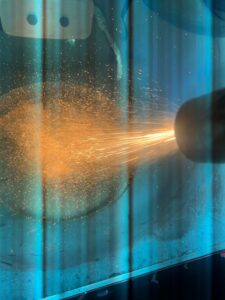
Artificial intelligence (AI) is rapidly becoming one of the most significant drivers of global electricity demand. By 2030, , from 415 TWh to 945 TWh, driven by AI-optimised servers that use up to 10 times the energy of traditional computing. In the U.S., data centres may account for nearly half of all demand growth, while in Europe they are projected to add 10% to 15% to national loads, with some countries already seeing . This surge has widened the “availability gap”—new generation and transmission capacity cannot be built fast enough, making grid stability increasingly dependent on the performance of assets already in service.
Despite large-scale investment in renewables and new-build projects, most grids continue to rely on ageing thermal generation (biomass, waste-to-energy, and gas-fired units) to provide the dispatchable power needed to balance intermittent supply. Many of these units are now operating well beyond their original design expectations, accelerating degradation mechanisms such as corrosion, erosion, and spallation. As a result, forced outages have become more consequential, affecting reserve margins, dispatchability, and market stability. Preserving the integrity of boilers, turbines, and other prime movers through targeted maintenance and protective technologies is therefore essential to sustaining dependable output from the existing fleet and maintaining continuity of supply as demand increases.
Global Outages and Economic Consequences
Across both emerging and developed economies, power outages are becoming more frequent and costly. Blackouts disrupt industry, healthcare, and essential services, and they highlight the vulnerability of grids heavily dependent on ageing thermal assets and insufficient reserve margins. In many regions, rising demand is outpacing operators’ ability to maintain stable, predictable generation.
South Africa: Load Shedding and the Limits of an Ageing Fleet
In South Africa, the return of underscored the fragility of the national grid. Eskom’s ageing units continued to experience repeated breakdowns, with unplanned outages often exceeding 14,000 MW, well . With reserve margins consistently strained, even minor equipment failures trigger load-shedding, highlighting how the combination of ageing infrastructure, maintenance backlogs, and rising demand leaves little room for recovery or operational flexibility.
However, by late 2025, Eskom had recorded more than 100 consecutive days without load-shedding and was projecting a stable, load-shedding-free summer. This improvement was driven by its Generation Recovery Plan, increased focus on plant reliability, and disciplined execution of maintenance priorities.
While risks remain during high-demand periods, the overall trend demonstrates that targeted reliability interventions on existing assets, such as metallurgical upgrades, can materially improve grid stability, even without new capacity coming online.
Caspian Region and Iran: Fuel Constraints and Structural Weakness
Energy shortages in Iran reflect a different but equally challenging dynamic. Scheduled rolling blackouts introduced in late 2024 were driven by a sharp decline in available fuel—natural gas supply to power plants had . With limited alternatives and many power stations operating with outdated equipment, utilities were forced to ration electricity across urban and industrial areas. These conditions (fuel bottlenecks, ageing generation assets, and deferred investment) demonstrate how grid weakness in the wider Caspian region is as much a structural issue as an operational one.
Across regions, the immediate causes of forced outages differ, but the underlying pattern is consistent. Grid instability is rarely driven by headline failures alone; it is more often triggered by degradation of critical components that reduces reliability until an outage becomes unavoidable. Among process equipment, two areas dominate forced-outage statistics—boiler pressure parts and gas turbine hot-gas-path components.
Boiler Tube Failures Causing Unplanned Power Plant Outages
Boiler tube failures remain one of the leading causes of forced outages in thermal power plants, . Even small leaks require an emergency outage, resulting in production losses and secondary damage that affects other equipment components.
Boiler tubes operate under extreme thermal and pressure conditions that accelerate several degradation pathways. These typically fall into three categories:
- Water/Steam-Side Mechanisms. Corrosion, scaling, and deposition that restrict heat transfer and create localised hotspots.
- Fireside Corrosion and Erosion. Accelerated metal loss from high-velocity flue gas, abrasive ash, or corrosive species, especially in thermal, biomass, and waste-to-energy units.
- Thermal and Mechanical Stresses. Creep, fatigue cracking, and weld deterioration driven by prolonged overheating, cycling, and vibration.
Because early signs of tube deterioration are often subtle, faults can progress unnoticed until a leak forms. Proactive inspection—ultrasonic testing, temperature monitoring, and condition-based assessment—is therefore essential to identifying at-risk sections before failure occurs. Advanced diagnostic approaches, such as principal component analysis (PCA)-based anomaly detection, have demonstrated that precursor signals can be detected hours before a trip, providing operators with a narrow but valuable window to intervene.
Why Minor Surface Damage in Gas Turbines Can Lead to Major Outages
In large-frame gas turbines, relatively minor surface damage can escalate into efficiency loss, hot-spot formation, and unplanned mid-cycle outages, often with limited early warning.
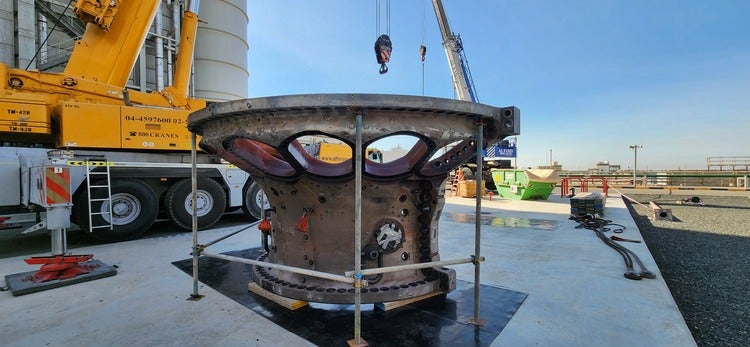
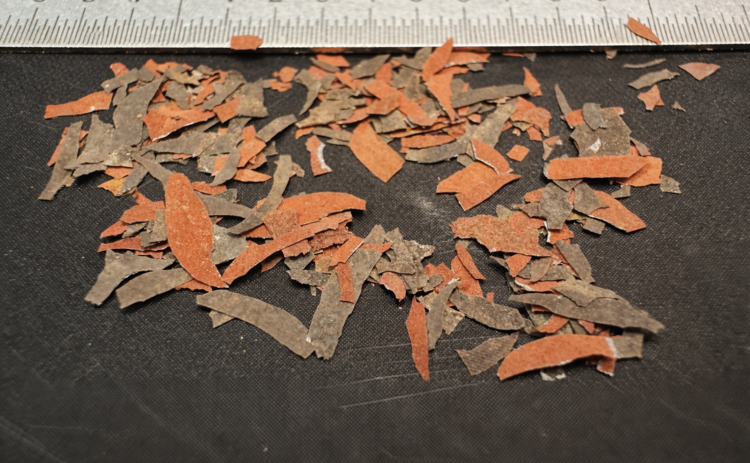
Surface damage in large-frame (LF) gas turbines, whether from spallation in the hot-gas path or oxide flaking in the compressor section, presents a significant yet sometimes under-recognised reliability risk. These issues typically develop in three ways:
- Loss of Protective Surfaces. Oxide layers detach under thermal and mechanical stress, exposing base metal and accelerating deterioration.
- Migration of Debris Downstream. Flakes can plug cooling passages, erode vane surfaces and thermal-barrier coatings, and contribute to hot-spot formation.
- Late Detection. Because early-stage damage is difficult to identify, operators often discover the problem only after efficiency drops or hardware distress becomes visible, leading to unplanned mid-cycle outages.

Strengthening Critical Components for Longer, More Reliable Operation
Addressing these degradation mechanisms requires solutions that can be applied within existing outage windows, withstand aggressive environments, and materially reduce failure risk, without introducing new operational complexity.
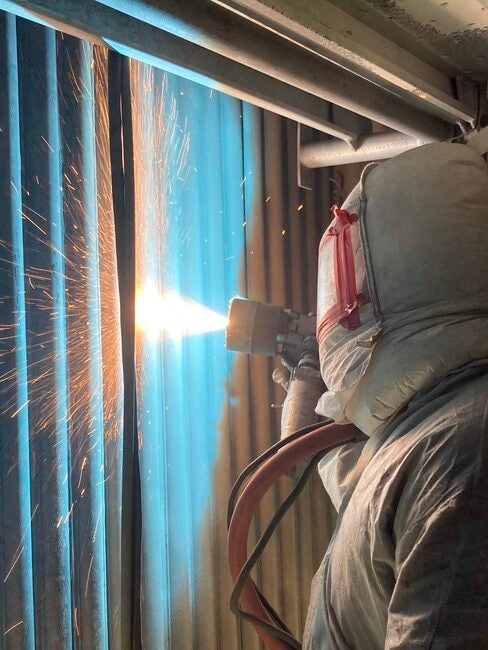
As such, field-installed and original equipment manufacturer (OEM)-validated protective claddings play an increasingly important role in maintaining the reliability of boilers, gas turbines, and other high-temperature components in thermal power generation. High-velocity thermal spray (HVTS) is one such approach, applying a dense, corrosion-resistant and erosion-mitigating alloy layer that shields base metal from aggressive operating environments.
In practice, the technology has been used to stabilise components experiencing accelerated wear, such as boiler tubes and turbine casings, by maintaining wall thickness and preventing localised thinning or pitting. The cladding’s durability supports longer run lengths and reduces reliance on reactive repairs, while its relatively short application time fits within planned outage windows without extending turnaround durations. These combined effects have allowed operators to reduce forced outages and manage lifecycle costs more effectively.
Case Study: Restoring Reliability at Scale in the Philippines
The Philippines has one of the world’s highest concentrations of circulating fluidized bed (CFB) boilers, many of which are ageing in parallel and exhibiting similar erosion and corrosion challenges. At one multi-unit site, boiler tube leaks were occurring once or twice per year despite previous mitigation efforts. These failures increasingly disrupted plant operations, undermined outage planning, and created avoidable instability for the regional grid.
From Reactive Repairs to a Predictable Reliability Strategy
As failures became more frequent and the financial impact of repairs and replacement power increased, the operator reassessed its protection strategy. The priority was no longer simply fixing leaks, but reducing the likelihood of leaks occurring at all, within the constraints of normal outage windows and with a method robust enough for aggressive CFB conditions.
As part of this review, the plant engaged Integrated Global Services (IGS) to evaluate HVTS for the most affected boiler areas. The focus was on selecting a protection approach that could be executed consistently and repeatedly, while improving visibility into boiler condition and enabling clearer maintenance prioritisation.
The operator began with a single boiler, applying HVTS to the highest-risk areas identified during the outage. This first deployment provided structured insight into degradation patterns and created a clearer basis for deciding what to address immediately versus what could be deferred to future cycles. Following the success of the initial outage, the operator expanded HVTS across the remaining boilers and later formalised a long-term service arrangement, shifting from reactive interventions to a repeatable, long-term reliability programme.
Results and Reliability Improvements
Over multiple maintenance cycles, the site has achieved:
- Zero tube leaks in cladded areas.
- No weld repairs and tube replacements in cladded areas.
- Outages that run to plan.
- A predictable generation profile for both grid and industrial customers.
Their maintenance representative summarised, “We used to plan for tube leaks, now we plan for uptime. Our outages run to schedule and we’re far more confident in the commitments we make to the grid and to our industrial customers.”
How Improved Asset Integrity Supports Grid Stability
Grid stability depends not only on available generation capacity but on how consistently that capacity can be delivered. For operators managing ageing thermal assets, strengthening the integrity of boilers and gas turbines directly stabilises system performance. Improved asset condition supports grid resilience in several ways:
- Fewer forced outages reduce reserve-margin shocks and make dispatch more predictable.
- Lower reliance on emergency shutdowns limits exposure to high-cost replacement power.
- Consistent performance reduces the likelihood of politically sensitive load-shedding events.
Together, these effects show how maintenance strategies that extend run lengths, slow degradation, and reduce unplanned downtime contribute not just to plant-level reliability, but to wider grid stability. As operators increasingly shift from reactive repairs to structured, long-term reliability programs, the cumulative benefit becomes measurable at the system level.
Strategic Recommendations for Plant Directors
Embed Boiler and Gas Turbine Integrity into Reliability Programs. Plant directors should integrate tube condition, hot-gas-path health, and degradation mechanisms such as oxidation, spallation, and erosion into core reliability and root-cause analysis frameworks. Embedding these factors early enables clearer identification of high-risk circuits and more targeted intervention planning.
Extend Run Lengths and Reduce Operations and Maintenance (O&M) Expenditure. Using protective technologies in suitable areas can slow corrosion and erosion, allowing longer intervals between major outages. Extending run lengths improves unit availability and helps moderate ongoing maintenance costs.
Optimise Capital Expenditure (CAPEX) Through Targeted Protective Measures. Directing protective cladding to areas with known wear risks can delay or avoid large-scale component replacements. This allows operators to shift part of their integrity strategy from capital expenditure to planned operational expenditure, reducing budget volatility.
Strengthen Grid Reliability and Commercial Performance. Lower forced-outage rates enhance dispatch compliance and improve key metrics such as availability factor (AF), net capacity factor (NCF), and forced-outage rate (FOR). More predictable generation also improves competitiveness in power-supply tenders and long-term service agreements.
Securing the Existing Fleet
As global electricity demand accelerates, driven by economic growth, expanding industry, and the rapid rise of AI, the resilience of power systems will increasingly depend on the dependable output of the assets already in service. For the many grids that continue to rely on ageing thermal generation, maintaining the integrity of boilers, turbines, and other prime movers has become a strategic necessity rather than an operational choice.
Investing in proactive maintenance, targeted protective technologies, and data-driven reliability programs is increasingly central to extending run lengths, reducing forced outages, and preserving stable generation profiles. As electricity demand outpaces the rate at which new capacity can be built, the ability to keep existing plants running safely and predictably will define energy stability in the decades ahead.
—Ed Griffith is managing director for Asia-Pacific (APAC) with Integrated Global Services (IGS).