Brent’s premium to the Middle East’s Dubai benchmark has blown out to its widest level since 2022, confirmation that the global oil market is squarely trading on disruption.
As of Tuesday morning, Brent was trading around $83–$84 per barrel, up more than 7% on the day, while Dubai crude sat near $68, barely moving. The spread between Brent futures and Dubai swaps — known as the Exchange of Futures for Swaps (EFS) — surged above $6 per barrel, compared to less than $2 just last week before the Iran conflict erupted. It is the widest gap in years, according to a Bloomberg analysis.
Brent is the global pricing reference used for much of the world’s seaborne oil trade, while Dubai serves as the key marker for Middle Eastern crude flowing into Asia. When Brent trades at a large premium to Dubai, it signals tightness and risk in Atlantic Basin barrels relative to Gulf-linked supply.
The futures market, where traders buy and sell contracts for oil delivered at a future date, is reacting to risk in real time, pricing in potential shortages, often before physical flows are visibly curtailed.
Related: How China’s Rare Earth Ban Backfired into a U.S. Tech Breakthrough
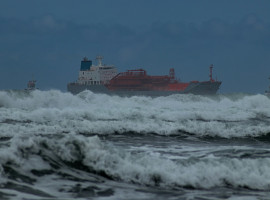
The catalyst is easily identifiable. Tanker traffic through the Strait of Hormuz has effectively frozen amid Iran’s threats and ongoing military action. Even if the Strait is not formally “closed,” no shipper wants to test how many teeth Iran has to make good on their threats. With crude from the Gulf stranded and freight rates spiking as available tankers thin out, trading in Middle East benchmarks has become patchy and uncertain.
Brent, meanwhile, is absorbing the geopolitical premium.
This widening gap matters. If the Strait remains inactive for weeks rather than days, upstream shut-ins in the region become increasingly likely. Analysts warn that beyond roughly three weeks of disruption, producers may have no choice but to curb output.
The market is debating how long the supply risk will last, and whether $100 oil is a floor rather than a ceiling if Hormuz does not normalize.
By Julianne Geiger for Oilprice.com
More Top Reads From Oilprice.com
- European Gas Prices Soar 30% as Qatar Halts LNG Output
- Oil Prices Surge to $84 as Supply Risk Becomes Real
- Inside North America’s First Fully Integrated Rare Earth Facility