In a statement sent to Rigzone on Tuesday, EY-Parthenon Chief Economist Gregory Daco outlined two potential scenarios for the ongoing Middle East conflict, with oil prices rising in both.
Daco’s first scenario sees a “moderate and short lived escalation”. In this scenario, Daco details that “tensions rise, Iranian oil production and exports are partially reduced, and traffic through the Strait of Hormuz is temporarily halted”.
“This produces a noticeable but contained price response: Brent crude temporarily rises by roughly $20 per barrel into the $80 range as markets reprice reduced Iranian supply and heightened geopolitical risk,” he noted in the statement.
“European natural gas prices surge 50 percent to around EUR 50 [$58.07]/MWh. As tensions ease, energy prices retrace and revert toward pre-conflict baselines by year-end,” he added.
In Daco’s second scenario, he sees a “severe and longer lasting escalation”. Daco projected a “more destabilizing path” in this scenario, where traffic through the Strait of Hormuz “faces sustained interruption”.
“Given that roughly one in every five barrels traded globally moves through this corridor, an extended stoppage would amount to a major supply shock,” he warned.
“Iranian production is significantly curtailed. Oil prices surge by more than $40 per barrel, climbing toward $110 and remaining above $100 through year-end,” he added.
“European natural gas prices rise by 150 percent and remain 100 percent above baseline levels through year-end,” he continued.
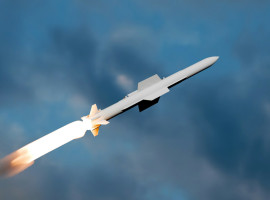
In the statement, Daco noted that a coordinated U.S.-Israeli military campaign struck Iran on February 28, “marking a dramatic escalation aimed at dismantling the country’s governing structure”.
“Washington framed the operation as an effort to neutralize Tehran’s strategic weapons capabilities, degrade its naval forces, and ultimately force a change in political direction,” Daco added.
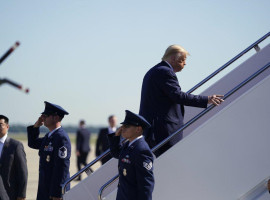
“In an address released as the operation began, President Donald Trump appealed directly to the Iranian population, suggesting that the moment represented a rare opportunity to reshape the nation’s future,” he continued.
Daco highlighted that the confrontation “is unfolding adjacent to the world’s most strategically important energy corridor: the Strait of Hormuz”.
“Close to one-third of global seaborne crude flows and roughly one-fifth of global liquefied natural gas (LNG) trade transit this narrow chokepoint,” he pointed out.
In a statement sent to Rigzone on Wednesday, Gagan Ranu, partner at law firm Spencer West LLP, noted that “the impact on the shipping industry and global oil and gas markets of the effective closure of the Strait of Hormuz cannot be understated”.
“The Strait is a critical artery for the flow of crude exports from the Gulf accounting for approximately 20 percent of global supplies, and therefore any disruption would have a significant impact on international markets and global trade,” Ranu highlighted.
“The impact has already been felt as oil and gas prices have surged in the past 48 hours causing global stock markets to tumble,” Ranu continued.
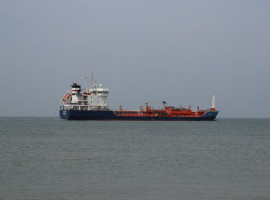
Ranu warned that the impact on the shipping insurance market “will be just as stark, not least in light of the express threats of attacks on vessels passing through the Strait”.
In another statement sent to Rigzone on Wednesday, Aaron Hill Chief Market Analyst at FP Markets, noted that “with retaliatory drone and missile strikes from Tehran hitting key infrastructure across the Gulf, markets are, it is fair to say, still catching their breath, with energy prices at the forefront”.
“Oil prices ended a third consecutive session in the green yesterday, with WTI Oil and Brent Crude clocking highs of $78.00 and $85.00, respectively. WTD, both markets are up by around 15 percent, with near-40 percent gains YTD,” he added.
“The real issue right now, of course, remains the Strait of Hormuz, which accounts for about 20 percent of global oil flows, and has seen most maritime traffic come to a halt,” he said.
“As far as I understand, the Strait is not ‘officially’ closed; it is more a case of shipping companies avoiding the waterway for obvious reasons, and insurance companies either pausing coverage in the region or, for those still offering insurance, raising premiums to unaffordable levels,” Hill went on to state.
“President Donald Trump has announced that the U.S. will provide coverage and insurance guarantees for tankers navigating the Strait, which offered some relief. But it is still early days, and until tankers are moving again, I expect oil prices to continue higher,” Hill warned.
Rigzone has contacted the White House, Israel’s Ministry of Foreign Affairs, and the Iranian Ministry of Foreign Affairs for comment on Daco, Ranu, and Hill’s statements. At the time of writing, none of the above have responded.
To contact the author, email