The war in Iran could result in production losses of over 3 million barrels daily by the end of the week, with those losses potentially topping 4 million barrels daily if the war continues for more than a couple of weeks.
This is according to JP Morgan commodity analysts who said Iraq is the most vulnerable, with three days of storage space, while Kuwait had two weeks’ worth of storage before it was forced to start cutting production.
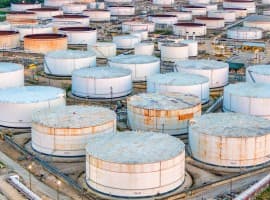
Iraq has already started shutting in oil production, due to storage capacity constraints. To date, the shut-ins have affected 1.5 million barrels daily in output but this could rise to 3 million barrels daily, which is almost all of Iraq’s exports.
According to JP Morgan, and in line with what common sense would suggest, the longer the war continues, the worse the oil supply situation will become. Per the bank’s analysts, by day 15 of the war, the volume of shut in production could reach 3.8 million barrels daily, and by day 18 this could rise to 4.7 million barrels daily.
Related: How China’s Rare Earth Ban Backfired into a U.S. Tech Breakthrough
Iran said on Monday that it would attack any tanker trying to enter the Strait of Hormuz. “The strait is closed. If anyone tries to pass, the heroes of the Revolutionary Guard and the regular navy will set those ships ablaze,” an adviser to the leadership of Iran’s Revolutionary Guards Corps said, as quoted by Al Jazeera.
“We will also attack oil pipelines and will not allow a single drop of oil to leave the region. Oil price will reach $200 in the coming days,” Ebrahim Jabari also said.
Indeed, there have been multiple reports of attacks on tankers in the Hormuz Strait and tanker traffic has been severely reduced, according to data from ship-tracking service providers such as Vortexa and Kpler.
In response to the traffic disruption, President Trump said earlier in the week that the United States is considering offering tanker insurance and a Navy escort for tankers in the Persian Gulf, “if necessary”.
By Irina Slav for Oilprice.com
More Top Reads From Oilprice.com
- Inside North America’s First Fully Integrated Rare Earth Facility
- European Gas Prices Soar 30% as Qatar Halts LNG Output
- US Crude Oil Inventories Continue to Build While Gasoline Draws Down