The Canadian Nuclear Safety Commission (CNSC) decision to issue the Licence to Prepare Site and Construct the proposed uranium mine and mill came 14 business days after the conclusion of the last part of the regulator’s two-part hearing process. The licence – which is valid until 31 March 2036 – covers site preparation and construction activities under Canada’s Nuclear Safety and Control Act: operation of the facility would need NexGen to submit another licence application which would be subject to a future licensing hearing and decision.
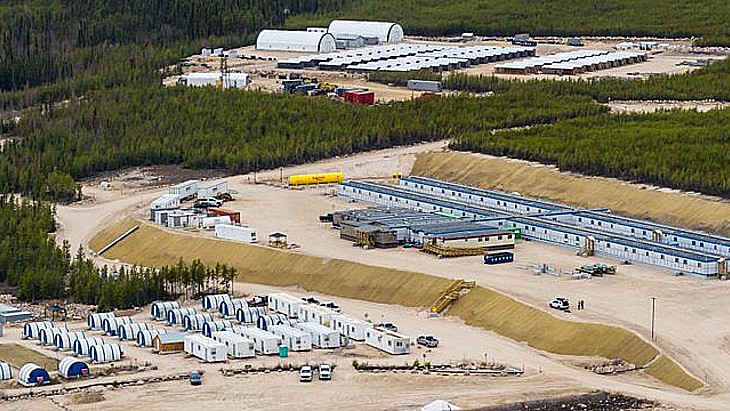
Rook I is described by NexGen as the largest development-stage uranium project in Canada. Centred on the Arrow deposit, a high-grade uranium deposit discovered by the company in 2014, the project is in the southern Athabasca Basin, about 155 km north of the town of La Loche. The project is situated on Treaty 8 territory, the Homeland of the Métis, and is within territories of the Denesųłiné, Cree, and Métis.
The Arrow deposit has a resource estimate of 357 million pounds U3O8 (137,319 tU) in the measured and indicated mineral resources category, grading 3.10% U3O8. Probable mineral reserves have been estimated at 240 million pounds U3O8, grading 2.37% U3O8. A 2021 NI 43-101 feasibility study for the project envisages production of up to 14 million kilograms of U3O8 annually for 24 years.
The project received environmental approval from the Province of Saskatchewan in November 2023, and, with all approvals now secured, NexGen said it is set to begin construction. A final investment decision has already been made, and the team, procurement, engineering, vendors, contractors and capital are in place to commence construction activities with advanced site and shaft sinking preparation. Construction will officially begin in this summer, the company said, and construction is expected to take four years to complete.
NexGen founder and CEO Leigh Curyer said the CNSC’s approval “represents one of the most rigorous and comprehensive regulatory processes undertaken for a resource project globally” and, as well as acknowledging NexGen’s team, expressed the company’s “sincere gratitude” to its Indigenous Nation partners, local communities, Premier Scott Moe and the Government of Saskatchewan, Government partners, regulatory bodies, and stakeholders who have contributed to the advancement of the project over the past decade.
“The world is changing fast, and NexGen’s Rook I is now ready to be a significant contributor to global requirements for nuclear energy and Canada’s role as an energy superpower. As global demand for reliable, clean, baseload nuclear energy continues to accelerate at an unprecedented pace, uranium is the critical fuel for powering industrial electrification and the digital infrastructure of tomorrow. Simply put, energy is the key to our global growth,” Curyer said.
In February, Reuters reported that NexGen had held preliminary talks with data centre providers about securing finance for a new mine. Speaking to investors in NexGen’s fourth quarter conference call on 4 March – one day before the CNSC announcement – Curyer said the first 12 months of construction is expected to cost around CAD300 million (USD219 million). NexGen is well funded to begin construction thanks to already completed equity raises and offtake agreements. Further offtake agreements are already in advanced negotiation, with contracts expected to be announced this year, he said, but the start of construction or production will not be dependent on those new contracts being in place.
“We know exactly what we’re doing every day of that 48-month process, who’s doing it, who’s responsible for it within NextGen,” Curyer said. “And as I said, once we’re in that basement rock, the highest risk around cost and schedule has been mitigated.”
Curyer told investors the company would issue a detailed construction timeline once the licensing process had concluded.