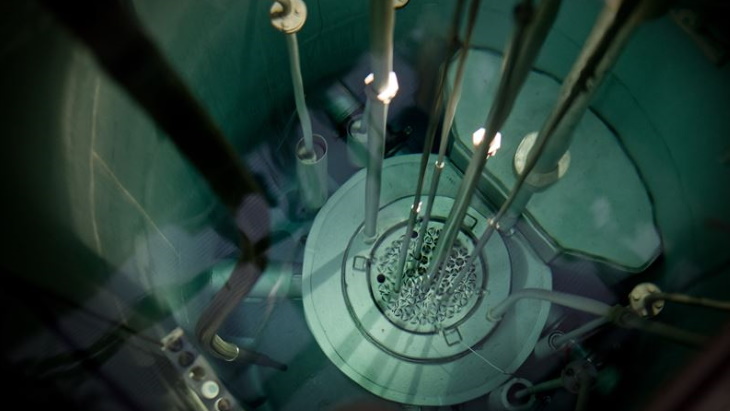
The Finnish Reactor 1 (FiR1) water-cooled, pool-type TRIGA Mark II research reactor was commissioned by the Helsinki University of Technology in 1962. The reactor was originally built for research and education and was later also used for isotope production and radiotherapy. Operational responsibility for the reactor was transferred to the VTT Technical Research Centre in 1971. Although licensed to operate until 2023, VTT decided in 2012 to stop the use of FiR1 for financial reasons. The reactor – with a thermal capacity of 250 kW – ran for the last time on 30 June 2015. In 2017, VTT submitted an application for permission from the Council of State to decommission the reactor, which was granted in June 2021.
In February 2021, partially used irradiated fuel from the reactor was transported to the USA for use in a TRIGA Mark I research reactor operated by the US Geological Survey in Denver, Colorado. The USGS required additional fuel to continue operating its reactor, but the production of suitable fuel had been suspended for several years.
The dismantling of the FiR1 reactor and the management of nuclear waste were carried out by VTT in cooperation with Fortum between 2023 and 2025.
The Radiation and Nuclear Safety Authority (STUK) supervised the planning and execution of the decommissioning from the beginning. The supervision ended last December when STUK decided to release the research reactor from regulatory control. After the decision, the research reactor is no longer considered a nuclear facility. The dismantled reactor area and premises in Otaniemi, Espoo, do not differ in any way from the surrounding area in terms of radiation safety, it said. The building can now be repurposed.
At the same time as FiR1 was released from regulatory control, STUK also released VTT’s materials research laboratory, located in the same building, from oversight. The research laboratory had conducted studies on radioactive materials since the 1970s. The operation and decommissioning of the FiR1 research reactor were regulated by nuclear energy legislation, whereas the laboratory’s activities were governed by the radiation act. The decommissioning of the laboratory was also subject to the radiation act and was carried out by VTT alongside the decommissioning of FiR1.
VTT delivered the radioactive waste generated from the dismantling and decontamination of the laboratory to Fortum for disposal at the repository located at the Loviisa nuclear power plant, just as with the reactor’s waste. Before releasing the laboratory from oversight, STUK confirmed that the premises were free of radioactive contamination.
FiR1 is the first nuclear reactor to be decommissioned in Finland. The decommissioning of the country’s nuclear power plants is not expected in the immediate future, but Finland is currently reforming its nuclear energy legislation and the complementary STUK regulations.
Kai Hämäläinen, a principal advisor at STUK, said the lessons learned from dismantling the FiR1 research reactor and supervising the process have been valuable in this work. “Until now, the law and regulations have not described the final stages of a nuclear facility’s life cycle and the technical requirements for decommissioning in much detail. The experience gained has now been used in drafting the new law and in writing STUK’s regulations,” he said.