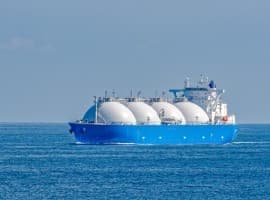
Asia is struggling to obtain spot LNG cargoes for emergency supply this month as the halt to Qatar’s exports tightened the market and reignited competition with Europe for promptly available supply.
In the absence of Qatar’s term supply and about 20% of global LNG flows blocked at the Strait of Hormuz, some buyers in South and Southeast Asia who have sought spot cargoes for March have failed to purchase any, sources and officials at key Asian LNG importers told Bloomberg on Tuesday.
Tenders for spot supply from India’s major gas buyers Gail and GSPC have not resulted in any awards, while other supply, for example, in Bangladesh, has been contracted at much higher prices compared to January, according to Bloomberg’s sources.
Unawarded tenders suggest that there isn’t enough immediately available supply for March, as most of the world scrambles to import spot LNG cargoes amid uncertainty about how long the war will impact Qatar’s LNG halt.
European gas prices and Asia’s spot LNG prices have soared to three-year highs since the Middle East war began. Qatar last week announced it is halting LNG production at Ras Laffan, the world’s biggest liquefaction complex, and issued force majeure notices to customers, while the Strait of Hormuz remains inaccessible for tanker traffic.
Related: Little-Known US Company Lands Important Pentagon Contract in Rare Earth Race
Asia is attracting most flexible-destination LNG cargoes away from Europe amid renewed competition for supply.
It looks like not even the higher pull toward Asia can meet LNG buyers’ immediate needs to avert energy shortages. With hotter weather coming soon to Southeast Asia, LNG demand is set to further jump, tighten the market, and intensify competition with Europe.
Among Asian buyers, China and Japan, although they are the world’s the two largest LNG importers, have a relatively limited exposure to Qatar’s LNG, at just 6% and 5% of their gas supply mix, respectively, Ken Lee, an LNG analyst at Vortexa, said on Tuesday.
The South Asian economies are most exposed to Qatari LNG, with the emirate accounting for 45-99% of their LNG imports and around 20% of gas supply. But these are very price sensitive and unless they need very urgently to avert a crisis, they are likely to pull out of the spot market, according to Vortexa.
South Korea, Taiwan, and Singapore are most vulnerable to high spot LNG prices. If Qatar’s supply doesn’t return soon, their exposure to the spot LNG market “is likely to grow substantially because gas accounts for at least a quarter of the power mix in all three countries,” Lee said.
By Michael Kern for Oilprice.com
More Top Reads From Oilprice.com
- Gulf Producers Slash Oil Output by 5 Million Bpd
- Aramco Warns of Catastrophic Consequences from Hormuz Crisis
- Trump’s Clean Energy ‘Assault’ Sinks Solar Installation Numbers