By Patrick Sykes and Dana Khraiche
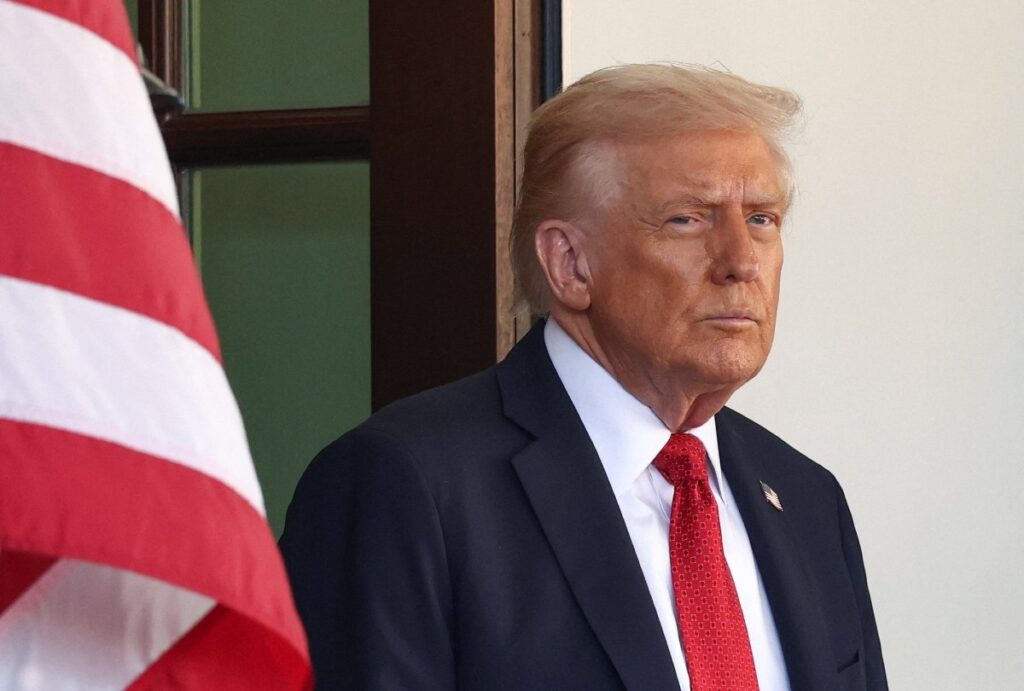
U.S. President Donald Trump called on Israel and Iran to stop attacks on energy facilities as the war in the Middle East escalated, with damage to key oil and gas infrastructure triggering a fresh surge in prices.
Get the Latest US Focused Energy News Delivered to You! It’s FREE:
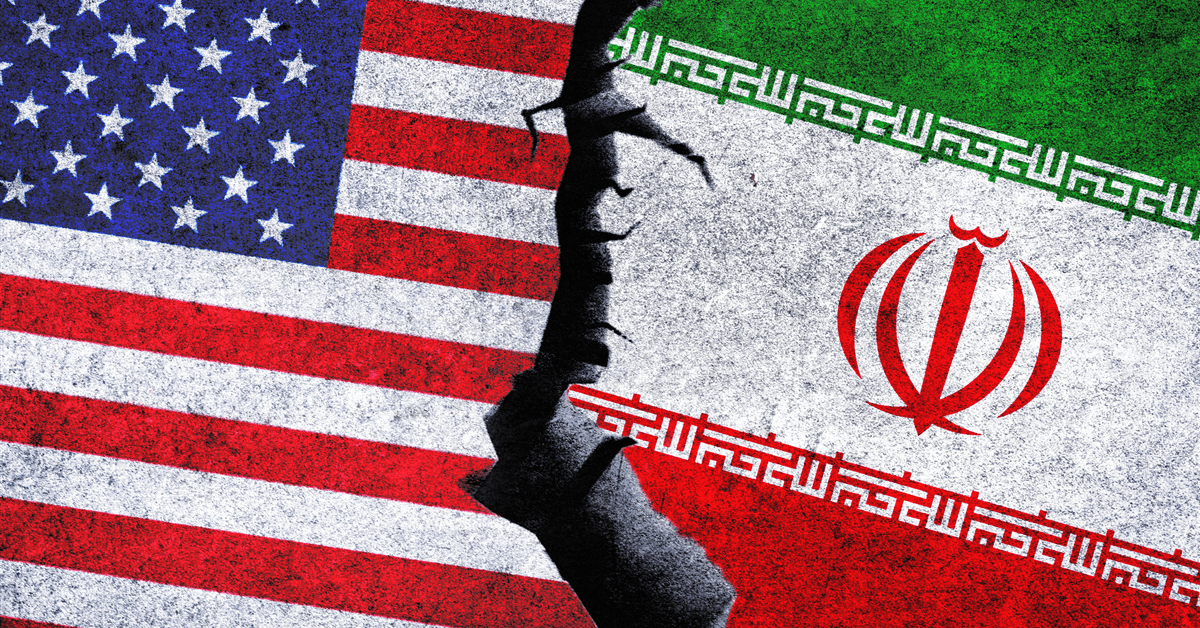
Iran followed through on a threat to strike major facilities around the region in response to Israel’s assault on the giant South Pars gas field, which Tehran shares with Qatar. That widened the scale of the conflict as it nears the end of its third week, with no sign of a ceasefire.
Saudi Arabia on Thursday said a drone hit its Samref refinery on the Red Sea, a vital exit route for the world’s biggest oil exporter with the Strait of Hormuz still effectively shut.
Qatar’s Ras Laffan Industrial City — home to the world’s largest export plant for liquefied natural gas — suffered “extensive damage” after an Iranian missile strike sparked a fire. The United Arab Emirates shut a major gas facility due to falling debris from missiles.
Trump said in a social media post that neither the U.S. nor Qatar was involved in the Israeli operation targeting the South Pars field, calling on the Islamic Republic to act with restraint.
“NO MORE ATTACKS WILL BE MADE BY ISRAEL,” Trump said on Truth Social late Wednesday. If Iran continues its strikes on Qatar’s LNG assets, the U.S. “will massively blow up the entirety of the South Pars Gas Field at an amount of strength and power that Iran has never seen or witnessed before.”
Brent crude rose more than 10 per cent to as high as US$119 a barrel on Thursday, bringing its advance since the start of the war to more than 67 per cent, and European natural gas rose as much as 35 per cent.
Global equities extended losses and bonds tumbled amid widening fears that the war will stoke inflation and hurt economic growth.
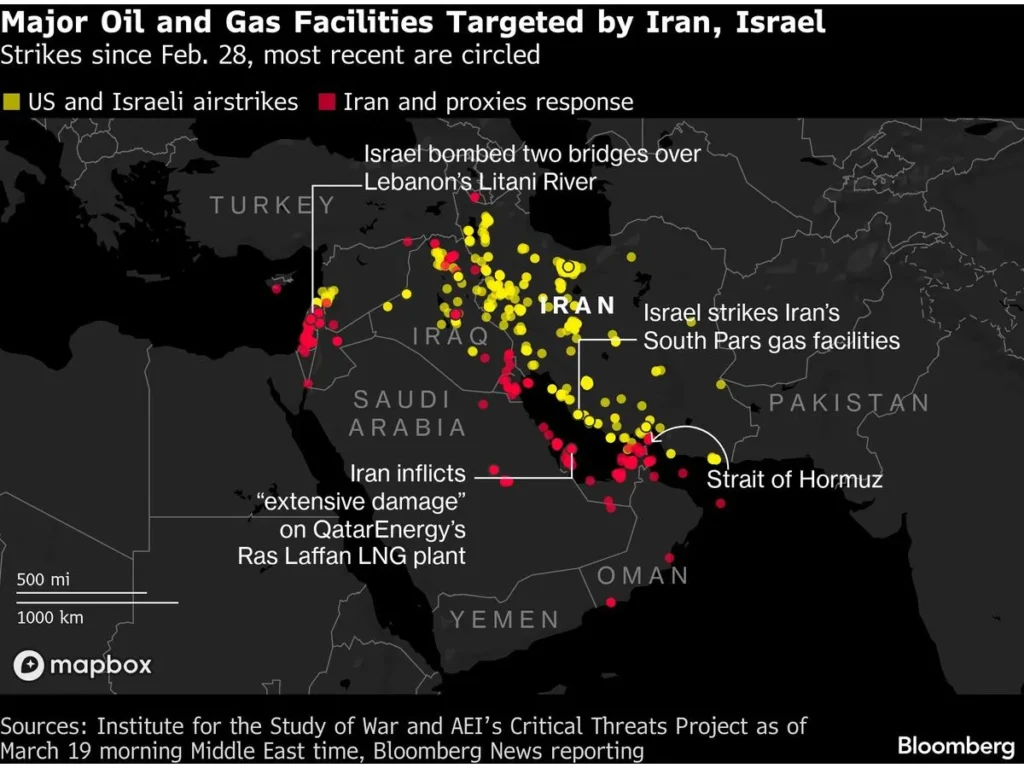
Saudi Arabia said it shot down ballistic missiles fired toward the capital, Riyadh. Two oil refineries in Kuwait were struck by drones that caused fires, according to Kuwait Petroleum Corp. Iraq reported a loss of power generation after Iran halted gas supplies from South Pars in the wake of the Israeli attack.
The strike on South Pars signals a shift toward degrading Iran’s economic infrastructure and curbing its ability to fight, according to Hamidreza Azizi, a visiting fellow at the German Institute for International and Security Affairs in Berlin.
“South Pars is central to Iran’s gas supply and, by extension, to electricity generation and industrial activity,” Azizi said by email. “Even limited or temporary disruptions can translate into power shortages, industrial slowdowns, and broader economic strain.”
Now in its 20th day, the war has claimed more than 4,100 lives across the region, with more than three quarters of them in Iran.
The risk of lasting damage to energy infrastructure and supply is increasing. Efforts to reopen the Strait of Hormuz — a chokepoint for about a fifth of global oil and LNG flows — have so far been unsuccessful, pushing prices higher. The fallout is spreading globally, with fuel, shipping and household costs already rising.
U.S. gasoline prices have soared in recent weeks, rising to around US$3.84 a gallon on Wednesday, according to the American Automobile Association. That’s the highest level in more than two years and is piling pressure on the Trump administration before the November midterm elections.
“Gas prices are up and we know they’re up, and we know that people are hurting because of it and we’re doing everything that we can to ensure that they stay lower,” Vice President JD Vance said on Wednesday, calling the spike “a temporary blip.”
Trump temporarily waived a century-old shipping mandate to lower the cost of transporting energy goods around the U.S. in a bid to curb price rises. Vance and other top administration officials plan to meet with oil executives Thursday, according to people familiar with the matter.
Countries continue to vie for access and control in the Strait of Hormuz. The U.S. said it dropped 5,000-pound bunker-buster munitions on Iranian missile sites near the waterway late Tuesday.
Iran has meanwhile been moving its own oil through the strait at close to prewar levels. Members of Tehran’s parliament are working on a bill that would require ships to pay Iran for safe transit, the semi-official Iranian Students’ News Agency reported.
In parallel with the war in Iran, Israel has stepped up an offensive in Lebanon, where it’s fighting Tehran-backed Hezbollah. Israeli strikes in the country have killed 968 people, according to the Lebanese government.
The U.S.-based Human Rights Activists News Agency says at least 3,134 people have died in Iran. Dozens of others have been killed in the rest of the Middle East, while the U.S. has lost 13 military personnel.
The war began with the joint U.S.-Israeli bombing of Iran on Feb. 28. Trump has since said that he started the war to disarm a potent nuclear threat, claiming Tehran was just two weeks away from acquiring a weapon. Iran has denied pursuing atomic weapons, and nuclear experts mostly disagree it could have built weapons that quickly.
U.S. Director of National Intelligence Tulsi Gabbard on Wednesday declined several times in a Senate hearing to say whether she thought Iran represented an “imminent nuclear threat,” as the White House has claimed.
Share This:
More News Articles