India’s stationary energy storage sector is witnessing rapid expansion, with the total pipeline of Battery Energy Storage System (BESS) projects reaching a record 92 GWh, while cumulative installed capacity—currently under 1 GWh—is projected to grow sharply to 346 GWh by 2033.
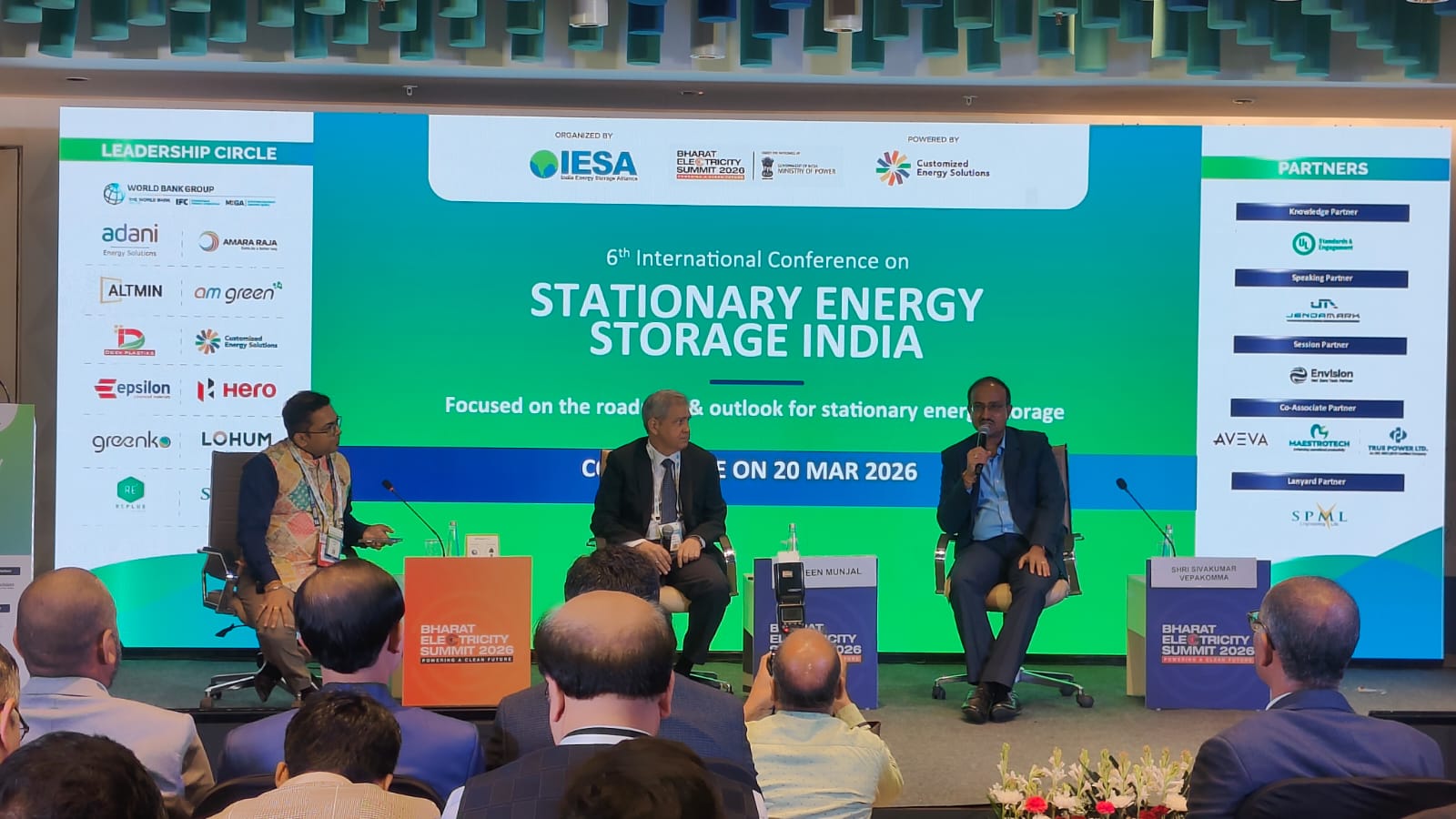
The milestone was highlighted at the Stationary Energy Storage India 2026 (SESI 2026) conference held at Yashobhoomi, Dwarka. During the event, the India Energy Storage Alliance, in collaboration with Customized Energy Solutions, unveiled a comprehensive white paper outlining the sector’s growth trajectory and future outlook.
The conference convened over 450 industry leaders, policymakers, and international delegates from more than 10 countries, reinforcing India’s growing prominence in global energy storage innovation. The event was inaugurated by S. C. Saxena, Chairman and Managing Director of GRID India, who emphasized the critical role of large-scale energy storage in ensuring grid resilience amid rising demand variability.
“Energy storage is no longer optional but essential for a reliable and flexible power system,” Saxena stated, highlighting increasing grid demand fluctuations of up to 90 GW and the accelerating integration of battery and pumped hydro storage technologies.
The report further noted a significant surge in market activity, with 69 new BESS tenders totaling 102 GWh issued over the past year—a 35% increase compared to 2024. This growth reflects rising investor confidence and the rapid maturation of India’s storage ecosystem.
Looking ahead, installed stationary storage capacity is expected to reach 346 GWh by 2033 under the base scenario, with potential to scale up to 544 GWh under accelerated policy support. Pumped hydro energy storage is also projected to expand substantially, from 7 GW in 2025 to 107 GW by 2033.
Debmalya Sen, President of IESA, described the white paper as a “milestone and a call to action,” underscoring its importance in achieving India’s target of 500 GW of non-fossil fuel capacity by 2030.
The report attributes the sector’s momentum to supportive policy measures, including Energy Storage Obligations (ESO), Viability Gap Funding (VGF), and the recognition of storage under the Electricity Amendment Rules 2025, alongside incentives such as 100% ISTS charge waivers.
Vinayak Walimbe, Managing Director of Customized Energy Solutions, noted that the findings provide a strategic roadmap for stakeholders to capitalize on emerging opportunities in the sector.
With nearly 5 GWh of new capacity expected to be commissioned in 2026—marking a tenfold increase over previous years—India is poised for a breakthrough in stationary energy storage. The SESI 2026 conference and the release of the white paper signal a pivotal moment in the country’s clean energy transition and its ambition to lead globally in energy storage deployment.
Subscribe to get the latest posts sent to your email.