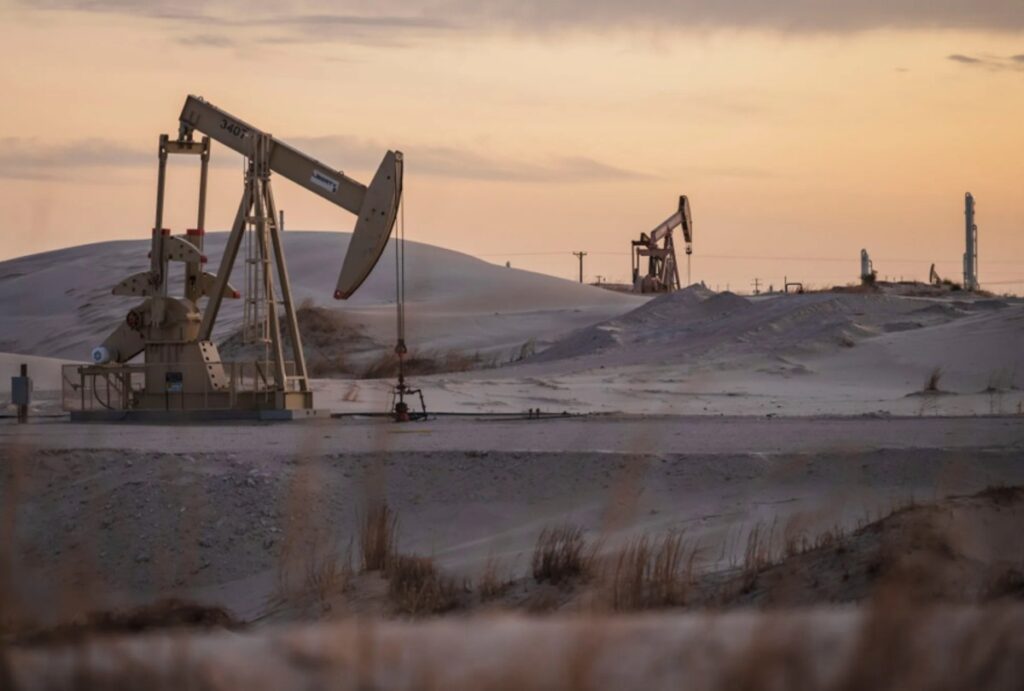
Shale producers helped make the U.S. the top producer in the world and are often counted upon to fill supply gaps because their operations can produce crude relatively quickly. Yet in recent years, shale companies have focused on returning capital to shareholders rather than growing output. Some also face rising costs and maturing fields.
ConocoPhillips is not currently considering increasing production, said Nick Olds, executive vice president of the company’s U.S. onshore lower 48 operations, adding that ConocoPhillips would need to see sustained higher prices.
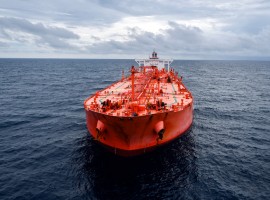
Iran’s effective closure of the Strait of Hormuz, a narrow channel along its coast, has stopped the passage of 20% of the world’s oil, triggering global price increases of around 50%.
Get the Latest US Focused Energy News Delivered to You! It’s FREE:
Still, many U.S. operators have locked in drilling plans and budgets for the year, and prices for future months will need to rise for companies to update those, executives said. Even then, they said, it would take at least half a year to get the barrels out of the ground.
“The cycle from the time you begin to when you make a decision that you’re going to add rigs to then ultimately drilling and producing and getting to market, that can be a year-long process, even in the U.S., which is a short-cycle market. Nine months would be the very best-case scenario,” said Steve Gassen, SLB’s executive vice president of geographies, on the sidelines of the CERAWeek conference.
Before operators make the decision to ratchet up production, “there needs to be a line of sight to higher oil prices for longer. So the concern is that you’re in a bit of a bell curve, and then prices then normalize back to $60 or $65 a barrel,” Gassen said.
SLB is having extensive dialogue with operators here in the U.S., but they’re only in the evaluation phase, Gassen added.
U.S. oil futures for October delivery are trading around $77 a barrel, roughly $11 under current prices.
The U.S. cannot produce a lot more crude in 2026, executives said.
“We have a plan, and we cannot improvise because of the environment, because of the price. Let’s stick to the plan,” said Francisco Gea, executive managing director of exploration and production at Spanish major Repsol, which has production in Texas, Alaska and the Gulf of Mexico, speaking at CERAWeek.
Companies will accelerate or restart drilling programs if prices stay for at least two quarters, said Linhua Guan, CEO of Surge Energy America, one of the largest private producers in the Midland Basin, adding that companies will look to complete wells that have already been drilled so they can quickly bring barrels to market at the current higher prices.
Shale operators will also look to use the high prices to boost hedge positions, essentially locking in the higher value for future sales, Guan added.
Smaller Texas producer Admiral Permian Resources also will not accelerate activity at $90 a barrel as the price was not sustainable enough to commit to increased activity, said CEO Denzil West. The company produces about 25,000 bpd and runs two rigs.
It would consider increasing activity if prices appear to be consistently high for six to 12 months, West added.
(Reporting by Arathy Somasekhar, Georgina McCartney and Sheila Dang in Houston; Editing by David Gregorio)
Share This:
More News Articles