“This strategic collaboration agreement aims to address growing global demand for reliable, zero-carbon power solutions in maritime, offshore and port infrastructure markets,” Scorpio Tankers said.
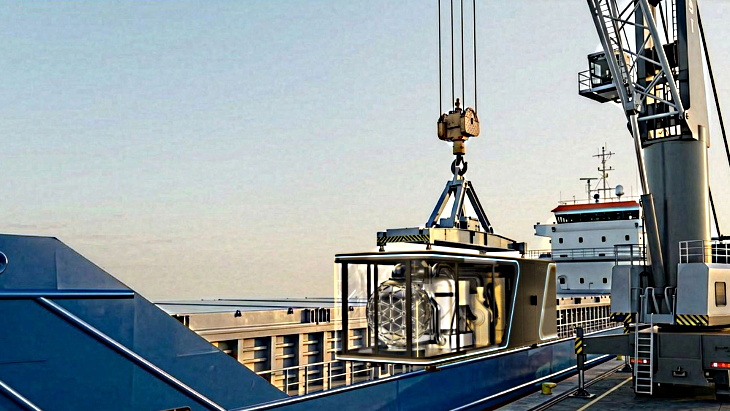
The partners plan to develop and deploy ultra-safe, nuclear-powered maritime energy systems, including floating nuclear power barges in the near term and nuclear-powered vessels over the longer term.
Through the collaboration, Scorpio Tankers will serve as the strategic market lead and domain expert for marine and maritime applications. The company – which currently owns 89 product tankers with an average age of just over 10 years – will contribute marine engineering, technical design, regulatory expertise and global commercial relationships across shipping and maritime infrastructure markets. AMPERA, meanwhile, will provide access to its “safeguards-by-design” proprietary micro-nuclear reactor technology and work jointly with Scorpio Tankers to develop commercial models and technical configurations tailored for maritime deployment, including power-as-a-service, leasing and long-term service agreements.
The collaboration will focus on: floating nuclear power barges; nuclear-powered commercial vessels; offshore and remote maritime energy supply; and port and coastal power infrastructure.
“This collaboration represents an important step toward the future of clean maritime energy, and our USD10 million investment in AMPERA reflects both our conviction in nuclear and our confidence in the team,” said Scorpio Tankers Chairman and CEO Emanuele Lauro. “Nuclear microreactors have the potential to fundamentally change how ships and offshore infrastructure are powered, and we believe this collaboration positions us at the forefront of that transition.”
AMPERA founder and CEO Brian Matthews added: “AMPERA’s ultra-safe reactors are well aligned with the maritime sector as they could cut fuel costs, reduce weight, improve efficiency, increase capacity and eliminate carbon emissions for shipping companies. We are pleased to team with Scorpio Tankers, which brings deep marine engineering expertise, global commercial reach and maritime regulatory experience.”
AMPERA is developing a compact, sealed subcritical thorium breeder microreactor system whose inherent safety characteristics make it well suited for commercial maritime propulsion. It says the system emphasises exceptional safety through a highly compact architecture and a sealed, ultra-long-life core that operates for decades without refueling. Its design aligns with established naval safety principles, eliminates fuel handling, does not use any water, minimises operational complexity and eliminates proliferation risk.
Target sector
In January, AMPERA announced it was adding the maritime sector as a primary segment in its growth portfolio, joining data centres and defence applications. The company noted that the global shipping market analysis indicates there are more than 10,000 commercial ships in operation today that could benefit from changing out their power systems to an AMPERA solution.
“Our game-changing technology strongly aligns with the business demands for commercial shipping and defence vessels,” Matthews said at the time. “Having a power generation unit onboard that can provide consistent, clean and safe energy, while drastically shrinking the engine room footprint and significantly reducing vessel weight is a strong value proposition.”
The shipping industry consumes about 350 million tonnes of fossil fuel annually and accounts for about 3% of total worldwide carbon emissions. In July 2024, the shipping industry, via the International Maritime Organization, approved new targets for greenhouse gas emission reductions, aiming to reach net-zero emissions by or around 2050.
NRC licensing objective
Just days after the US Nuclear Regulatory Commission (NRC) finalised its new regulation, 10 CFR Part 53, AMPERA announced its goal to obtain NRC licensing for its subcritical, thorium-fueled reactors.
On 23 February, AMPERA submitted a formal letter to the NRC indicating its desire to begin the pre-application process for a factory-fabricated, containerised microreactor utilising advanced fuel forms and passive safety features, intended for modular deployment. The company requested an initial pre-application meeting before the end of May.
“With the NRC implementing Part 53, innovative, advanced nuclear concepts like ours can focus on licensing new technology rather than explaining how it is different from traditional nuclear systems,” Matthews said. “We are harnessing the power of AI to create a safeguards-by-design architecture in the development of one of the most energy-dense solutions that creates low-cost power and is rapidly deployable.”
AMPERA’s Licensing Strategist April Smith added: “The NRC’s new regulatory process is an effective way to ensure the same level of safety while acknowledging the different types of technology that are coming to the market. AMPERA looks forward to working with the NRC as it goes through the licensing process to bring next-generation nuclear reactors to market that can be commercially produced in a factory setting.”