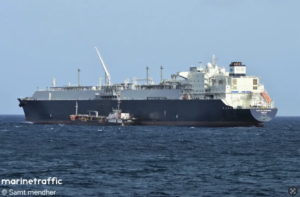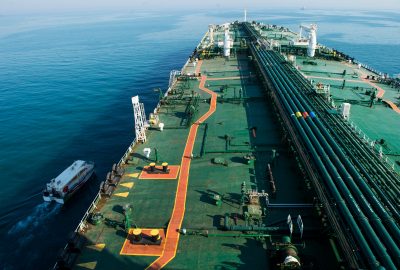
Energy industry experts say it could be a while before any calm returns to rattled oil markets after Iran’s top diplomat declared the Strait of Hormuz “completely open” to commercial traffic that had all but ceased when war engulfed much of the region seven weeks ago.
“It will take several weeks, actually, for things to start getting back to normal,” said Werner Antweiler, associate professor at the University of British Columbia’s Sauder School of Business.
Insurers and shipping companies still have to sign off on its being safe for vessels to move through the waterway, he said.
Get the Latest US Focused Energy News Delivered to You! It’s FREE:
“The Iranians said they will not harass the ships, but there still may be mines that haven’t been fully cleared yet,” said Antweiler, whose specialties include energy economics and international trade.
U.S. President Donald Trump said on social media the American blockade on Iranian ships and ports “will remain in full force” until Iran reaches a deal with Washington to end the war, adding further uncertainty to the outlook.
And there is also the matter of restarting oil production in Middle Eastern countries that have had to shut in due to transport constraints and damage to their facilities.
“It isn’t just flipping a switch and restarting everything,” said Antweiler. “It’s just not that easy.”
The Strait of Hormuz is a narrow waterway connecting the Persian Gulf and the Gulf of Oman, from which tankers can make their way to the open sea and then destinations around the world.
The route was virtually cut off after the U.S. and Israel began their attacks on Iran in late February, sending global crude prices soaring.
West Texas Intermediate crude was trading down about 10 per cent to around US$82 a barrel after word of the reopening on Friday, a significant drop from its highs above US$115 a barrel earlier in the crisis, but still more than 22 per cent higher than before the conflict began.
Friday’s price drop has more to do with market expectations than any real-world changes to crude being able to reach markets that need it, said Al Salazar, head of macro research at Enverus.
“Nobody wants to be the first ship to the strait,” he said.
“Until you get a handshake deal of what this looks like, you will have people hesitant to go through … To be the first ship captain to risk their life to go through without transparency of what this actually means — I think that will take some time still.”
Salazar described the energy shock as a “slow moving car crash” that has spanned the world. It will take time for fuel shortages in Asia and Europe to work themselves out, he said, noting can take 30 to 45 days for tankers in the Persian Gulf to make their way to their destinations and empty their loads.
And another reckoning is coming for the U.S. market, Salazar added. He said dozens of crude carriers are headed to the U.S. Gulf Coast to be loaded and sent abroad to compensate for missing Middle East barrels. That would draw down U.S. stocks could push pump prices in that country higher.
“It really feels like oil has to be higher for longer because you may have fixed the flow problem of the strait, but you have now a low stock problem that requires high prices to rebuild those stocks,” Salazar said.
Canadian oilpatch executives told The Canadian Press earlier this week that the crude price surge resulting from the conflict is not prompting them to meaningfully boost their spending and production for the year. The long-term outlook is too uncertain and there are limits to how much can be exported abroad given current pipeline constraints, they said.
S&P Global Energy said in a note that it’s “acutely uncertain” how long the ceasefire between Iran and the U.S. will last.
“We see the day’s announcement as a step in the right direction toward the normalization of global oil trade,” the research firm said, calling the outlook for oil prices “bearish” for now.
“Weekend talks in Pakistan between the U.S. and Iran, and the durability of the ceasefire between Israel and Lebanon, will offer further signs of progress.”
Antweiler said a resumption in hostilities is entirely possible, given that Iran has learned it can extract concessions by “holding world trade hostage” through the Strait of Hormuz.
“One can only look like one day forward, one step at a time,” he said.
“I would counsel caution in not taking anything for granted until we see physical movement on the ground.
This report by The Canadian Press was first published April 17, 2026.
Lauren Krugel, The Canadian Press
Share This:
More News Articles