(Reuters) – U.S. drivers can expect another spike in gasoline prices in the coming days, just as the summer driving season gets underway, as the conflict in Iran drives oil prices higher and pushes countries around the world to call on American energy supplies.
Gasoline demand typically peaks in the summer as many Americans embark on road trips and other travel. So far, relatively well-supplied stockpiles of gasoline have shielded U.S. consumers from the worst of the supply disruptions resulting from the Iran war and the effective closure of the Strait of Hormuz, a key trade chokepoint, even as prices have climbed to their highest level in four years.
Get the Latest US Focused Energy News Delivered to You! It’s FREE:
But that could be changing. Government data released on Wednesday showed a 6.08 million-barrel decline in gasoline stockpiles last week, part of a massive drawdown in U.S. energy inventories as countries turn to America to cover supply gaps. Exports of crude oil hit a record last week, helping to further drive up prices which are already over $100 a barrel.
Gasoline stockpiles are now 5.98 million barrels, or nearly 3%, below the previous five-year average, according to EIA data. Refinery production, meanwhile, held relatively steady week-over-week at just under 90% utilization.
“We’re drifting in the wrong direction on gasoline stocks heading into summer driving season. You’d be building stocks in anticipation of the start of the driving season and we can’t do that. This is getting ugly fast,” said Bob Yawger, a managing director at Mizuho.
The national average price for retail gasoline hit $4.229 a gallon on Wednesday, the highest since July 2022, according to data from AAA.
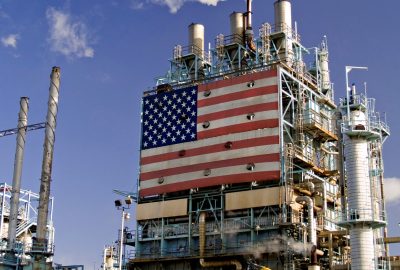
Refinery outages in the Midwest and on the U.S. Gulf Coast are compounding the supply crunch. BP’s 440,000 bpd Whiting refinery was hit by a power outage on Sunday, while Shell’s 250,000 bpd Norco refinery in Louisiana suffered a fire on Tuesday. In parts of the Midwest, prices are anticipated to climb above $5 a gallon as a result of the Whiting outage, according to Patrick De Haan, an analyst for GasBuddy.
Elsewhere, costs at the pump are also expected to rise further, particularly as oil prices remain above $100 a barrel. On Wednesday, Brent crude futures were trading at $118.34 a barrel, up $7.08 a barrel, while U.S. crude futures were at $106.35 a barrel, up $6.42.
Gasoline futures were trading up 5% on Wednesday at $3.7423 a gallon, their highest level since 2022.
“If we hold these high gasoline prices, eventually we will see demand destruction. We haven’t quite seen it here in the U.S. yet. It normally takes another month or two before we see the U.S. consumer really pull back on demand,” said Dennis Kissler, senior vice president of trading at BOK Financial.
Reporting by Liz Hampton in Denver, Arathy Somasekhar in Houston, and Shariq Khan and Nicole Jao in New York; Editing by Hugh Lawson
Share This:
More News Articles