“For too long, Europe has relied on external dependencies for energy, critical technologies, and strategic raw materials,” they say in to European Commission President Ursula von der Leyen, EU Energy Commissioner Dan Jørgensen, and EU Commissioner for Startups, Research and Innovation Ekaterina Zaharieva.
“We have grown complacent with the status quo, adopting emergency measures when in need, and focusing on incremental improvements at best. This must change. Political leaders in the EU and its Member States must shift from short-term solutions to a long-term plan that delivers energy security, reduces structural dependencies, strengthens technological sovereignty and prevents future disruptions from dictating our economic fate.”
Fusion power, they say, must be a part of that plan.
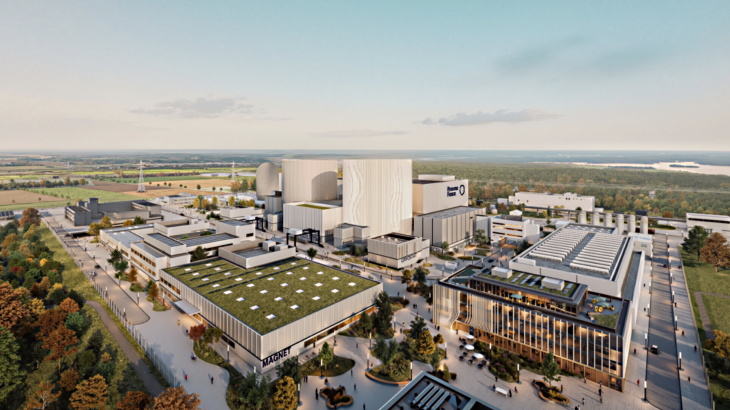
“Fusion is no longer a distant dream,” the letter says. “Sites for fusion power plants have already been identified in Germany, the UK and Sweden. The US, China, Japan, and Canada are scaling up public support and private investment. Europe now faces a strategic choice: stay among the leaders of this transition or continue to depend on technologies and value chains developed elsewhere.”
The CEOs say the European Commission should present an EU Fusion Strategy “that gets the level of ambition right from the start” in order for commercial fusion power plants to be constructed in the 2030s. “Europe has one chance to set the trajectory – and it must seize it. Europe’s industrial base is ready to support commercial fusion, and there is broad alignment across the ecosystem on the need for a clear and ambitious strategy.”
They say the strategy must recognise fusion as a strategic priority for Europe’s competitiveness, energy security, and net-zero objectives. It must be “ambitious, technology‑neutral and outcome-oriented”. The strategy must prioritise milestone‑based funding that incentivises private investment and rewards progress and performance. It must set out concrete steps to integrate fusion into existing EU regulatory frameworks, ensuring that it is treated differently from fission, “reflecting its fundamentally lower risk profile”. It must strengthen, adapt and expand European supply chains and workforce capabilities, ensuring that value creation remains in Europe.
The industry leaders add that the strategy must be accompanied by an action plan that commits budget, mobilises capital and sets “a favourable and predictable regulatory pathway” to make commercial fusion happen.
“The benefits will be transformative: clean and abundant energy, industrial renewal, technological leadership, high-skill jobs for a generation of European talent working on one of humanity’s most ambitious endeavours,” the letter concludes. “It is a future we can approach with confidence rather than apprehension.”
The letter was signed by senior figures from: Renaissance Fusion, Focused Energy, Marvel Fusion, Proxima Fusion, Novatron Fusion, Gauss Fusion GmbH, NINEFusion, DWE GmbH, RI Research Instruments GmbH, Fusion Europe, Fusion Industry Association, and ProFusion German Fusion Industry Association.