America’s family farmers are navigating a period of intense economic pressure. The costs of essential inputs such as fertilizer and diesel continue to rise, while global markets contract and commodity prices fall sharply. Despite these difficulties, farmers remain remarkably resilient. Every day, they weigh risk and reward, think long-term, and make decisions that protect both their livelihoods and their land.
They adjust to unpredictable weather, unstable commodity prices, and shifting market conditions, all while exploring new crops, emerging technologies, and additional income streams.In this challenging environment, thousands of farms are turning to solar—either installing it themselves or leasing land for solar projects.
For many families, solar provides income stability, soil recovery opportunities, and a buffer against market volatility. It is an option that should remain available to every landowner, since the decision ultimately belongs to the farmer who knows the land best. However, a growing number of local governments are considering or implementing restrictions on solar development on farmland.
These policies remove power from farmers and undermine their ability to protect their businesses during a period of economic uncertainty. Understanding how solar supports farmers is essential to countering arguments from officials seeking to limit landowner choice. Across many states, farmers are choosing solar because it works.
In Oklahoma, solar is increasingly helping growers create financial stability for families and rural communities. A similar story is unfolding in Texas, where solar is enabling farmers and ranchers to withstand downturns in agricultural markets and preserve family land. In California—especially in water-restricted regions—solar has become a practical and sustainable use for land that can no longer be irrigated, offering income without consuming scarce water.
In Iowa, a guest column in the Cedar Rapids Gazette argued that energy from solar should be viewed as an additional commodity that strengthens a farmer’s bottom line. For multi-generational farms, this steady income can be the difference between keeping the land and selling it. Increasingly, unnecessary restrictions—rather than solar—pose the greater threat to agricultural stability.
In Ohio, soybean farmer Wayne Greier hoped to receive $540,000 per year from solar lease payments to manage significant medical expenses. Local officials, however, used state law to block the project he depended on. As a result, Greier and many of his neighbors are now facing difficult decisions about how to keep their land and maintain their farms.
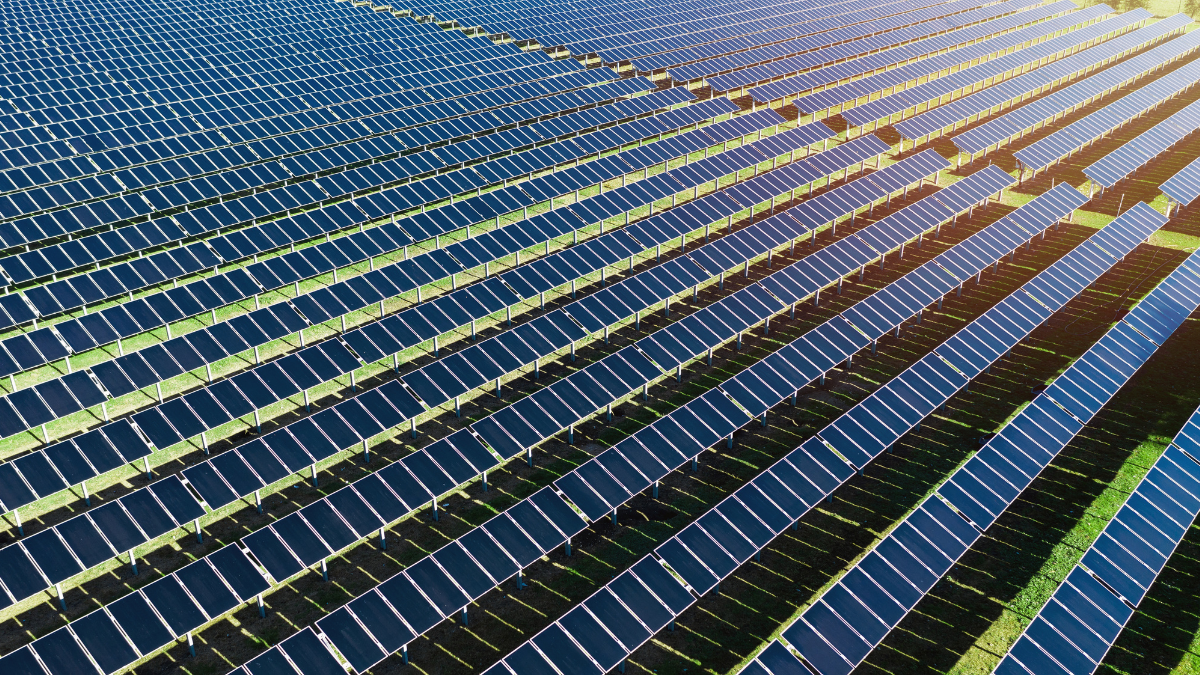
Addressing misinformation is critical. Solar development has a much smaller physical and environmental footprint than many forms of land use. Only around 0.05% of U.S. farmland has been involved in solar projects, according to data from the Solar Energy Industries Association (SEIA) and the United States Department of Agriculture (USDA).
Meanwhile, urban growth and residential development accounted for 95% of farmland loss between 2001 and 2016. Even golf courses occupy more than three times the amount of prime farmland used for utility-scale solar.Long-term projections also show solar’s modest footprint. Even if the entire U.S. grid were fully decarbonized through solar alone, the U.S. Department of Energy (DOE) estimates that only about 0.5% of contiguous U.S. land would be required—roughly equivalent to today’s surface coal mining footprint, and significantly safer for the environment.
Claims that solar panels contain harmful levels of toxic materials are also inaccurate. Panels do not release dangerous substances, even when damaged, and most projects include decommissioning plans. Additionally, solar panels can be—and frequently are—recycled.Solar provides farmers with a dependable, low-risk tool that isn’t affected by rainfall, fluctuating global markets, or fuel prices. It can also coexist seamlessly with agricultural production.
Agrivoltaics—combining farming with solar arrays—is creating new ways to use land efficiently. Sheep can graze beneath panels, reducing vegetation management costs. Pollinator-friendly plantings improve biodiversity and soil quality. Certain crops benefit from partial shade, enabling farmers to increase the overall productivity of each acre.
High-value crops such as leafy greens, broccoli, peppers, strawberries, and blueberries often perform well in reduced light. Research has shown that cherry tomato yields can double under solar panels, with water-use efficiency improving by as much as 65%. These innovations are being led by farmers themselves.
The President of the American Solar Grazing Association, Stacie Peterson, has highlighted the growing number of successful colocation practices farmers are adopting to maximize land value.Large-scale solar projects also provide meaningful economic benefits to rural communities. In Texas, utility-scale solar currently in operation is expected to generate $12 billion in tax revenue for local governments over its lifetime.
Throughout the United States, solar development supports infrastructure, contributes to local services, and strengthens rural economies. Ultimately, trust in farmers is essential. Those who have cared for their land for generations are best positioned to decide how it should be used. Rural communities understand their own needs and can weigh the pros and cons of solar without one-size-fits-all restrictions imposed from above.
Innovation that comes from the ground up inherently reflects local values and priorities. Solar is simply another tool in that long tradition of agricultural adaptation. And like every tool before it, the choice of whether and how to use it should rest with farmers themselves—not with bureaucrats making decisions on their behalf.
Subscribe to get the latest posts sent to your email.