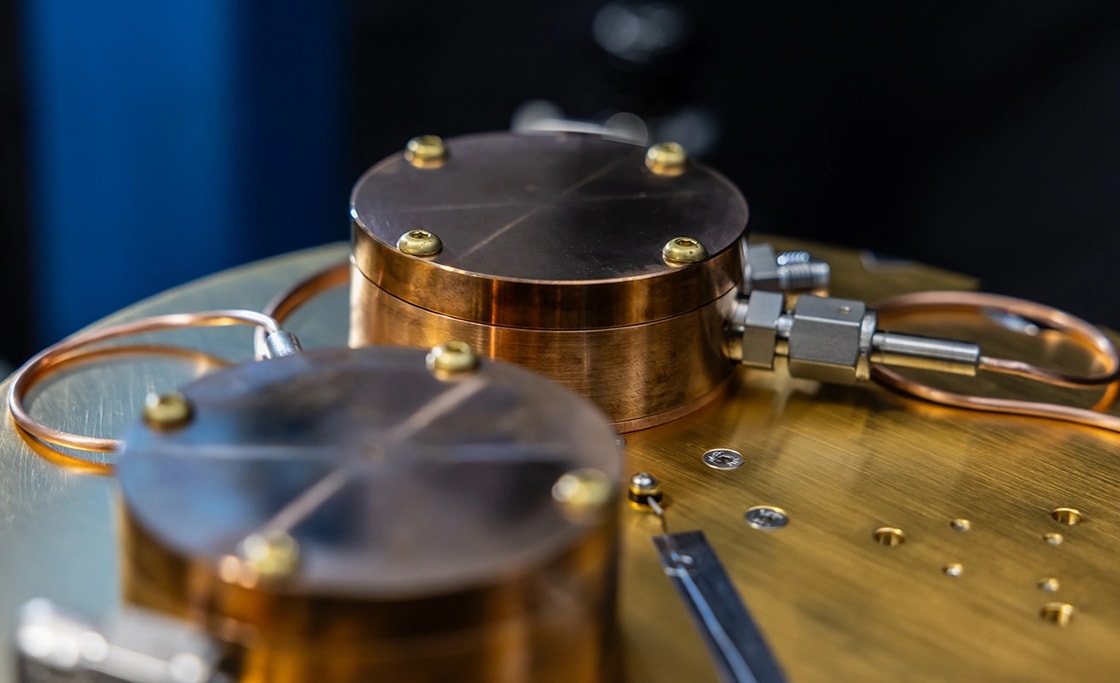
A device developed by researchers at the University of Surrey in the UK could accelerate the development of cleaner fuels and energy technologies.
Known as “lab-on-a-chip”, the systems use renewable electricity to drive reactions that convert carbon dioxide (CO2) into fuels and chemicals such as sustainable aviation fuels, ethanol and ethylene – a key building block in plastics and other industrial materials.
The team behind the device believes the chemistry behind carbon capture and reuse technologies are highly complex, making optimisation slow and heavily reliant on traditional trial-and-error methods.
The Surrey-developed chips claim to offer a more precise approach to CO2 utilisation by recreating these reactions inside miniature electrochemical systems and allowing researchers to observe how the chemistry unfolds in a highly controlled environment.
The devices are fitted with sensors to track reactions in real time, while analytical tools gather large volumes of data, including electrical signals, chemical changes and reaction conditions.
Researchers can then use AI to spot patterns in this data, helping to guide future experiments and improve performance more efficiently.

©The University of Surrey
The systems generate experimental data, while physics-based models describe how these reactions should behave.
“By bringing the two together, AI can learn from both theory and experiment – refining models, filling in gaps, and quickly identifying the most promising conditions,” said Dr Lei Xing, Lecturer in Digital Chemical Engineering.
“This approach moves us beyond traditional trial-and-error, significantly accelerating the optimisation of CO2 conversion processes.”
This could reduce both the cost and time required to develop next-generation technologies, with applications extending beyond CO2 conversion.
According to the researchers, the technology could also be used to advance batteries, hydrogen systems, ammonia production and environmental monitoring.
“Our chip-based devices give us a window into processes that were previously hidden, helping us understand complex chemical systems faster, more clearly and with greater confidence,” said Dr Kai Yang, Lecturer in Energy Materials & Nanotechnology.
The research is already attracting early commercial interest, with the team exploring collaborations with industry partners in areas such as battery materials and energy systems.