Canada may finally be doing the thing everyone has been yelling about for the last decade: building more oil pipelines.
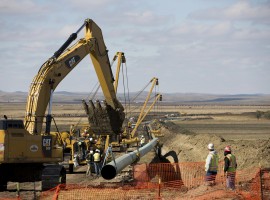
Prime Minister Mark Carney said Thursday that Ottawa and Alberta will meet Friday to advance plans for a major new pipeline capable of moving at least 1 million barrels per day of Alberta crude to new markets. Carney also confirmed reports that his government will unveil a new industrial carbon pricing agreement with Alberta, signaling an attempt to calm the long-running cold war between Ottawa and Canada’s energy heartland.
For a country sitting on the world’s third-largest oil reserves, Canada has spent an impressive amount of time arguing with itself about whether it actually wants to move any of it.
That may be changing.
The latest push comes as global oil markets remain deeply rattled by the Iran war and the disruption of Persian Gulf exports through the Strait of Hormuz. Canadian crude suddenly looks a lot more attractive when Middle Eastern barrels become difficult, expensive, or politically radioactive.
Earlier this month, oil producers committed at least 400,000 barrels per day to another proposed export pipeline system linking Canada to the United States through Montana and Wyoming. That project, backed by South Bow Corp. and Bridger Pipeline, would initially move 550,000 bpd and eventually scale to more than 1.1 million bpd.
The market signal is getting harder for Ottawa to ignore.
Canada is already producing roughly 5.5 million bpd and is expected to reach 6.1 million bpd by 2030. Pipeline constraints have haunted the industry for years, trapping barrels inland and hammering Canadian crude prices whenever takeaway capacity tightens.
The Trans Mountain expansion helped, but not enough. Enbridge is expanding. TMX may expand again. Now Ottawa appears ready to lean further into export infrastructure.
Even the politics may be shifting.
Carney’s move on industrial carbon pricing suggests the federal government understands something it resisted for years: Canada probably cannot become an energy superpower while simultaneously making it impossible to build energy infrastructure.
By Julianne Geiger for Oilprice.com
More Top Reads From Oilprice.com
- India’s Wholesale Inflation Hits 3.5-Year High as Fuel Costs Surge 25%
- China Still Cautious on Fuel Shipments Despite Eased Export Rules
- Sinopec Opens Major Ultra-Deep Shale Gas Play in China