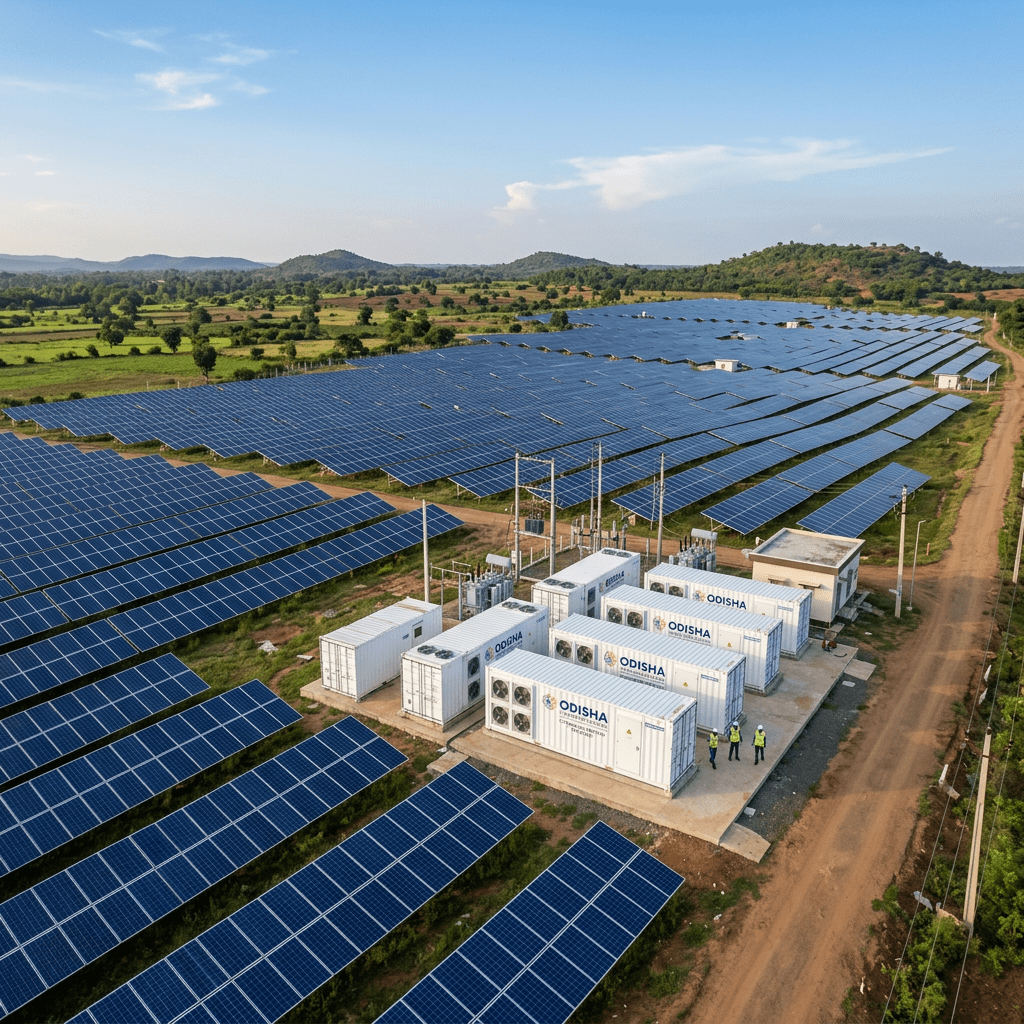
SECI has awarded a 10 MW solar power project integrated with a 20 MWh Battery Energy Storage System in Odisha to BNC Power Projects. The initiative aims to strengthen grid reliability and support renewable integration in the state. The project reflects India’s increasing focus on hybrid renewable infrastructure combining clean generation with energy storage for improved dispatchability and power management capabilities.
UP Energy Expo 2026 highlighted Uttar Pradesh’s expanding role in India’s renewable energy transition. Industry leaders, policymakers, and technology providers gathered to discuss solar deployment, EV infrastructure, energy storage, and green manufacturing opportunities. The event showcased the state’s growing policy support and investment potential, positioning Uttar Pradesh as a key emerging hub for clean energy development and industrial sustainability initiatives.
Power Grid Corporation of India Limited (PGCIL) has invited bids for a 150 MW / 300 MWh Battery Energy Storage System project in Andhra Pradesh. The project is expected to support grid balancing, renewable energy integration, and peak demand management. The tender marks another major step in India’s utility-scale storage expansion as transmission utilities increasingly adopt advanced energy storage infrastructure.
Waaree Clean Energy Solutions has secured a green hydrogen project order from TMEIC Industrial Systems India Pvt Ltd in Karnataka. The project further strengthens India’s emerging green hydrogen ecosystem and supports industrial decarbonization efforts. The order reflects growing private-sector participation in clean hydrogen infrastructure and reinforces Waaree’s strategic expansion into next-generation renewable energy solutions.
NTPC Vidyut Vyapar Nigam Limited (NVVN) has invited bids for a rooftop solar project at AIIMS Bilaspur. The initiative aligns with India’s push to expand clean energy adoption across government institutions and healthcare facilities. The project is expected to reduce energy costs while promoting sustainable infrastructure within the public healthcare sector through decentralized solar power generation.
Energy Efficiency Services Limited (EESL) has issued an Expression of Interest to empanel agencies for preparing DPRs and conducting feasibility studies for solar projects across India. The initiative is aimed at accelerating project planning and execution while improving technical evaluation standards. It also supports the government’s broader mission to streamline renewable energy project implementation nationwide.
The Central Electricity Regulatory Commission (CERC) has initiated proceedings to revoke a power trading license over repeated compliance failures. The move highlights the regulator’s stricter enforcement approach toward operational transparency and market discipline within India’s power trading ecosystem. The action is expected to reinforce accountability standards and strengthen confidence in the country’s evolving electricity market framework.
CERC has approved transmission charges linked to the Khavda renewable energy evacuation project in Gujarat. The decision supports the development of large-scale transmission infrastructure required for evacuating renewable power from one of India’s largest clean energy zones. The approval is expected to facilitate timely project execution and strengthen grid readiness for future renewable energy expansion.
The Uttarakhand Electricity Regulatory Commission (UERC) has proposed a Resource Adequacy Framework 2026 aimed at ensuring reliable and uninterrupted power supply. The framework focuses on long-term demand forecasting, generation planning, and procurement optimization. It is expected to improve system reliability while supporting the integration of renewable energy into Uttarakhand’s power distribution ecosystem.
Rajasthan Renewable Energy Corporation Limited (RRECL) has invited Expressions of Interest for a 45 MW solar power project catering to industrial consumers in Rajasthan. The initiative is expected to enhance renewable power access for industries while supporting the state’s leadership in solar deployment. The project aligns with India’s broader industrial decarbonization and clean energy procurement goals.
Tamil Nadu Electricity Regulatory Commission (TNERC) has proposed new SLDC fee regulations and a Multi-Year Tariff framework for 2026 focused on grid management efficiency. The proposals aim to modernize operational cost structures, improve load dispatch management, and strengthen grid reliability. The regulatory changes are expected to support Tamil Nadu’s expanding renewable energy integration and transmission operations.
Tata Power Renewable Energy has completed its first commercial rooftop solar installation in Ladakh at Hotel Barath in Leh. The project demonstrates the growing viability of solar deployment in high-altitude regions with challenging climatic conditions. It also supports sustainable tourism and decentralized clean energy adoption in remote areas of northern India.
Union Minister Jitendra Singh inaugurated Central Electronics Limited’s 200 MW solar module manufacturing facility aimed at strengthening India’s domestic clean energy manufacturing ecosystem. The new facility is expected to support the country’s solar self-reliance goals, enhance local production capabilities, and contribute to India’s broader renewable energy supply chain development strategy.
Fujiyama Power Systems Limited has commissioned a 2 GW solar panel manufacturing facility in Madhya Pradesh. The expansion strengthens India’s solar manufacturing capacity and supports the country’s growing domestic demand for modules. The facility is expected to improve supply chain resilience while contributing to India’s ambitions of becoming a global renewable energy manufacturing hub.
Bajel Projects Limited has secured a major contract for a 765kV Pune East substation project in Maharashtra. The project will strengthen high-voltage transmission infrastructure and improve power evacuation capabilities in the region. The development reflects continued investment in grid modernization and transmission expansion to support India’s rapidly growing renewable energy capacity.
Fujiyama Power Systems Limited reported a 72% revenue growth in FY26 while continuing its solar manufacturing expansion in India. The company’s performance reflects rising domestic demand for renewable energy products and increasing market confidence in India’s solar sector. The growth also underscores the momentum behind local manufacturing investments under India’s clean energy transition strategy.
Subscribe to get the latest posts sent to your email.