The war with Iran has drawn global attention to the security and resilience of energy systems and supply chains, particularly at a time when rising electricity demand was already placing pressure on the US grid. In a special episode recorded at the ACORE Finance Forum in New York, host Ed Crooks examines how geopolitical tensions are reshaping the US power sector and accelerating debates around infrastructure, investment certainty and energy security.
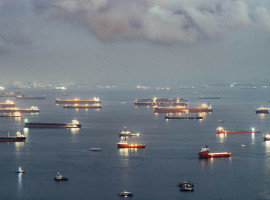
Lori Ann LaRocco, a trade and supply chain expert and author of Trade War: Containers Don’t Lie, explains that the closure of the Strait of Hormuz has far-reaching consequences because it disrupts exports from a key global energy hub. She notes that around 70,000 products are derived from petrochemicals, including critical inputs used in solar panels, semiconductors for data centres and mobile phones.
Disruption in Gulf exports is therefore tightening supply chains across multiple industries, with some materials already facing shortages. She adds that even if the strait were to reopen immediately, it would still take at least a year for global supply chains to fully normalise due to the logistical challenges of repositioning tankers, clearing hazards and restoring export infrastructure.
Her key recommendation is that companies must understand their supply chains in depth, extending visibility far beyond primary suppliers to multiple downstream tiers.José Antonio Miranda, chief executive of Avangrid, highlights that rising electricity demand is creating both challenges and opportunities for the power sector.
He stresses that investment in generation and grid infrastructure must begin immediately and continue consistently over time. His central message to policymakers is the need for regulatory certainty, arguing that while private capital and technical expertise are available to build new energy systems, investors cannot operate effectively in environments where rules change unpredictably or permitting outcomes lack clarity.
Harry Krejsa, director of studies at the Carnegie Mellon Institute for Strategy and Technology and a former US government official, focuses on the intersection of energy and national security. He argues that discussions around dependence on China for clean energy technologies often confuse cybersecurity risks with supply chain dependencies. His guiding principle is to protect sensitive digital systems while continuing to source less critical components globally and invest in domestic innovation for future technologies.
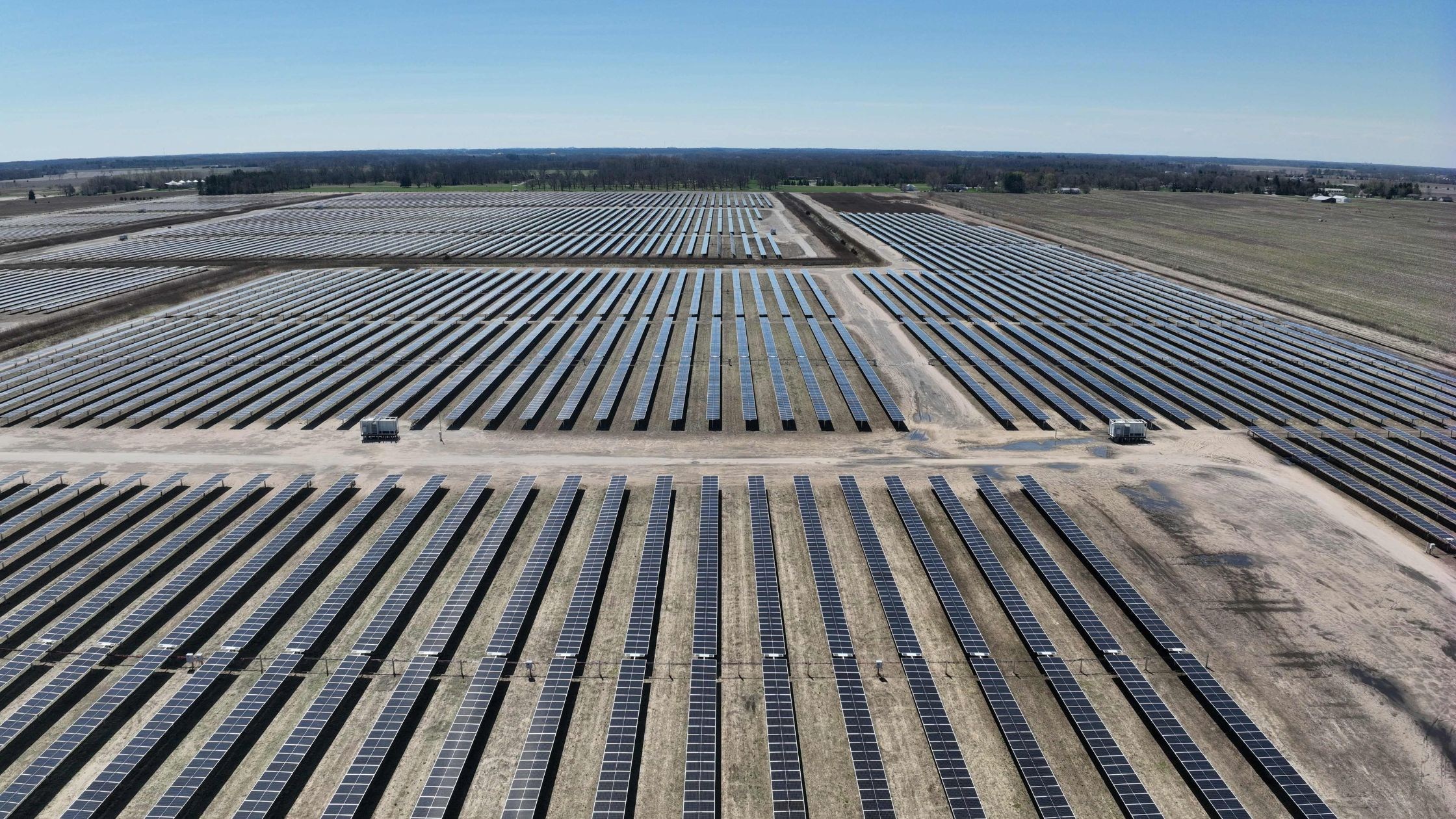
Kara McNutt, head of power and renewables consulting for the Americas at Wood Mackenzie, raises concerns about grid reliability in the United States. She points out that the share of dispatchable power generation is declining as coal plants are retired and more wind and solar capacity is added. While nuclear energy and small modular reactors are generating interest and could play an important long-term role, she notes that these solutions are unlikely to materially support grid stability in the current decade.
Benoy Thanjan, founder of Reneu Energy and host of the Solar Maverick podcast, observes growing demand for behind-the-meter energy storage as businesses and consumers prioritise resilience in response to geopolitical uncertainty. He also highlights ongoing tensions around Foreign Entities of Concern (FEOC) rules, which are designed to limit access to US tax credits for companies linked to certain countries.
While customers increasingly prefer US-manufactured equipment, he notes that the cost gap between compliant and non-compliant technologies remains a significant barrier.Ray Long, president and chief executive of ACORE, summarises the forum by identifying three key policy priorities needed to unlock investment: reforming federal permitting processes, providing clear guidance on FEOC rules from the US Treasury, and accelerating approvals from federal agencies responsible for energy and infrastructure projects.
Overall, the discussion underscores how geopolitical instability is reshaping energy markets, reinforcing the importance of supply chain visibility, investment certainty, grid reliability and domestic manufacturing capacity.
Subscribe to get the latest posts sent to your email.