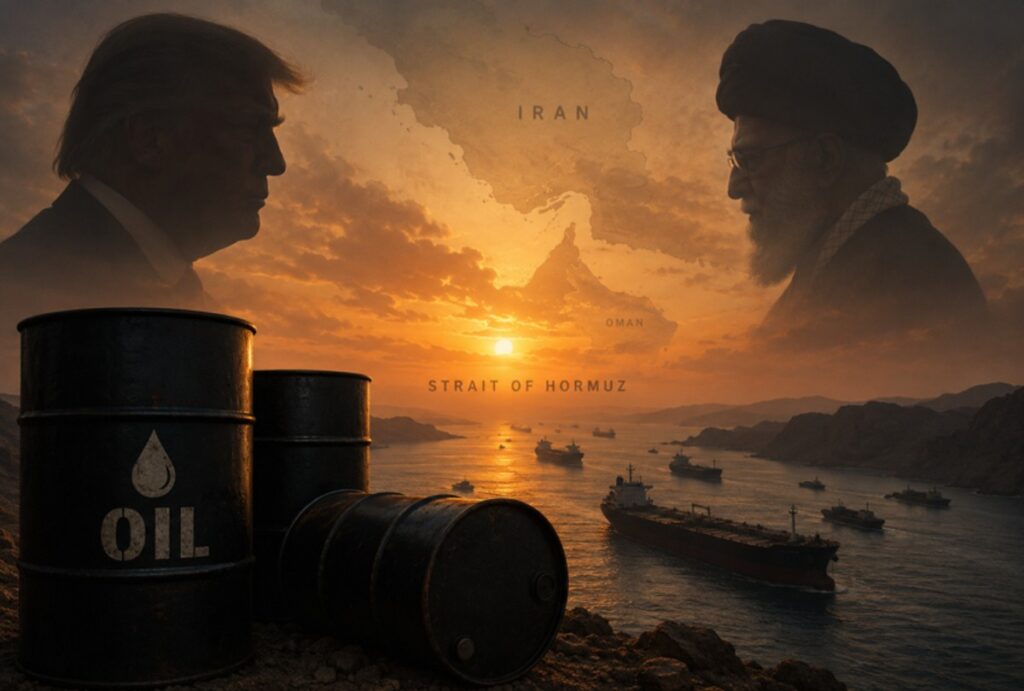
Three months since the Iran war began, persistently high oil prices have policymakers grappling with renewed inflation fears, while sliding currencies are a headache for some Asian countries.
Get the Latest US Focused Energy News Delivered to You! It’s FREE:
But the conflict has boosted other assets, especially oil, and the dollar’s credentials as a safe-haven.
Here’s a look at some stand-out winners and losers.
OIL’S WIDER IMPACT
Oil’s roughly 40% jump has upended the outlook for inflation and interest rates. On the physical market, crude prices are well above $100 a barrel and, at one point in early April, were nearly double what they were pre-war. A record 400-million-barrel release from the strategic reserves of major economies, together with traders finding alternative sources, has helped cushion the loss of supply. But the strain on the global energy system is growing.
AI BOOM CUSHIONS STOCKS
Global stocks have so far weathered the storm, as renewed AI optimism and broader hopes for a peace deal overshadow the negative impacts of the war. U.S. stocks are at record highs, as is South Korea’s Kospi. European shares are nudging at all-time highs. SK Hynix topped $1 trillion in market value for the first time on Wednesday, joining its memory chip rivals Samsung Electronics and Micron Technology in reaching the milestone on an AI-driven rally.
Not all sectors are winning. The S&P 500 passenger airlines index is down more than 6% since the conflict began amid global flight disruption. A global luxury basket is down 10%, reflecting investor fears that inflation could hit spending.
HSBC Private Bank global CIO Willem Sels said the firm has an underweight position on consumer-related goods and services.
“It provides us with a hedge in case the conflict accelerates,” he said. “Consumption has done reasonably okay, certainly in the U.S. where you have better-off households who still consume a lot and are benefiting from AI.”
DOLLAR KEEPS ITS CROWN
The dollar has also been a winner, with investors embracing its safe-haven properties. It has gained 1.5% against other major currencies since the war began, outperforming the Swiss franc and yen. Rising U.S. Treasury yields have also boosted the dollar’s appeal, while some note it continues to contend with U.S. policy uncertainty and will likely weaken when the conflict ends.
“We are currently neutral but still expect a weaker dollar in the medium term,” said Van Luu, global head of solutions strategy at Russell Investments.
ASIAN CURRENCIES FEEL THE PAIN
Asia had bought about 80% of oil shipped through the now-shuttered Strait of Hormuz and what fuel there is still available is costlier than before. That is hurting growth and making their currencies among the biggest underperformers since the war. India’s rupee, Indonesia’s rupiah and the Philippine peso have hit record lows against the dollar and some countries have hiked rates or tapped FX reserves to ease the pain. Sri Lanka stunned markets on Tuesday with a 100 basis point hike.
In Asia, only China’s yuan has held up, helped by substantial domestic energy reserves.
ANOTHER BLOW TO GLOBAL ECONOMY
The oil price surge has also knocked the world economy, particularly countries that rely on imported energy. In the euro zone, economic activity shrank at its sharpest rate in more than two-and-a-half years in May, S&P’s composite purchasing managers index shows.
The war’s impact is amplifying Europe’s financial vulnerabilities, the European Central Bank warned in a report on Wednesday.
British companies also reported a drop in activity alongside a jump in input prices due to higher energy costs.
The U.S., which is self-sufficient in oil and gas and where AI investment is surging, has taken less of an economic hit. However, the global nature of oil markets means U.S. gasoline prices have hit a four-year high of $4.56 a gallon.
BONDS TAKE A BEATING
Government bonds are also in the losing camp, as the oil price surge has prompted traders to factor in the risk of higher rates in response to energy-driven inflation.
Expectations of higher fiscal and military spending have added to pressure on longer-dated maturities. The Federal Reserve might end its easing bias soon and U.S. 30-year Treasury yields have risen to their highest since 2007, trading above 5%.
German Bund yields, meanwhile, have hit their highest in over 15 years as traders price in at least two ECB rate hikes by year-end.
(Reporting by Amanda Cooper, Lucy Raitano, Dhara Ranasinghe, Alun John, Harry Robertson and Stefano Rebaudo; Compiled by Dhara Ranasinghe; Editing by Alexander Smith)
Share This:
More News Articles