By
54 min ago 3 min read
Energy giant Shell expects a year-long outage at one of two liquefied natural gas (LNG) trains that make up the world’s largest gas-to-liquids plant in Qatar.
The update follows on QatarEnergy’s Ras Laffan Industrial City in March, where several energy facilities were damaged, including Pearl GTL Train 2, which is co-owned by QatarEnergy and Shell.
Speaking during Shell’s first-quarter earnings call in May, CFO & Director Sinead Gorman said the “most significant” effects for the company have been in Qatar.
“At Pearl GTL, Train 2 was damaged, but thankfully, nobody was hurt,” she said. “We currently estimate it will take around a year to return this train back into service.”
The company expects repair costs to be “well below” $500m on current estimates.
CEO & Director Wael Sawan gave an update on progress so far, revealing that the team had removed all the debris from the site.
“Super job by the team … they had isolated the unit that was damaged,” he said. “We have already put in a long lead item request and we have a plan for execution.”
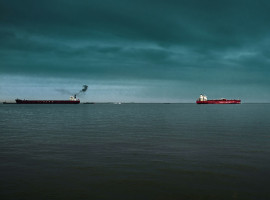
Meanwhile, Shell says Train 1 and the separate LNG N4 train co-owned by QatarEnergy are ‘start-up ready’ subject to the ability to move products through the Strait of Hormuz.
“The other train could be up and running, but it’s more about the ability to be able to evacuate through the Strait,” explained Gorman.
She gave no clear timescale, saying it would depend on how long it takes to clear vessels from the Strait and resume shipments.
“So that will be a loss in terms of the incoming coming through from that perspective,” she added.
Read more:
Despite this loss in volume, higher LNG prices are helping to offset some of the financial impact but the situation remains tight for now.
“In the short term, the tightness of the market is real because 20% of the volumes are out,” said Sawan.
However, he added that it is important to differentiate it from oil, where outages mean 12% to 15% of the market is impacted.
“While 20% of the LNG market is impacted, that’s just 3% of the overall gas market … so it is much more contained.”
Looking beyond the current disruption, Sawan said Shell remains confident in the long-term outlook for LNG, citing growing demand linked to energy security, industrial development and the expansion of AI-driven data centres.
“We do see a trajectory of, say, 600 million to 800 million tonnes by 2050 of resilient demand … for LNG,” he added.
He also highlighted the value of Shell’s geographically diverse supply portfolio, including new volumes from LNG Canada, in serving customers across multiple markets.
Read more:
Shell’s Pearl GTL is the world’s largest gas-to-liquids facility and it processes up to 1.6 billion cubic feet of gas per day to produce 140,000 barrels of liquid hydrocarbon products.