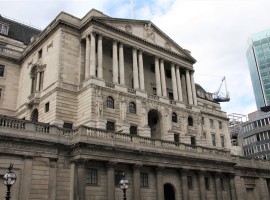
The Bank of England may know where inflation is headed, but it has a much harder time knowing where oil—and interest rates—are headed.
That was the message from Bank of England policymaker Swati Dhingra on Friday, as the ongoing Middle East energy crisis continues to complicate the outlook for interest rates.
“If you ask me what’s my interest rate decision next month going to look like or in the future, I think that’s very hard to say, because the big elephant in the room here is what happens to the energy crisis,” Dhingra said during an event hosted by University College London.
The comments highlight a growing problem for central banks on both sides of the Atlantic. Policymakers have spent years fighting inflation. Now they are trying to determine whether the latest energy shock is a temporary price spike or the beginning of something more persistent.
Before the Iran war erupted in late February, Dhingra had been among the most dovish members of the Bank of England’s Monetary Policy Committee. She voted to cut rates by a quarter point in February while most of her colleagues preferred to stay put.
That was before crude prices surged and the Strait of Hormuz effectively closed to most commercial traffic.
Since then, the calculus has become considerably more complicated.
According to minutes from the Bank’s April meeting, Dhingra said rate cuts could again become appropriate if the conflict is resolved quickly and oil prices retreat sharply. If the crisis deepens, however, additional tightening may be necessary.
Markets appear to be leaning toward the latter risk. Traders see little chance of a rate increase when the Bank of England meets later this month, but are pricing in roughly an 80% chance of a quarter-point hike by September.
The uncertainty mirrors concerns increasingly voiced by U.S. central bankers. Kansas City Fed President Jeffrey Schmid warned last week that the current oil shock may not be as transitory as policymakers once hoped, particularly with inflation already running above target.
For central bankers, that leaves an uncomfortable reality. Oil prices are now driving a growing share of the inflation outlook, while the trajectory of the Middle East conflict remains anyone’s guess.
That makes forecasting rates almost as difficult as forecasting crude.
By Julianne Geiger for Oilprice.com
More Top Reads From Oilprice.com
- EU Says No Jet Fuel Shortage Coming Despite Middle East Supply Loss
- UK Conservatives Blast Labour North Sea Ban as ‘Utter Madness’
- Australia’s 344-Million-Barrel Oilfield Could Finally Get the Green Light