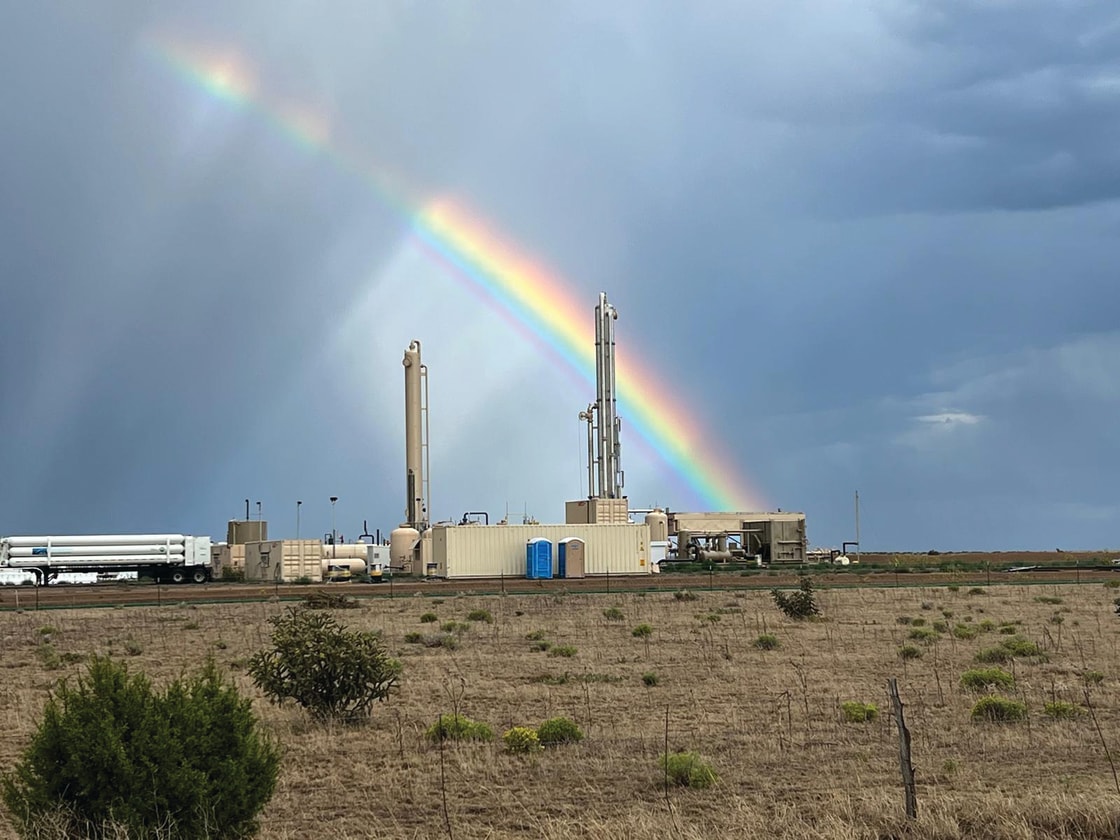
“Yesterday, in the presence of Mr Batjargal Ochirpurev, Governor of the Dornogobi province, Mr Ganburen Gansukh, Governor of the Ulaanbadrakh sum and Mr Manlaijav Gun-Aajav, Secretary of the Nuclear Energy Commission, we celebrated a decisive milestone in the implementation of this strategic project led by Orano and its subsidiary Badrakh Energy, alongside our Mongolian partners,” Orano Chairman Claude Imauven said on LinkedIn.
“As our two countries celebrated the 60th anniversary of their diplomatic relations in 2025, Zuuvch Ovoo illustrates our shared commitment to developing a strategic project that creates sustainable value for Mongolia and the Dornogobi Province,” he added, before thanking the Mongolian authorities, Orano’s partners, and the teams at Badrakh Energy and Orano “for their commitment to this exemplary cooperation”.
Mongolia has substantial uranium resources – as of 2023, according to World Nuclear Association’s information library, its 144,600 tU of uranium resources put it 10th in the world. Although it has been mined there in the past – in conjunction with Russian interests – no uranium has been mined in Mongolia since the mid-1990s when mining at the Dornod mine, operated by a subsidiary of Russia’s Priargunsky Industrial Mining & Chemical Union, ceased.
_f716ec8f.jpg)
Image: Orano
Orano Mining has been present in Mongolia for more than 25 years, and has been carrying out exploration in the Gobi Desert since 1997, according to information from the company. The Zuuvch Ovoo deposit was discovered in 2010. In January 2025, Orano and the Government of Mongolia signed an investment agreement to develop and operate the project, in the south-eastern Dornogovi province.
The project will use in-situ leach (ISL, also known as in-situ recovery, or ISR) methods, demonstrated in pilot operations in 2021-2022. Development is planned to take 4 years. The project will have a nominal production capacity of about 2,500 tU per year for a 30-year estimated lifespan, creating 1,600 direct and indirect jobs.
Under the terms of the investment agreement, more than 51% of the direct benefits generated by the project will be received by the Mongolian state.